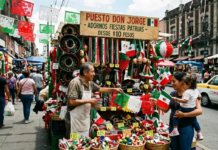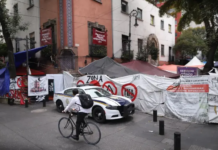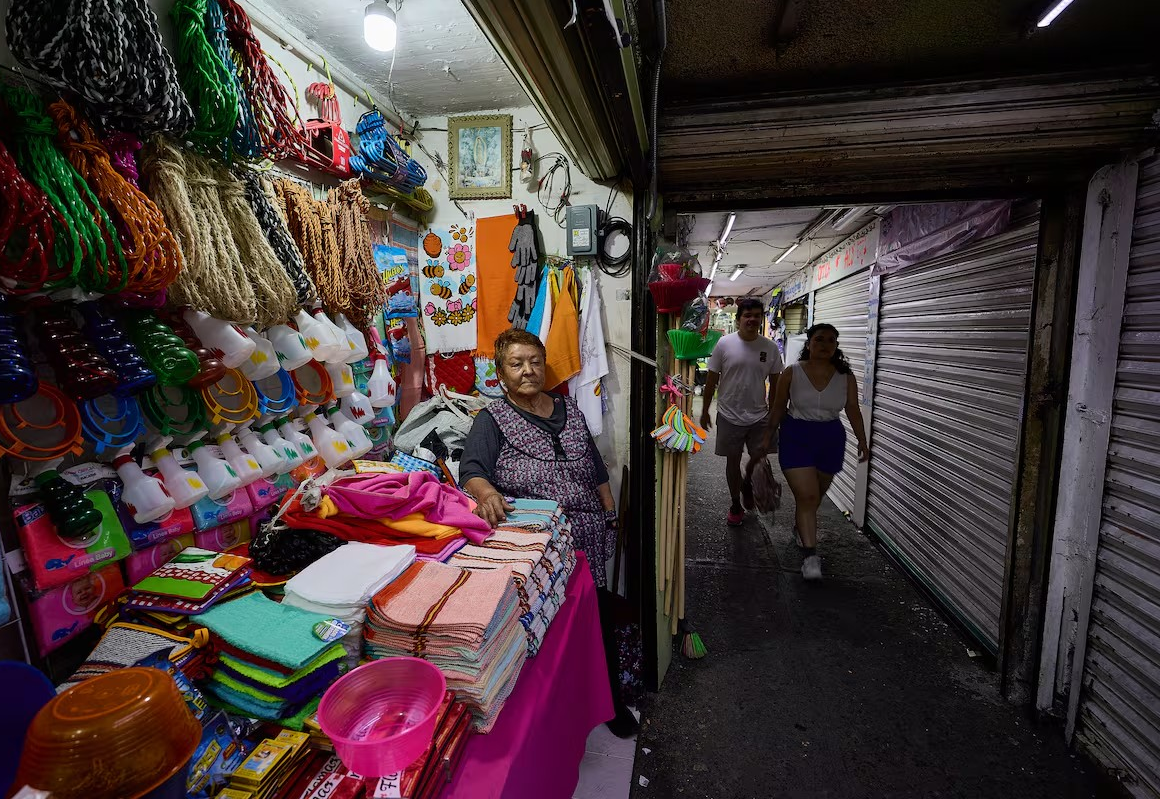

Fernanda and Sandra González grew up underground. They’ve spent most of their days there since their parents set up a stall at one of the pedestrian crossings on Calzada de Tlalpan in Mexico City. This subterranean passage, located next to the Viaducto Metro station exit, has witnessed four decades of their lives; it saw them grow up and, eventually, take over the family business. Now, the city government intends to remodel these passageways and add them to the list of areas reclaimed through concession programs.
The sisters, along with other vendors, oppose this imposed transformation. “We don’t mind them fixing things up, but we want dialogue,” explains Fernanda while tending to one of her family’s two stalls in the narrow passageway. The 32-year-old vendor says that these tunnels were rehabilitated by those who now run them; they are the ones who guarantee the safety and cleanliness of the premises.
A few meters south, the walls of another underpass display a banner with the phrase: “No to the gentrification of the underpasses.” The vendors fear that the official plans, carried out through the state-owned company Servimet and linked to the World Cup renovations, will displace them from the area where they have worked for decades. The work began in March with the renovation of 12 of the 34 underpasses that cross the avenue.
A banner with the message ‘No to gentrification’ hangs in the underpasses of Calzada de Tlalpan. Ginnette Riquelme Quezada
The underpass where the González sisters work is on the edge of the section to be renovated. Manuel Olvera, who has worked there for 39 years, recounts amidst the aroma of popcorn and gas that, in the past, the underpasses were unsafe, unsanitary, and frequently flooded. “I personally prevented many robberies and cases of harassment against young women,” he asserts.
Antonio Peralta, secretary of the merchants’ association, explains the reason for their concern: the flow of information and consultation have been minimal. Peralta recounts that Servimet’s initial contact was limited to a notice posted on the tunnel entrances, urging vendors to regularize their situation with the company. Later, the company’s management announced minor renovations, but weeks later notified them that they had to temporarily vacate their stalls for a complete restructuring.
Peralta maintains that they requested detailed documents from the project’s executive plan and technical studies, but received no response. They only learned of the plan’s scale when the Head of Government, Clara Brugada, announced it publicly. “The treatment we’ve received has been outrageous and contemptuous; it seems they think we lack our own judgment or perspectives. This is definitely shocking,” he laments. The Public Works Department did not respond to a request for information from América Futura.
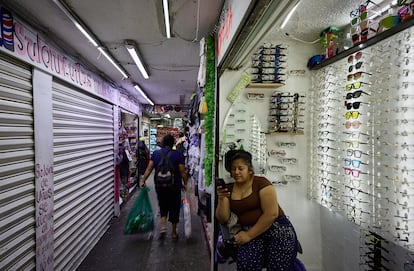
Sandra González García looks at her cell phone next to her sister, Fernanda Selvas García. Ginnette Riquelme Quezada
Since the announcement, and given the resistance from the vendors, Peralta says that Servimet staff have approached them on several occasions to offer voluntary departure options, from relocation to financial compensation. “They offered 3,000 pesos a month, but my colleagues have rejected it because it’s insufficient; it’s an amount that doesn’t even warrant discussion,” he says. Beyond the money, the vendors demand that the occupancy permit granted almost forty years ago be respected.
The reluctance stems not only from Servimet’s treatment of them or the lack of guarantees, but also from the vision for the project. Peralta asserts that the government plans—which include medical offices, cafes, and recreational areas—ignore the actual use of the site. “People use the pedestrian walkways because they carry out their daily activities; they walk safely because we have improved the area through our efforts,” he explains.
Merchants expect to receive information about the future of their businesses by the end of this year and will continue their resistance, Peralta asserts. The consequences of the intervention remain to be seen. This is not the first time the Mexico City government has publicized plans to reclaim urban remnants. For nearly two decades, authorities have announced improvements under the overpasses that make up the metropolis’s labyrinth of elevated roads, with mediocre results.
Pablo Gaytán Santiago, PhD in Social Sciences and an expert in urban studies, agrees with Peralta. “Those who give them real use value are the pedestrians and city dwellers who travel through them,” he states. The local administration’s intention is “a sanitization policy that seeks to hide poverty and inequality under a staged rug,” the expert writes.
According to Gaytán, the intervention under overpasses began in 2004, when Marcelo Ebrard, then head of the Mexico City police, implemented Rudolph Giuliani’s “zero tolerance” security model. The activist explains that the policy continued under Ebrard as Head of Government (2006-2012) and in subsequent administrations: Miguel Ángel Mancera (2012-2018), Claudia Sheinbaum (2018-2024), and the current administration of Clara Brugada.
“The logic is that the use of these residual properties should be positive: the city obtains resources, activities are revitalized, and security improves,” explains Rosalba Loyde, a land and housing specialist. This is the justification used to present the plans for reclaiming the underpasses where street vendors operate.
This same logic has prevailed in projects in vehicular areas. One of the first initiatives, an attempt to “take back” the space from graffiti artists, Gaytán notes, was a skatepark at the intersection of San Cosme and Circuito Interior. Mariani, a 20-year-old skater who goes to the park at least twice a week, explains that despite private security, insecurity persists.
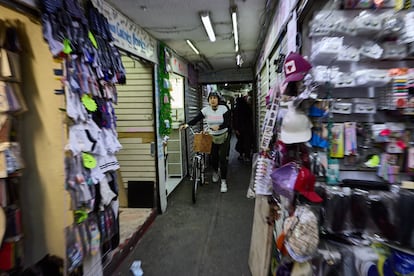
Gaytán states that, because the policy is superficial, the problems remain. These areas “deteriorate rapidly because they are conceived as exhibition spaces and not as places designed for everyday life.” Citizens don’t want to spend time under a bridge, he asserts. The same is true in the Tlalpan tunnels, which serve as pedestrian routes due to the lack of street-level crossings.
Source: elpais