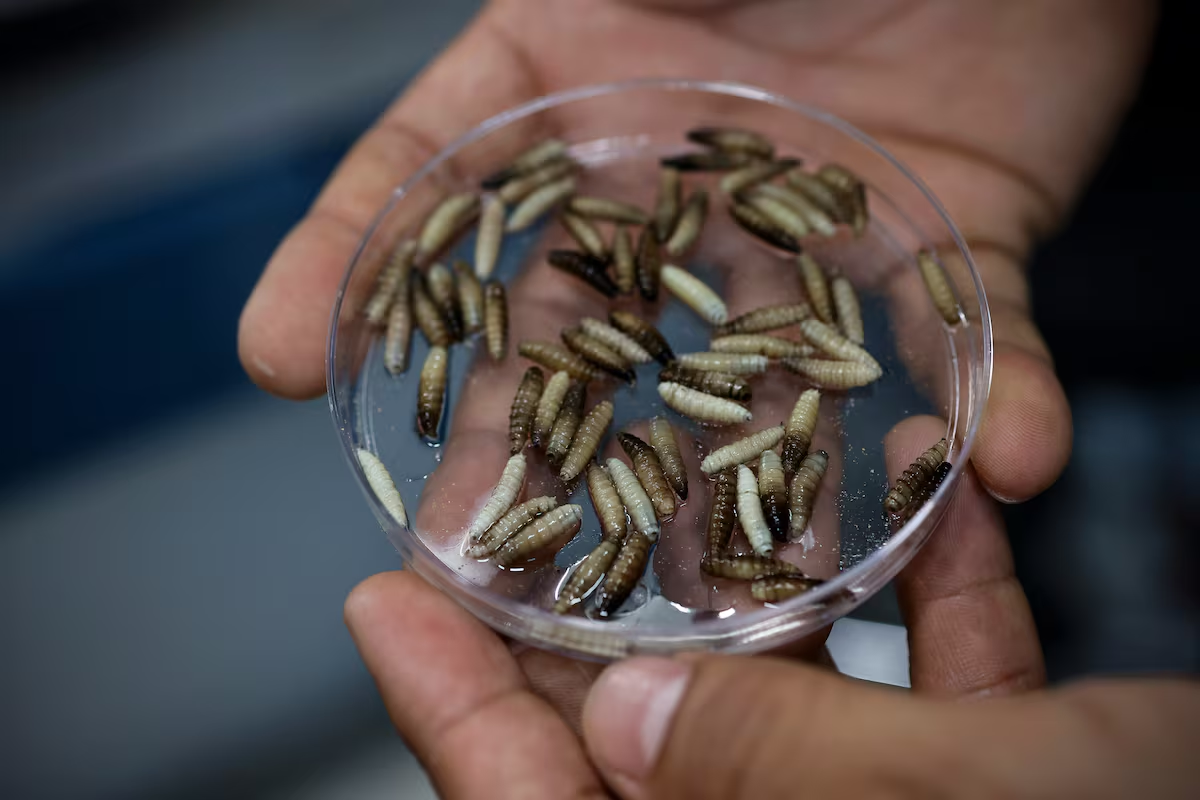

The Ministry of Health reported this Wednesday the first case of screwworm infection in humans in Mexico City. The information from the epidemiological bulletin arrives three weeks after authorities reported the first case of myiasis infection in the capital—at that time, in a 12-year-old Doberman. Nevertheless, the city remains far from the total of 352 accumulated cases in humans nationwide. Chiapas, the most affected state, accounts for 131 of these cases.
The agency’s data is current as of last Friday. For its part, the Ministry of Agriculture notes in its monitoring reports that the capital has had two active cases since last Monday—three days after the figure presented by the Ministry of Health. When asked for further details regarding the human infections, the Ministry of Agriculture referred inquiries to the Ministry of Health. As for the total figures—encompassing both animals and humans—records show that the capital currently has five active cases out of the 2,100 cases reported nationwide.
The detection of the infection in the Doberman—confirmed in late April but reported on May 5—was presented at the time as “an isolated case,” according to information provided by authorities. The report indicated that the infection resulted from larvae incubating in the animal’s left ear, where it had an open wound sustained during a fight with another dog. The dog was admitted to a veterinary clinic in Topilejo, in the southern part of the capital, where it remained under supervision. Authorities subsequently announced the implementation of a containment strategy in the area to prevent further cases. The capital—which is less than a month away from hosting the opening matches of the World Cup—has recorded six cases since then (one of which is no longer active).
When the initial case emerged, the Ministry of Agriculture stated that no secondary cases had been detected “due to the altitude and climatic conditions of the location where the case was identified.” It further emphasized that preventive measures would be implemented. “The Government of Mexico, through Senasica [National Health Service], maintains constant surveillance in the area and has immediate response protocols in place,” the agency stated in its written release. The screwworm infestation—which was believed to have been eradicated in Mexico since 1991—reappeared over the past year, becoming a major headache for authorities. In early January, Senasica recorded 492 active cases—a figure it hailed as representing “a 57% reduction compared to December 2025.” Mexico City has served as a small oasis within the country’s interior, having reported no cases for months.
The resurgence of screwworm cases triggered alarm within the U.S. administration, which decided months ago to close the border to Mexican livestock. This issue opened a new front in the relationship between the Republican administration and that of Claudia Sheinbaum—a relationship already marked by constant tension over the fight against drug trafficking and trade issues. Mexico, for its part, has sought to turn the situation around by establishing a sterile fly production facility in Chiapas—known as Moscamed—which is expected to be operational by June.
Source: elpais