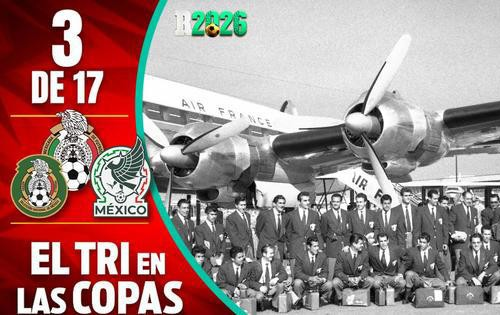

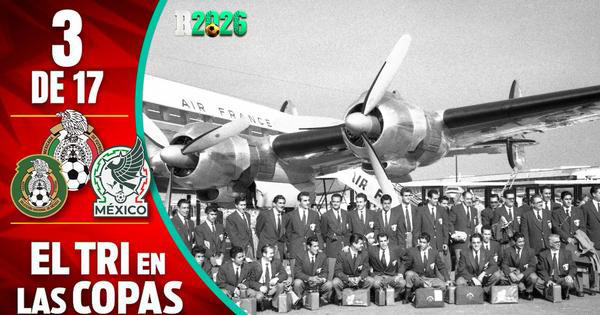
The Mexican National Team’s participation in the 1954 World Cup in Switzerland marked one of the most challenging chapters in the squad’s early history within the tournament. El Tri arrived on Swiss soil as one of the 16 qualified nations, during an era when international football was just beginning to establish itself as a global spectacle.
Mexico was placed in Group A alongside three international football powerhouses: Brazil, Yugoslavia, and France. The competition format at the time differed significantly from today’s, as each team played only two group-stage matches and did not face every opponent within its sector.
The Mexican squad made its debut against Brazil, one of the tournament’s most formidable teams. The match proved to be an absolute nightmare for El Tri; they were thoroughly outplayed by the South Americans and ultimately fell by a score of 5–0, starkly highlighting the immense gap in footballing quality that existed during that era.
Despite this harsh initial blow, Mexico attempted to bounce back in its second fixture against France. The national team displayed a much more competitive performance and managed to put up a fight for extended periods of the match, though they ultimately lost 3–2 in one of the closest contests the Mexican squad experienced during its early World Cup campaigns.
Who was the standout player?
One of El Tri’s most prominent players at that World Cup was Tomás Balcázar, a Mexican forward who managed to leave his mark despite the team’s early elimination. Balcázar scored one of Mexico’s two goals in the tournament during the match against France, thereby emerging as one of the national team’s key offensive figures.
With these results, the Mexican National Team concluded its campaign in last place in Group A, finishing with zero points and a goal difference of minus six. Furthermore, the team bowed out with no chance of advancing to the next round—a outcome that reflected the difficulties Mexican football faced in competing at the highest international level during that historical period.
Statistically, Mexico played two matches, lost both encounters, conceded eight goals, and scored only two. Although the results were far from positive, the 1954 World Cup in Switzerland stood as a pivotal experience in the historical growth of the Mexican National Team—a squad that, over the decades, would evolve to become a regular fixture and key contender in the World Cups.
Despite the adverse results, Mexico’s presence at Switzerland 1954 helped continue building international experience for future generations. Each World Cup contested represented a significant learning opportunity for a national team that was still striving to establish itself among the footballing elite.
Source: msn