
In a context of accelerated technological transformation and the redefinition of the State’s role in economic life, the debate on the digitalization of money has ceased to be merely technical and has become a profoundly constitutional discussion. The transition toward “zero cash” schemes in Mexico, driven by the narrative of modernization and efficiency, raises fundamental questions about the limits of public power versus individual autonomy, financial privacy, and institutional control.
Jurist José Alberto Sánchez Nava frames it in stark terms:
“The Glass Cage: Monetary Digitalization and the End of Citizen Autonomy”
On the threshold of what appears to be a radical reconfiguration of individual sovereignty, Mexico is moving toward a “zero cash” policy. Under the official narrative of modernization, Claudia Sheinbaum’s administration has outlined a roadmap so that, by 2026, sectors such as gas stations and toll booths operate exclusively in digital form.
Yet behind the promise of efficiency lies an unprecedented architecture of social control.
Total digitalization of money is not a neutral technological advance; it is the elimination of the last bastion of privacy: the anonymous transaction.
In an ecosystem where every peso has a digital trace, the State gains the ability to monitor, in real time, the habits and movements of every citizen. This transparency, however, is one‑sided.
While the citizen is placed under a fiscal microscope, the public apparatus sinks into growing opacity, marked by a history of systematic irregularities.
Rampant Corruption: The Double Standard of Oversight
The contradiction is alarming.
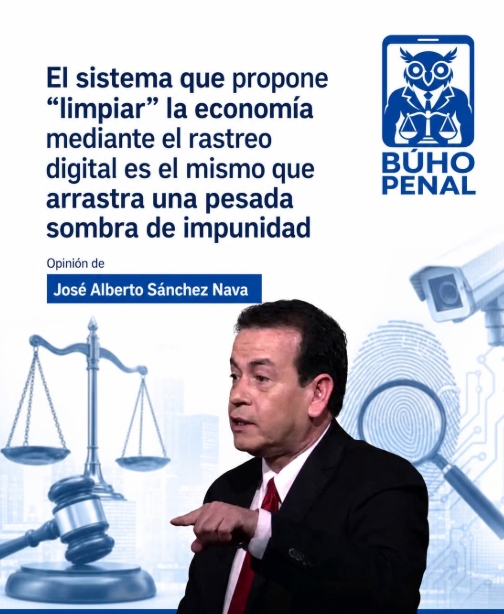
The system that proposes to “clean” the economy through digital tracking is the same one burdened by a heavy shadow of impunity:
- Million‑Dollar Irregularities: Flagship projects such as the Tren Maya closed 2025 with operating losses exceeding 3.5 billion pesos, along with legal proceedings for lack of transparency.
- Fiscal “Huachicol”: Illegal fuel import schemes involving high‑level officials have been documented, representing one of the largest corruption mechanisms in recent decades.
- Institutional Embezzlement: Cases like Segalmex, with irregularities amounting to billions of pesos, show that strict control is applied to citizens but not to the State’s own structures.
The Digital Hostage: Vulnerability and Cybersecurity
Adding to this panorama is a critical legal and technological vulnerability. With authorization for the Financial Intelligence Unit (UIF) to freeze accounts without a court order, the citizen’s “digital switch” is left in bureaucratic hands.
If cash disappears, blocking an account is not a procedure; it is instant civil death.
Moreover, Mexico’s financial system faces an unprecedented digital siege:
- Explosion of Cyberfraud: In 2026 alone, cyberfraud in Mexico has grown 84%, affecting more than 2.4 million people through identity and data theft.
- State Data Leaks: Databases from 25 public institutions, including SAT and IMSS, were recently leaked, exposing biometric and financial data of millions of Mexicans.
- System Losses: Losses from cyber incidents in the financial system have quintupled recently, proving that the infrastructure is not ready to sustain a 100% digital economy.
In a country with abysmal connectivity gaps, forcing this transition is not inclusion—it is a mechanism of economic submission. The path toward “zero cash” seems less an effort for public honesty and more a fence to ensure that no citizen operates beyond the reach of a State that refuses to account for its own resources.
Source: mexicodailypost