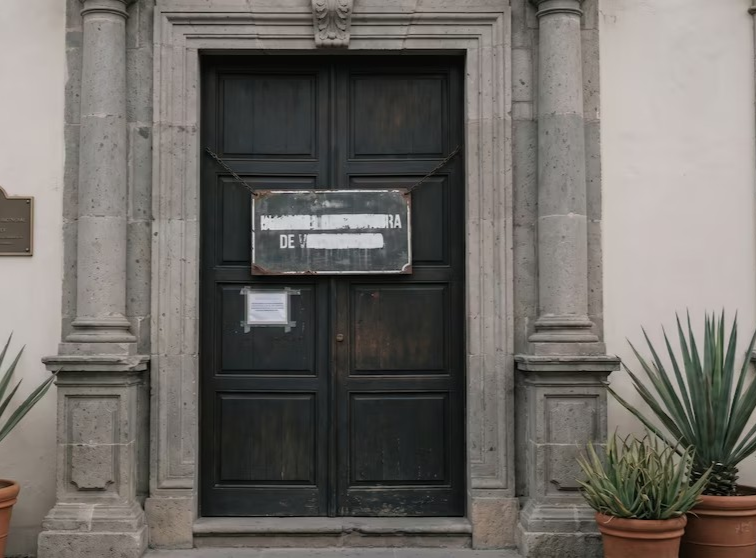

Structural Challenges Behind Low Museum Attendance in Mexico
Low attendance at Mexican museums should not be interpreted as a lack of cultural interest from citizens. Instead, it stems from much deeper, structural issues, according to Dr. Sara Baz Sánchez, an academic at the Universidad Iberoamericana in Mexico City.
The specialist stated that a lack of federal investment from the Ministry of Culture, combined with a decline in tax incentives and fragile private financing mechanisms, has directly impacted these cultural spaces.
For decades, museums operated through a combination of public funds, strong patronages (patronatos), and tax incentives that encouraged private capital investment. However, this framework has progressively weakened, affecting everything from basic maintenance to collection updates and the promotion of new exhibitions.
A Telling Contrast: Dr. Baz recalled the comprehensive renovation of the National Museum of Art (MUNAL) in the late 1990s, when the museum could afford to close entirely for a deep modernization—a scenario she considers practically unfeasible today due to budget constraints.
Rethinking the Role of Museums
The consequences of this financial strain go beyond fewer exhibitions or lack of innovation. They manifest in restricted services due to staff shortages, closed galleries, and reduced operating hours. Therefore, the debate over low attendance cannot simply focus on public interest; it must address these operational and budgetary limitations.
To counter this, Dr. Baz highlights several key strategies to transform museums into more accessible, vibrant spaces:
- From Passive to Active: Shift away from passive contemplation by encouraging workshops, panel discussions, artistic interventions, and participatory projects that foster a sense of community belonging.
- Digital Integration: Adapt to the social media era through short-form content, hybrid visits, and Artificial Intelligence (AI) tools. However, this requires sustained investment in digitalization and technological infrastructure.
- Redefining Success: Move away from judging a museum’s success solely by foot traffic. It is essential to incorporate qualitative evaluations that measure the emotional experience and social impact on visitors.
Iconic Museums Keeping Mexico City’s Culture Alive
Despite these challenges, Mexico City remains one of the world’s leading capitals in terms of museum density and a global benchmark for cultural tourism. Some of its most emblematic venues include:
| Museum | Key Highlight |
| National Museum of Anthropology | Houses the most important pre-Hispanic collection in Mesoamerica, including the Aztec Sun Stone. |
| Templo Mayor Museum | Preserves archaeological remains and artifacts from ancient Tenochtitlan, such as the Coyolxauhqui monolith. |
| National History Museum | Located in the Chapultepec Castle; chronicles Mexico’s history from the Spanish Conquest to the Revolution. |
| Palace of Fine Arts Museum | Famous for its Art Deco architecture and iconic murals by Rivera, Siqueiros, Orozco, and Tamayo. |
| National Museum of Art (MUNAL) | Displays the evolution of Mexican art from the viceroyalty era to the 20th century. |
| Frida Kahlo Museum (“The Blue House”) | Offers an intimate look into the personal life and artwork of the painter in Coyoacán. |
| Soumaya Museum | Holds one of Latin America’s largest private art collections, featuring works by Rodin, Dalí, and European masters. |
| Cineteca Nacional | Complements the cultural landscape through arthouse cinema, specialized exhibitions, and film preservation. |
Source: infobae