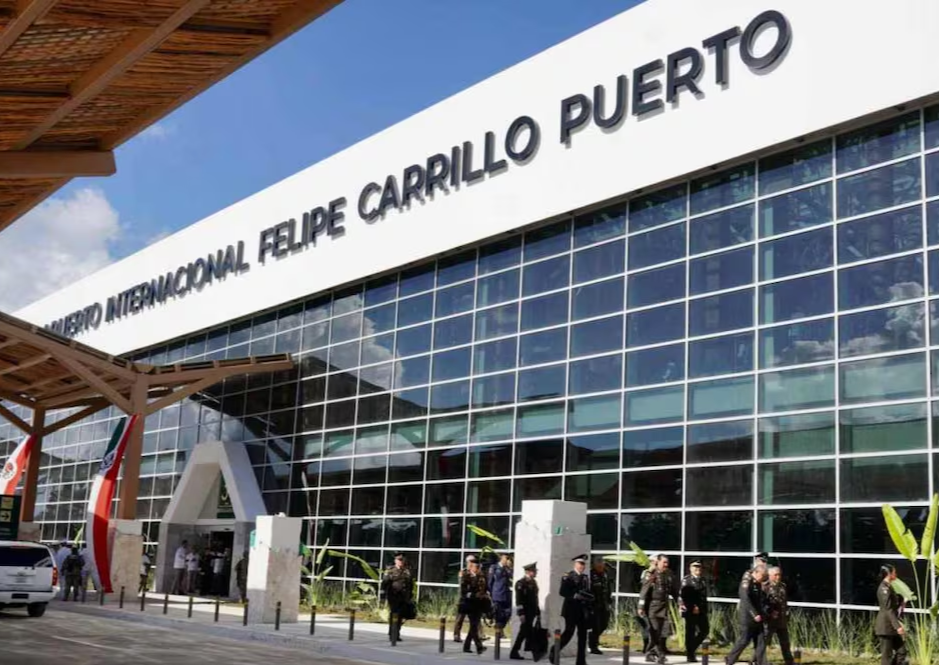

The Tulum International Airport began operations in December 2023 with high expectations of attracting tourists to the southern area of the Riviera Maya and even competing with the Cancún International Airport.
However, after two and a half years of operation, the airport is reporting a significant decline in passenger traffic, airlines, and destinations due to the tourism crisis affecting Tulum, according to specialists.
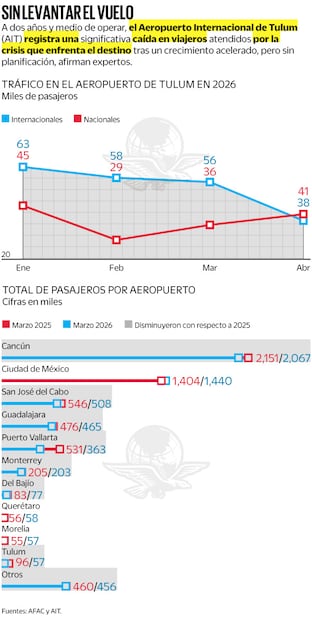
In 2024, the airport transported 1.233 million passengers; in 2025, 1.244 million; and from January to April 2026, it handled 366,000 passengers, according to airport figures.
However, during the first quarter of 2026, it received 178,000 international travelers, 34% fewer than during the first quarter of 2025, according to the Agencia Federal de Aviación Civil (AFAC).
This represents 90,800 fewer international passengers, especially since January, February, and March are peak travel months for Canadians escaping winter weather.
Regarding domestic passengers, AFAC reported 36,000 users, 25% fewer than in the first three months of 2025.
According to aviation consultant Fabricio Cojuc, in June 2024 foreign airlines offered flights from Tulum to 12 destinations, including Chicago, Los Angeles, New York, Atlanta, Dallas, Houston, Miami, and Panama City.
Today, only four international destinations remain — Atlanta, Dallas, Houston, and Miami — operated by the American airlines American Airlines, Delta Air Lines, and United Airlines.
“Eight destinations were lost, and from 10 daily departures two years ago, there are now only three. New York lost connections to both John F. Kennedy and Newark airports,” he explained.
Several foreign airlines have already suspended flights to Tulum, including Avianca, Copa Airlines, JetBlue, and Volaris Costa Rica.
Cojuc believes the low interest in operating flights to Tulum is because airlines were forced to maintain dual operations in the region — both Cancún and Tulum — and needed stronger demand in Tulum to justify doing so.
“The expectation was that a large amount of traffic would shift toward the southern Riviera Maya and generate enough demand. At first there was a bubble, a wave of excitement, but gradually the numbers failed to meet expectations. The airlines’ first step was reducing schedules, cutting seats, and prioritizing Cancún,” he said.
He also noted that Tulum lacks the ground transportation system available in Cancún.
“There have been complaints that taxi and bus services — since Uber does not operate in Tulum — are very expensive, and transportation from the airport to the hotel zone is costly, unpredictable, and offers limited service options, unlike Cancún,” he added.
Tourism Crisis
Karim Goudiaby, CEO of Iad México and an expert in real estate investments, explained that Tulum’s decline is mainly due to three factors: sargassum on the beaches, hotels with limited infrastructure, and insecurity.
“Tulum experienced an oversupply of hotel rooms and an overestimated dependence on digital nomads, but one of the biggest causes is the sargassum. Cancún still offers a world-class hotel experience even when there is sargassum, but Tulum has smaller hotels that may offer amenities but not all-inclusive services like those in Cancún or Playa del Carmen.
“The appeal of Tulum is walking along endless white-sand beaches, and it is not the same experience with brown water or poorly maintained beaches, because hotel owners in Tulum do not have the resources to constantly clean the coastline,” he explained.
In addition, security incidents have negatively impacted tourism, especially among North American visitors who hear about shootings in Tulum and decide not to travel there.
“In the end, the destination becomes less competitive if you have to pay for expensive accommodations, expensive transportation, and eventually expensive meals,” he said.
Cojuc considers it likely that Tulum will handle around 700,000 passengers this year, compared to 1.2 million last year — “a very sharp decline.”
His forecast is based on the fact that seat availability for May dropped by 60% compared to May 2025, while the high winter season — when Canadian airlines usually resume operations — is still months away.
Goudiaby remains confident that the destination can recover, but only with support from authorities and the private sector.
“The Nascar race held at the Tulum airport was a way to attract a different type of event beyond music festivals. The destination has quality, but the major risk is insecurity. If it becomes perceived as unsafe, recovery will be difficult,” he concluded.
Source: eluniversal