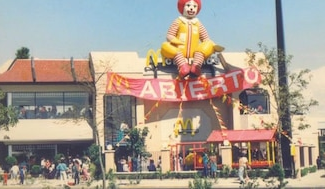

Opened on October 29, 1985, in Pedregal, the chain’s first restaurant marked the beginning of a cherished story for thousands of Mexican families. Since then, the company’s commitment has been to offer quality, innovation, and opportunities that contribute to the country’s development.
The initial expansion was rapid and strategic: after the opening in Pedregal, it was followed by Gonzalitos (Monterrey) on December 16, 1985, Polanco (Mexico City) on June 29, 1986, Satélite (State of Mexico) on June 14, 1988, and Zona Rosa (Mexico City) on June 6, 1989. This rapid succession of openings solidified McDonald’s as a leader in the national restaurant landscape.
McDonald’s consolidation in the country was achieved not only through its geographic expansion but also through the constant evolution of its offerings. Its trajectory has involved continuous adaptation to the needs of the Mexican market, helping to shape the restaurant landscape and the consumer experience over the decades.
Events such as birthdays, weekend family gatherings, post-game visits, or get-togethers with friends have found a meeting point at McDonald’s. The McDonald’s experience has transcended mere entertainment, becoming a space for socializing and creating shared moments.
From the excitement of children opening their Happy Meal to adults seeking to enjoy the flavors and menu options, McDonald’s path in Mexico goes hand in hand with adapting to new generations.
McDonald’s Mexico has evolved to become an agent of social and economic change. The company has been a pioneer in introducing innovative practices, such as hourly pay and flexible employment models, the implementation of kitchen systems that prepare food on demand, and the disclosure of calorie information on its menus.
Their commitment to society is demonstrated through various initiatives. These include reducing plastic in their operations and donating to the Ronald McDonald Children’s Foundation, which has supported more than 126,000 families since its establishment in Mexico in 1997.
ALTERNATIVE TEXT:
For more than two decades, they have proudly celebrated Big Day, formerly known as McHappy Day. This is a global social responsibility initiative that donates 100% of the proceeds from Big Mac sales on a single day to support causes that make a real impact.
In response to technological advancements, McDonald’s plans to complete the digitization of all its restaurants by 2027. Currently, more than 120 restaurants already operate with interactive menus, drive-thru service, and improvements to their mobile app.
Sustainability, community, and the passage of time
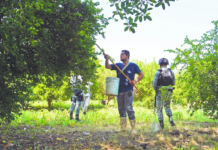
The brand also has a strong connection to the Mexican community, as 70% of its ingredients come from national suppliers. Behind every hamburger is a network of farmers and ranchers spread across several states: Michoacán, Sinaloa, Chihuahua, Guanajuato, Hidalgo, Oaxaca, Chiapas, and Veracruz, who bring the best of Mexico to McDonald’s kitchens.
Most of McDonald’s Mexico’s ingredients come from national producers. The brand has become a part of everyday life and a source of memories for generations of Mexicans. McDonald’s social commitment is evident in its donations and community support since 1997. (Courtesy of McDonald’s)
Who hasn’t enjoyed a hamburger at McDonald’s? Who hasn’t had good times there? How many children have enjoyed the surprise inside a Happy Meal?
In its 40-year history, McDonald’s has established itself as a landmark in the lives of different generations and as a brand committed to innovation, social impact, and community.

Source: infobae