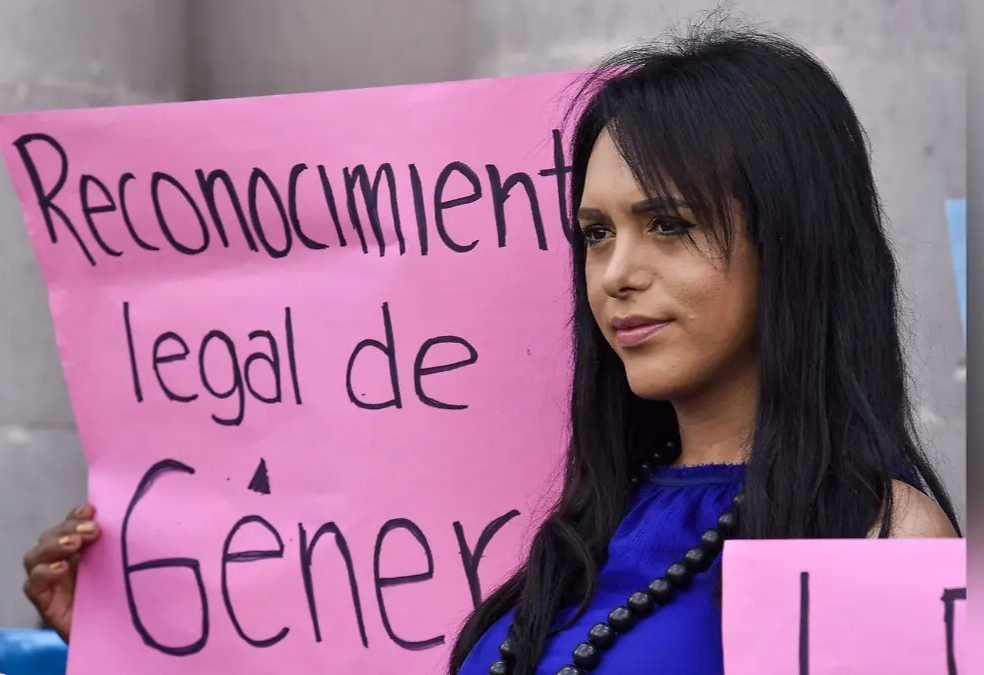

In the country, five out of 32 entities still do not allow individuals to modify their birth certificates according to their gender identity through an administrative process and without the need for a legal proceeding. These are the states of Querétaro, Chiapas, Tabasco, Tamaulipas, and Durango. The first is the most recent case, as Governor Mauricio Kuri González struck down the Gender Identity Law approved on April 30 by the state Congress, considering that its content represents a risk to the development of children and adolescents.
The decision was announced through a message shared on social media, where the mandate holder established a stance against the reform that sought to allow the modification of name and gender on birth certificates through an administrative procedure.
“I am vetoing the so-called Gender Identity Law, in accordance with my constitutional powers. This law, driven by the radical left, allows children and adolescents to change their sex on their birth certificate based on their self-perception. It is an ideological issue that they want to impose on our society. And no, I am not going to allow it,” he asserted. The head of the Executive Branch maintained that the veto responds to his responsibility to protect Querétaro families, particularly minors, whom he placed as a priority of his administration. “That is my conviction and that is my obligation. I received a mandate from society to protect Querétaro families and I am going to fulfill it (…) Do not mess with our children. Let’s think about those we must care for the most,” he expressed.
Iniciativas pausadas
In Chiapas, legally changing one’s name and gender on official documents remains a complex process for individuals who must resort to lawsuits and injunctions (amparos) due to the lack of a gender identity law. This situation, which has been stalled in the local Congress for more than ten years, represents a serious backlog in human rights, alert LGBT+ collectives.
Meanwhile, in the state of Tabasco, members of the LGBT+ community issued a statement last Tuesday, May 19, to request immediate compliance with the ruling of the Supreme Court of Justice of the Nation (SCJN) regarding the recognition of sexual and gender identity. According to the demonstrators, this legal struggle does not seek to obtain special concessions, but rather the harmonization of basic civil rights that already operate in a large part of the Republic.
In Tamaulipas, various collectives have demanded that the Gender Identity Law be approved without political overtones and brought immediately to a vote in the local Congress; currently, there are more than 650 trans people who have resorted to injunctions (amparos) to enforce their rights. The president of the organization Tamaulipas Diversidad VHIDA Trans, Ana Karen López Quintana, commented that there are currently two initiatives under analysis: the one presented by Congresswoman Cynthia Lizabeth Jaime Castillo, supported by representatives of the trans community, and a second proposal promoted by Congresswoman Lucero Deosdady Martínez López, through the Gender Equity and Diversity Commission.
For its part, in the state of Durango, activists have denounced that the absence of a Gender Identity Law represents a scenario of violence, discrimination, and violation of human rights for trans and non-binary people.
Postura de la SCJN
The Supreme Court has established that gender identity is a fundamental human right protected by the Constitution. In December 2025, the Court declared invalid a provision of the Civil Code of Campeche that required having a voting credential to be able to request a new birth certificate for the recognition of self-perceived gender identity and name change. The Plenary concluded that this requirement imposed an unjustified barrier that discriminatorily excluded children and adolescents, whose right to live according to their identity cannot depend on a document to which, due to their age, they cannot access. According to the organization, this restriction violated their rights to equality and non-discrimination, the free development of personality, and gender identity, by using age as a suspect category without a valid constitutional justification. The Court highlighted that gender identity forms part of the most intimate sphere of the person and is linked to their dignity and autonomy, meaning the State has the obligation to regulate accessible and safe procedures so that all people, including children and adolescents, can adapt their identity documents according to their self-perceived identity.

Source: oem