
The phenomenon recorded on May 25 in the community of El Salitre, Michoacán, does not correspond to the birth of a volcano or a geyser. Instead, it consists of hydrothermal manifestations associated with the circulation of hot fluids underground, according to specialists from UNAM and the Michoacán University after conducting a field investigation.
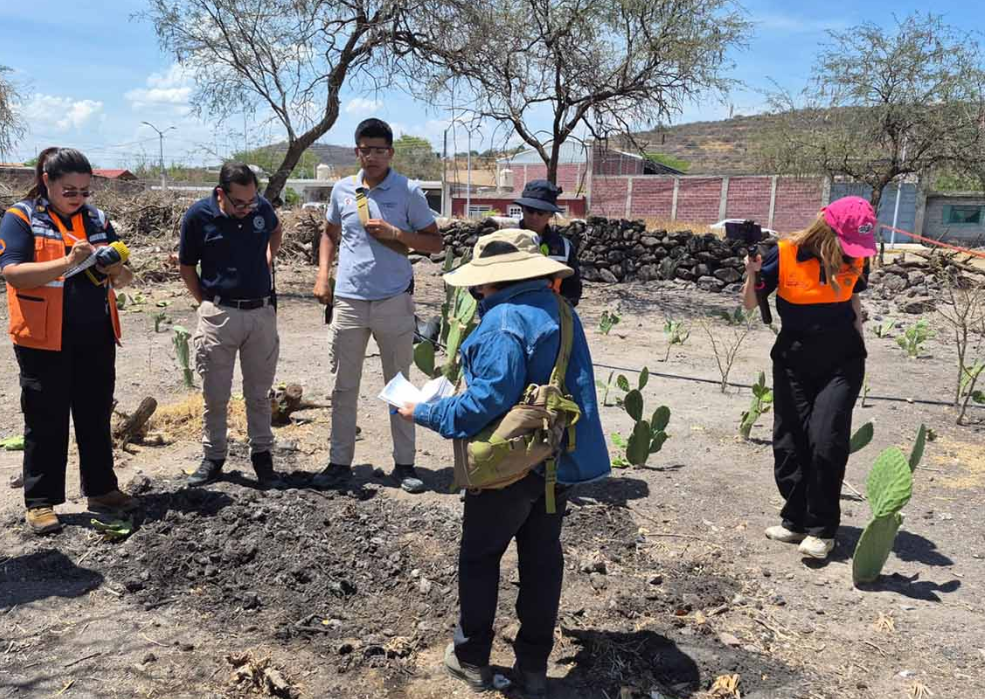
Dr. Ruth Esther Villanueva Estrada, researcher at the Michoacán Unit of UNAM’s Institute of Geophysics and a specialist in geothermal studies, explained that a team of researchers visited the area in coordination with personnel from the National Center for Disaster Prevention (CENAPRED) and civil protection authorities at the municipal, state, and federal levels.
“We visited the area on May 27 to collect samples and identify the origin of the phenomenon. The evidence indicates that these are shallow hydrothermal vents and wells related to the circulation of hot fluids,” said Dr. Villanueva.
During the inspection, researchers observed emissions of steam, hot water, gases, and mud rising through fractures in the subsurface. According to Villanueva Estrada, these characteristics are incompatible with a geyser, since geysers intermittently expel hot water and steam due to pressure buildup in underground conduits and cavities.
“There is also no evidence of magma rising toward the surface, so we are not witnessing the birth of a volcano,” she emphasized.
Scientific Evidence
During the field visit, specialists identified 11 mud pools: three inside the home where the phenomenon was first reported and eight more in the adjacent property.
They also recorded temperatures of approximately 86°C (187°F) in some locations, along with low concentrations of gases such as ammonia (NH₃), carbon dioxide (CO₂), and hydrogen sulfide (H₂S).

The community of El Salitre is located on the Ixtlán Fault, a geological structure that facilitates the circulation and upward movement of hot fluids from deep underground to the surface. Similar activity was observed in 2017 when several vents appeared aligned with this fault system.
The 11 pools that emerged on May 25 show a similar distribution pattern, reinforcing the interpretation that this is a hydrothermal process linked to the region’s geological dynamics.
A Region with a Long Geothermal History
The specialist explained that Michoacán is part of the Trans-Mexican Volcanic Belt, one of the most geologically active regions in the country.
Ixtlán de los Hervores has long been recognized for its geothermal activity. Scientific records dating back to 1906 document hundreds of hydrothermal manifestations between Ixtlán and El Salitre.
During the 1950s, Mexico’s Federal Electricity Commission (CFE) drilled exploratory wells in the area. One of these wells gave rise to the well-known “Ixtlán Geyser,” a tourist attraction that displayed intermittent activity for decades.
Geological, geophysical, and geochemical studies have identified underground temperatures ranging from 125°C to 225°C, as well as tectonic structures that facilitate the ascent of hot fluids from depth.
There are also recent records of significant hydrothermal activity in El Salitre, including mud and hot-water eruptions documented in previous years.

Recommendations for the Public
Although the phenomenon has generated public attention and misinformation, specialists stress that the area has a long history of hydrothermal activity and that similar events may occur again. Therefore, communities should have contingency plans in place.
Recommended safety measures include:
- Monitor the ground for the appearance of cracks or surface swelling.
- Do not approach openings or areas emitting steam.
- Avoid walking on cracked or wet ground that may have high temperatures.
- Do not insert objects into the vents or pools.
- Keep children and pets away from affected areas.
- Notify local authorities if similar phenomena are observed.
- Follow only official information issued by Civil Protection and other competent authorities.
According to the researchers, this phenomenon represents a valuable opportunity to better understand Mexico’s active hydrothermal systems and improve the identification of potential risk zones for communities located in these regions.
The field team included Dr. Ruth Esther Villanueva Estrada (Institute of Geophysics, UNAM Michoacán Unit), Dr. Ana Teresa Mendoza Rosas (Researcher at the Michoacán University of San Nicolás de Hidalgo), Dr. Gemma Gómez Castillo (Institute of Geophysics, UNAM Michoacán Unit), and Dr. Erika Aline Solano Hernández (National School of Higher Studies, Morelia).
Source: unamglobal