
The Secretariat of Health reported that, should a suspected case of Ebola virus disease arise within national territory, the individual will be admitted to the National Center for Research and Care for Burn Patients (CENIAQ), which is part of the National Institute of Rehabilitation (INR).
At this facility, clinical evaluation, initial care, sample collection, and the subsequent shipment of samples to the Institute of Epidemiological Diagnosis and Reference (Indre) for analysis will be carried out.
To date, the federal agency has affirmed that no individuals with the disease have been identified in Mexico and noted that the risk of this occurring is low.
Nevertheless, the Secretariat issued an epidemiological alert detailing the actions to be followed upon the identification of a person suspected of being infected with the Bundibugyo Ebola virus.
What symptoms must a person exhibit to be considered a suspected case of Ebola?
According to the epidemiological alert, any person—regardless of age or sex—who presents with a sudden fever of 38.6 degrees Celsius and one or more of the following symptoms should be considered suspected of infection:
A sensation of fatigue or physical weakness
Vomiting
Diarrhea
Loss of appetite
Headache or abdominal pain
Difficulty or inability to swallow food
Impairment of kidney or liver function
Cough
Bleeding
In addition to these symptoms, the Secretariat established a fundamental epidemiological criterion: suspicion must focus on individuals who, during the 21 days prior to the onset of signs and symptoms, have been in areas with active Ebola transmission or have had contact with a confirmed case of the disease.
The document was issued for implementation in health centers, family medicine units, general and high-specialty hospitals, Hospital Epidemiological Surveillance Units, and all members of the National Network of Public Health Laboratories.
The objective of this directive is to ensure that personnel across all these institutions are familiar with the protocol to be followed and are able to activate response mechanisms immediately. What is the international context of the Ebola outbreak?
The Secretariat of Health noted that the World Health Organization (WHO) issued an alert regarding Ebola on May 5, following an outbreak that emerged in the Democratic Republic of the Congo.
As of the Wednesday prior to the issuance of the alert, health authorities in that country had reported 906 suspected cases, 233 of whom had died.
How is the Ebola virus transmitted?
The Secretariat of Health (SSa) explained that the infection is transmitted through direct or indirect contact with the blood, bodily fluids, or secretions of individuals who are infected with the virus or who have died from it.
These fluids include urine, saliva, vomit, feces, semen, and vaginal fluids. The agency emphasized that transmission can also occur through contact with the secretions of a living person carrying the virus.
Is there a treatment or vaccine for Ebola?
One of the major challenges facing health systems, the SSa warned, is that there is currently no specific antiviral treatment nor are there any approved vaccines to prevent the disease.
This lack of pharmacological tools makes the timely detection and immediate isolation of suspected cases absolutely essential.
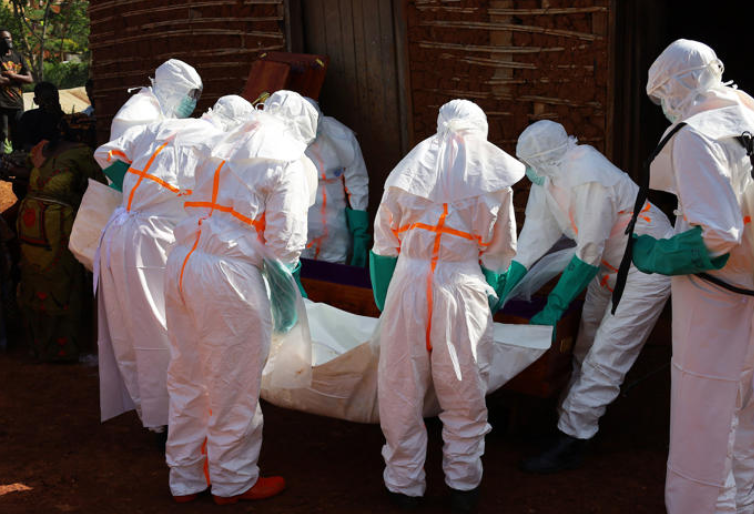
The federal agency established precise guidelines to protect healthcare personnel. In the event of a suspected case presenting at any medical facility, healthcare professionals must perform only a “minimal clinical assessment without physical contact” and must wear full personal protective equipment at all times; this equipment consists of gloves, a gown, a high-efficiency respirator (N95, KN95, or higher), and impermeable eye and body protection.
The suspected case must be reported immediately to the Epidemiological and Health Intelligence Unit of the Directorate General of Epidemiology.
Once the notification has been made, the patient will be transferred to the INR for admission to the CENIAQ.
Regarding the healthcare personnel involved in the patient’s care, the contact tracing protocol will be applied, which includes preventive isolation as a containment measure.
Source: msn