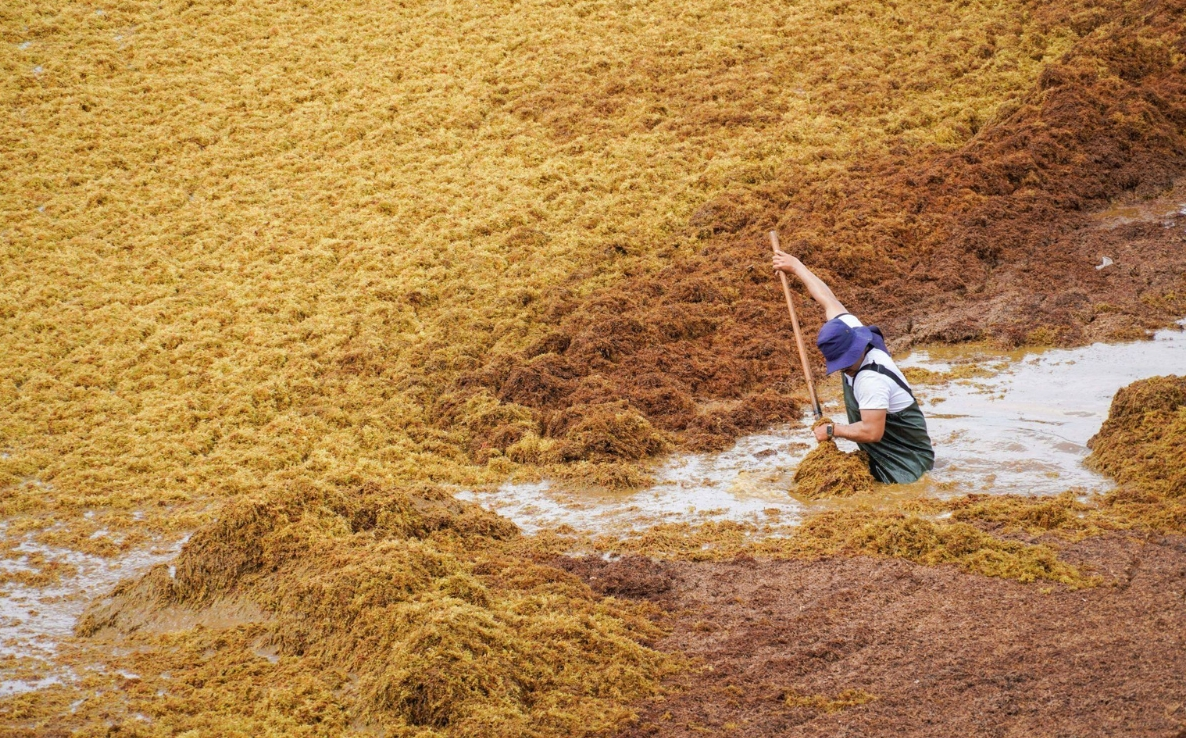

The Mexican Caribbean could face an intense sargassum season in 2026. Researchers from the National Autonomous University of Mexico (UNAM) estimate that up to 40 million metric tons of sargassum biomass could accumulate in the Atlantic Ocean this year, a figure higher than that recorded in 2025.
Although specialists warn that it is not yet possible to determine how much will reach the coasts of Quintana Roo, they agree that the peak months for sargassum influx are usually between June and September.
According to Jorge Prado Molina, coordinator of the National Laboratory for Earth Observation (LANOT) at UNAM’s Institute of Geography, monitoring models indicate that 2026 could see one of the highest concentrations of sargassum observed in the Atlantic in recent years.
The university researcher explained that the laboratory has dedicated the last six years to satellite monitoring of these macroalgae in order to anticipate their arrival in the Mexican Caribbean and reduce their impact on reefs and beaches.
The concern coincides with reports from the Mexican Navy (Semar), which, as of April 17, counted 21,685 tons of sargassum in Mexican Caribbean waters and 290,976 tons in the central-western Atlantic.
Specialists from the Reef Systems Academic Unit of the Institute of Marine Sciences and Limnology (ICML) at the National Autonomous University of Mexico (UNAM) indicated that the high biomass observed in the Atlantic suggests a year of high activity, although the exact amount that will reach Mexican shores will depend on factors such as ocean currents, winds, and atmospheric conditions.
Rosa Elisa Rodríguez Martínez, an academic technician at ICML, explained that the behavior of sargassum remains difficult to predict due to ocean dynamics. However, she noted that historically, years with high concentrations in the Atlantic tend to result in larger influxes for the Mexican Caribbean.
The specialist emphasized that the months of June, July, August, and September typically represent the period of greatest intensity for this phenomenon. However, he clarified that a high concentration in the open ocean does not imply that all of that biomass will reach the beaches of Quintana Roo.
For his part, researcher Juan Pablo D’Olivo Cordero indicated that monitoring carried out in the eastern Atlantic shows a considerable accumulation of biomass, comparable to that observed during periods of heavy sargassum influx recorded in previous years.
LANOT uses images from the European Sentinel-2 satellite, updated every five days, to identify and track sargassum blooms from the Atlantic to the Caribbean. This information is complemented by current, wind, and wave models that allow for estimating migration routes and potential impact zones.
In addition, researchers from ICML conduct field verifications using drones, floating GPS devices, and spectroradiometers to validate the data obtained from space.
Currently, containment barriers are installed at various points in Quintana Roo. However, Prado Molina pointed out that these structures have limitations, since sargassum can sink during its decomposition and pass underneath them before reaching the coast.
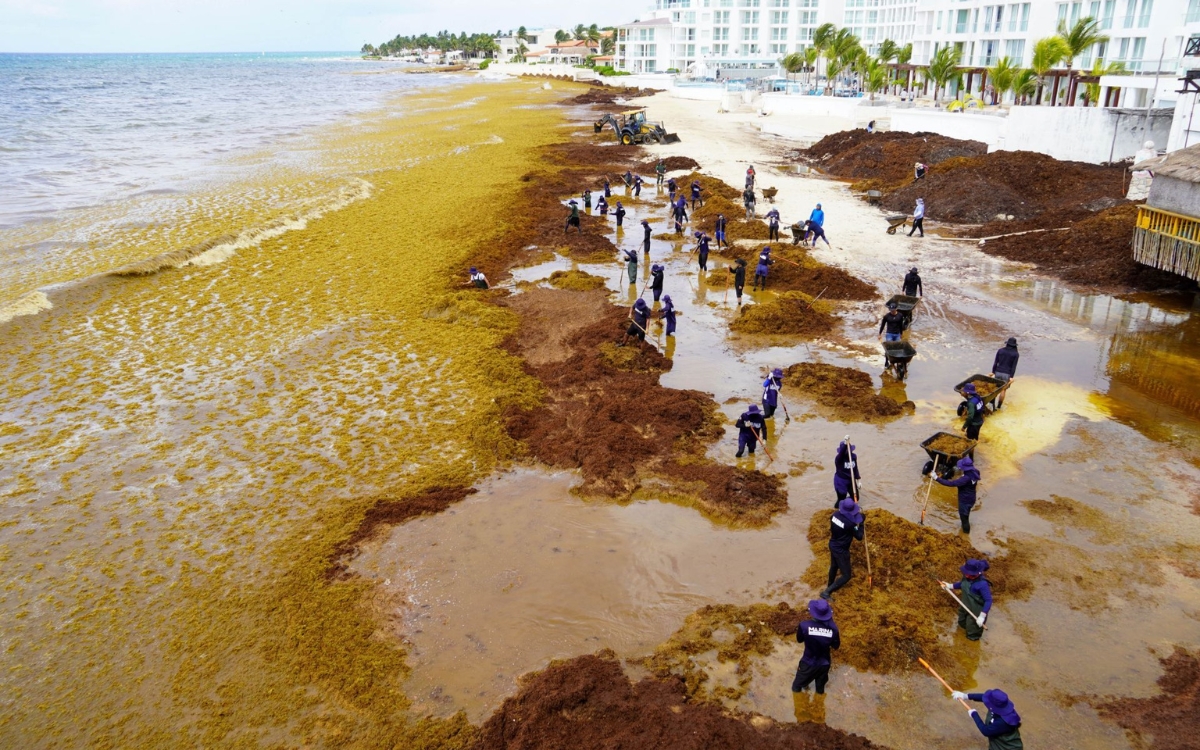
Researchers noted that the massive accumulation of sargassum can alter the quality of coastal waters due to decomposition processes that generate leachate and release nutrients.
According to Rodríguez Martínez, this phenomenon favors the growth of algae that compete with corals and can affect ecosystems such as reefs, mangroves, seagrass beds, and coastal lagoons.
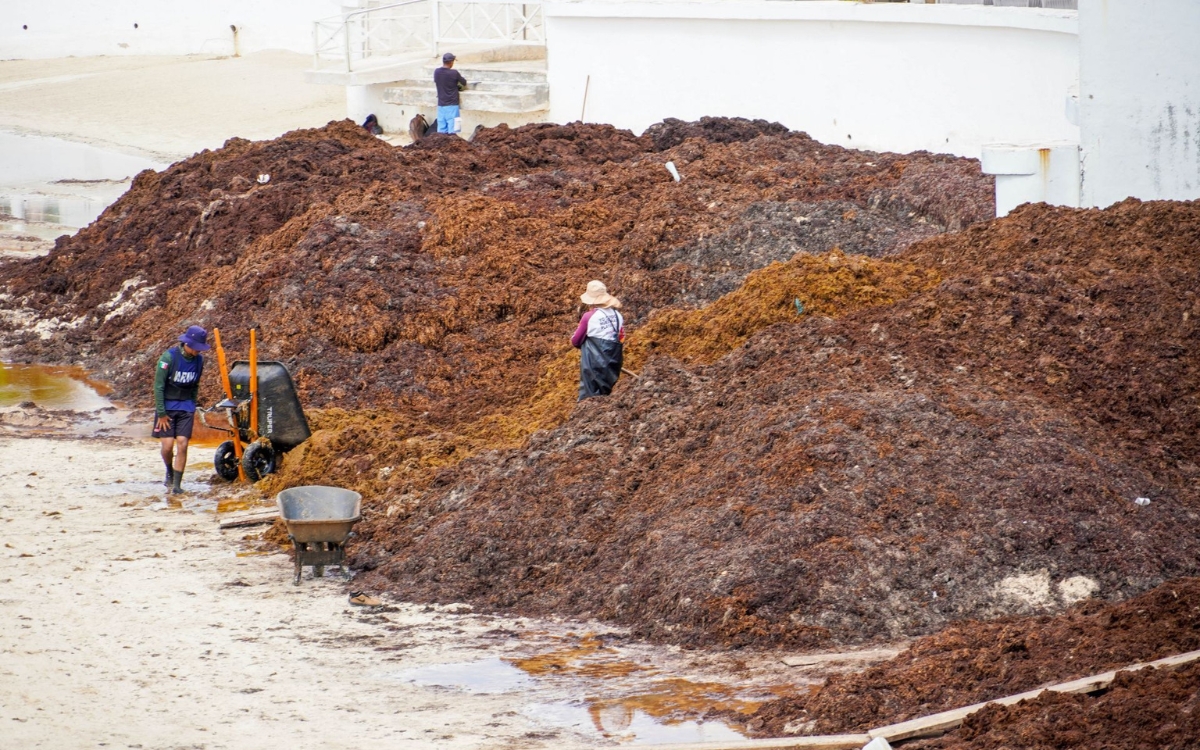
The academic also reminded that sargassum can concentrate elements such as arsenic, mercury, and cadmium present in the ocean, which hinders its use and necessitates controlled disposal to avoid the risk of aquifer contamination.
Specialists also link the growth of the phenomenon to factors associated with climate change, ocean warming, and the increase in nutrients from human activities and insufficiently treated wastewater.
While cleanup efforts continue on beaches in Quintana Roo, such as Playa del Carmen, the scientific community is maintaining constant monitoring of the large masses of sargassum moving across the Atlantic. Although uncertainty remains regarding the final volume that will reach Mexican shores, researchers agree that the period between June and September will be crucial for assessing the magnitude of the 2026 season.
Source: aristeguinoticias