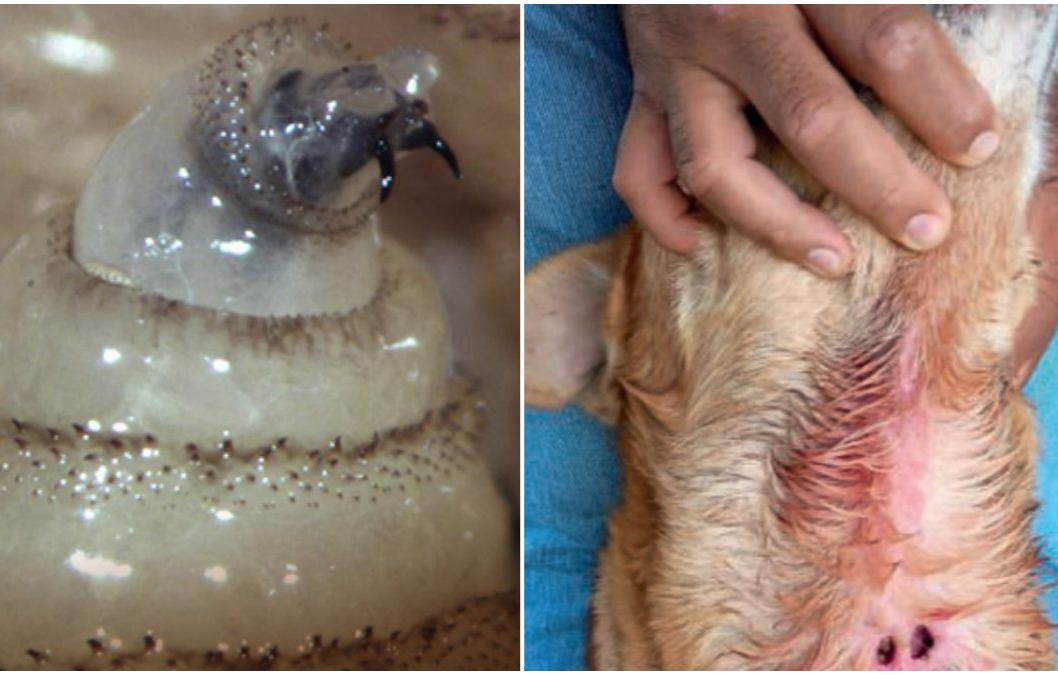

The American Veterinary Medical Association (AVMA) has issued a travel alert for pets following the detection of New World screwworm cases in Texas, United States.
According to the AVMA, due to the detection of screwworm in U.S. territory, exports of the following species from the United States to Mexico have been suspended:
- Cattle (slaughter and breeding)
- Wild ruminants (non-bovine)
- Horses (slaughter, breeding/work, and sport/show/transport)
- Sheep and goats (slaughter and breeding)
- Companion dogs
- Pigs (breeding)
- Ferrets (commercial and pets)
- Songbirds, ornamental birds, and birds of prey (commercial and pets)
Returning to the United States with your dog? Authorities require certificates
The AVMA explained that dogs returning to the United States after traveling to Mexico must meet several requirements, including a certificate signed by a certified veterinarian confirming that the animal is free of Cochliomyia hominivorax larvae.
“For dogs traveling to the United States from Mexico, the required certification of freedom from New World screwworm may be issued by a trained clinical veterinarian,” explained the Animal and Plant Health Inspection Service (APHIS).
The agency also provided a list of authorized veterinarians in Mexico who can issue the certificate.
The document must state that:
- The dog was examined within five days prior to its arrival in the United States.
- The animal is free of screwworm larvae.
- If the animal had been infested, it was quarantined and received treatment.
Traveling to Mexico with your dog or cat?
The AVMA noted that a health certificate is no longer required for dogs and cats entering Mexico. However, animals will be inspected by Mexico’s National Service for Agrifood Health, Safety and Quality (Senasica) upon arrival.
Owners traveling to Mexico with dogs or cats must comply with the following requirements:
- Pets must be transported in clean carriers.
- Travelers must report to the Agricultural Health Inspection Office (OISA) and contact Senasica personnel.
Authorities will verify that the animals:
- Show no signs of contagious infectious diseases.
- Are free of ectoparasites.
- Do not have fresh wounds or wounds that are still healing.
Symptoms of screwworm myiasis in pets
Senasica explained that several signs may indicate the presence of this parasite, which originates from the fly Cochliomyia hominivorax.
The agency emphasized that any wound should be cleaned and treated properly, as the fly lays its eggs in open wounds, mucous membranes such as the nose, mouth, or genitals, or in natural body cavities.
Possible signs include:
- Bloody discharge
- Maggots present in a wound
- Wounds that do not heal
- A sensation of movement in a wound or mucous membrane
- Lesions or sores that worsen or fail to heal
- Bleeding or foul odor from open wounds
Dogs are the second most affected species by screwworm myiasis in Mexico
Dogs rank as the second most affected species by New World screwworm (NWS) in Mexico, accounting for 15.5% of all recorded cases, according to Senasica.
Screwworm can affect mammals such as dogs and cats, as well as humans. The larvae cause a parasitic infection known as myiasis.
According to the NWS Progress Bulletin, 16,489 cases have been confirmed, of which 2,554 involved dogs. The figures cover the period between November 21, 2024, and February 28, 2026.
“The canine species has been highly significant, since out of a total of 16,489 positive cases, 15.5% correspond to this species,” placing dogs in second place among the most affected species.
How can screwworm spread?
- Fly movement: Adult flies can travel up to 290 kilometers (180 miles) in one week.
- Movement of infested animals: Larvae remain protected inside wounds, allowing them to spread over long distances.
- Improper transportation: Vehicles that are not properly cleaned can harbor larvae.
- Tourism in endemic areas: People returning with infested wounds may introduce the parasite into new regions.
What is myiasis and how does it occur?
Myiasis occurs when the fly Cochliomyia hominivorax lays eggs in open wounds, mucous membranes such as the nose, mouth, or genitals, or natural body cavities.
Between 12 and 24 hours later, the larvae hatch and remain in the wound for approximately 5 to 8 days.
During this period, the larvae feed on living tissue, which can rapidly worsen injuries.
The complete life cycle lasts about 21 days, enabling rapid reproduction in warm and humid climates.
What does the screwworm fly look like?
Cochliomyia hominivorax was first described in 1858 by French physician Charles Coquerel.
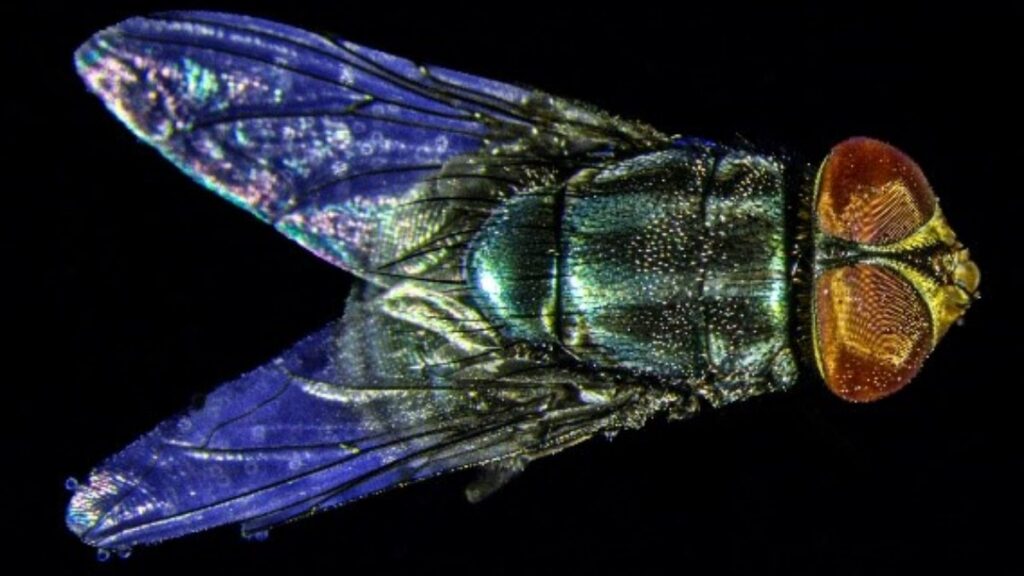
The screwworm fly measures between 8 and 10 millimeters in length. It has a metallic blue body with greenish reflections and reddish eyes. It also has three black stripes on its thorax and a rounded, hairy abdomen.
Unlike other species in the same genus, it does not feed on dead tissue. Instead, it requires living flesh to survive, according to the Faculty of Veterinary Medicine and Animal Science of the National Autonomous University of Mexico (UNAM).
Females can lay up to 3,000 eggs on the dry edges of wounds or areas containing coagulated blood.
What does the screwworm larva look like?
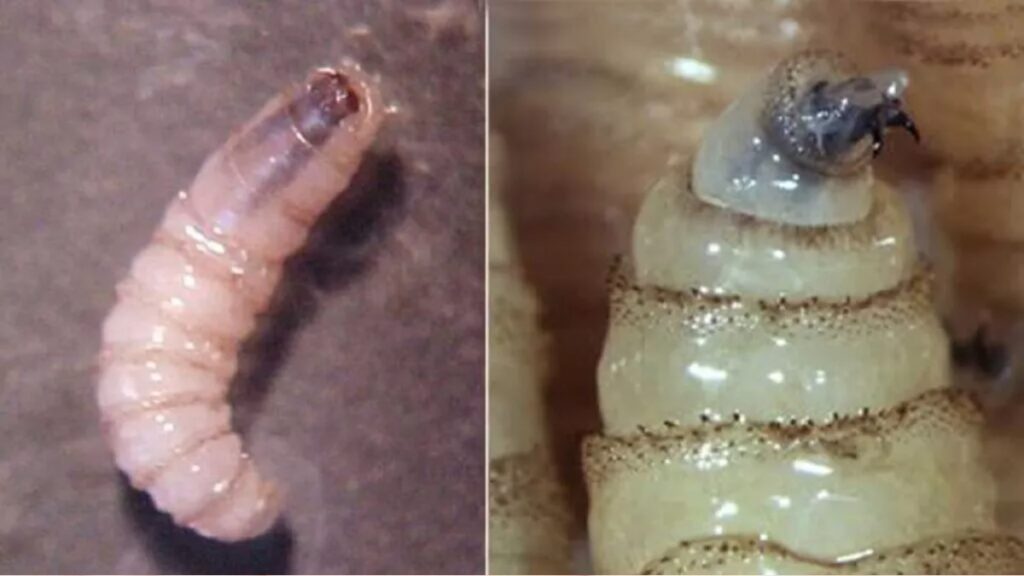
The larva has a whitish, elongated appearance, and its screw-like shape is the origin of its English name: screwworm.
The larvae hatch in less than 24 hours and immediately begin feeding on the host’s living tissue using specialized mouth hooks, according to UNAM’s Faculty of Veterinary Medicine and Animal Science.
Source: unotv