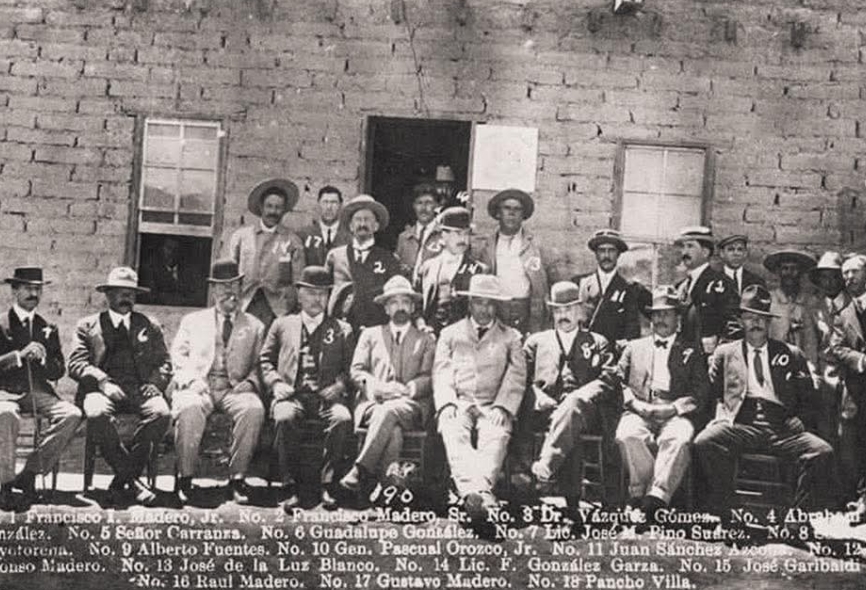

Francisco I. Madero González was a member of a family from Coahuila that had taken advantage of the peace and economic progress of the Porfiriato to accumulate enormous wealth. His grandfather, Evaristo Madero, had been Governor of Coahuila and was the owner or shareholder of large agricultural and livestock estates, wineries, textile factories, oil and soap factories, wheat mills, sawmills, banks, mines, guayule-processing plants, metallurgical companies, and many other businesses.
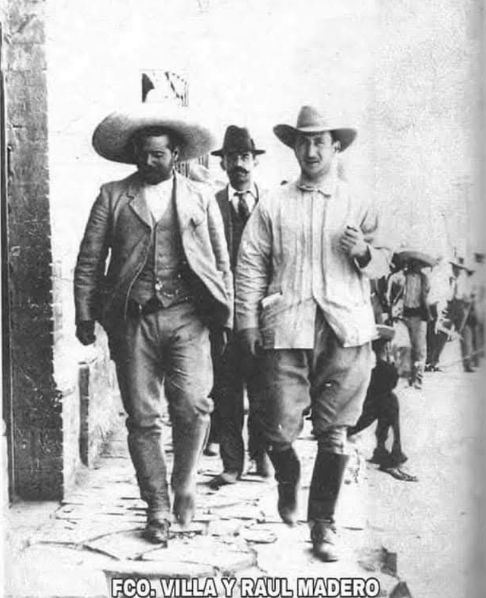
When Francisco I. Madero began his campaign against President Porfirio Díaz, the Madero family presented a double face. Evaristo Madero sent a letter to Díaz stating:
“My esteemed and distinguished friend:
…Neither I nor my sons, I say once again, have ever sympathized with the political activities undertaken by my grandson Francisco; and we have strongly disapproved of the conduct of those who have taken up arms to disrupt the established order.
Despite our efforts to demonstrate our loyalty to the established order, we know that slander points to us as instigators and supporters of the rebellion; and although they cannot point to a single act that proves it, they persist in their claims.
Believe me when I say that I will always remain your devoted and loyal friend who greatly esteems you and remains your faithful servant.
Evaristo Madero”
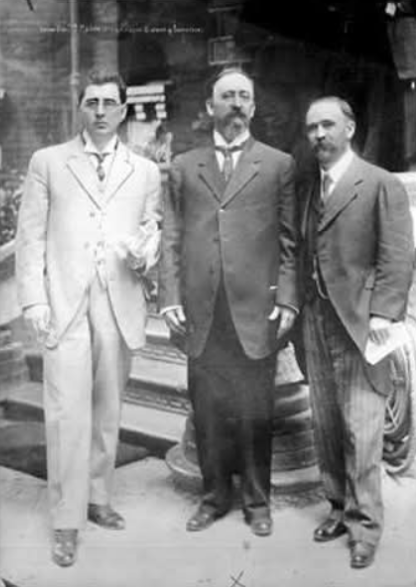
Evaristo Madero lied. His sons Francisco Madero Hernández (his eldest son) and Ernesto Madero Farías (his favorite son); his grandsons Gustavo Adolfo, Alfonso, Emilio, Raúl, and Julio Madero González; and other relatives supported Francisco I. Madero González and were instigators, supporters, and participants in the revolt against Porfirio Díaz. They would also benefit from its success.
When Porfirio Díaz resigned from the presidency and went into exile, Rafael L. Hernández y González, Francisco I. Madero’s cousin through both sides of the family, was appointed Secretary of the Interior and later Secretary of Development. Ernesto Madero Farías, Madero’s uncle, became Secretary of the Treasury.
In his book The Case of Mexico and President Wilson’s Policy, Rafael Zayas Enríquez accused Ernesto Madero Farías of disposing of funds whose destination was never justified. He may have been referring to the $642,195 (equivalent to approximately $278 million pesos today) that the Madero family demanded and immediately received to recover what they had spent on weapons, ammunition, equipment, legal fees, agency services, press campaigns, expeditions, emissaries, travel expenses, and other costs related to carrying out the revolution against Porfirio Díaz.
Ernesto Madero was also accused of assigning a salary to Francisco I. Madero of 10,000 pesos per month from May to November 1911, even though he had not yet assumed the office of President of the Republic.
However, this amount was insignificant compared to the 62 million pesos (almost 27 billion pesos in today’s value) that General Porfirio Díaz had left as reserves for the federal government. In less than six months, those funds were spent paying Madero’s revolutionaries and compensating private citizens for damages caused during the armed movement.
By June 1912, nearly 10,000 claims had been filed for compensation related to alleged damage to private property. Claims ranged from 15 pesos to repair a fence to more than one million pesos for livestock deaths and burned crops. By November 1911, almost nothing remained of the savings accumulated during 34 years of the Porfiriato.
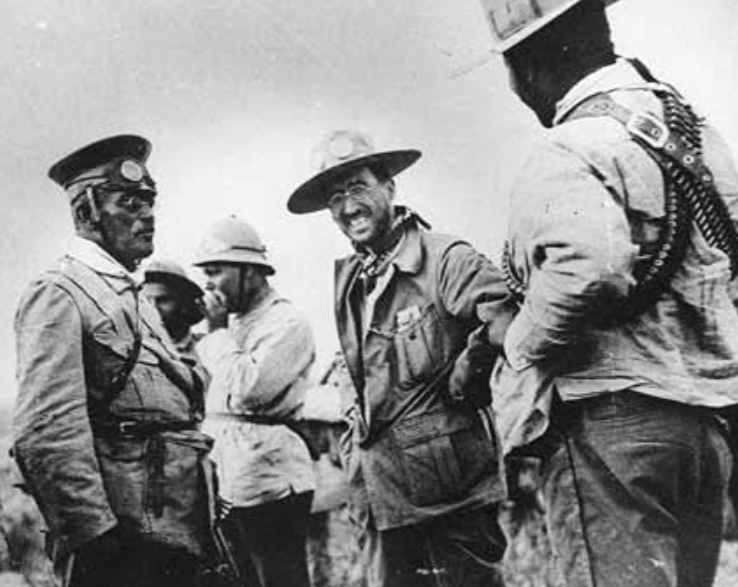
Francisco I. Madero appointed his brother Gustavo Adolfo as a federal deputy. Like Francisco, Gustavo would meet a tragic fate. His other brothers fared better:
- Emilio Madero achieved the rank of Division General.
- Raúl Madero became a Brigadier General and later served as governor of Nuevo León and Coahuila.
- Julio Madero became an important public official and served as ambassador to Sweden under several revolutionary governments.
I remember that in November 1965, while I was in the first grade of elementary school at a ranch in the mountains of Arteaga, Coahuila, during the celebration of Revolution Day, I was chosen to recite a poem that I still remember:
“To Don Francisco I. Madero
Today that Mexico is free,
from the bottom of my heart,
I shout with all affection,
Long live the Revolution!”
…I never believed in Santa Claus, but I did believe in Francisco I. Madero.
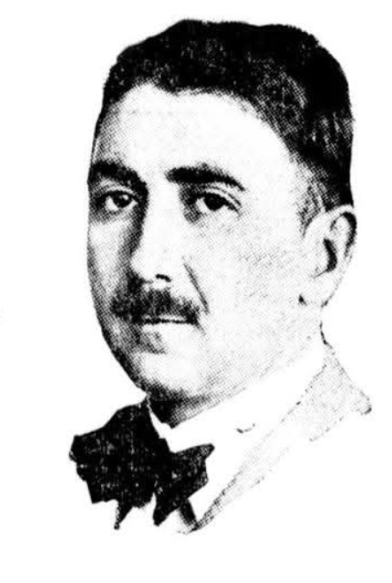
Source: mexidodailypost