
By preventing stars like Vinícius Jr., Achraf Hakimi, and Frenkie de Jong from answering in Spanish during press conferences, FIFA sparked a controversy regarding the 2026 World Cup: the exclusion of the official language of Mexico, one of the host nations.
Before Brazil’s debut match against Morocco, a Spanish journalist asked Vinícius Jr. a question in English, in compliance with the rules of football’s governing body, which permits only three languages at conferences: those of the competing teams and English.
The Brazilian star interrupted and asked him to continue in Spanish, but the FIFA official explained that this was not permitted for logistical reasons.
Curaçao pays a heavy price for its boldness against a giant Germany, while the Netherlands fails to beat Japan.
“We don’t have Spanish available for remote interpretation. Ask in English or in the languages we are using today,” he stated firmly.
Visibly annoyed, the Real Madrid forward put on his headphones to listen to the translation.
Although other stars are fluent in the official language of Mexico—and the second most spoken language in the United States—football authorities remained inflexible. The ban sparked criticism on social media, forcing FIFA to respond.
A source close to the organization told AFP on Sunday that the translators available at press conferences are requested directly by each national team based on their needs, but noted that Spanish would be included in translation services moving forward.
AFP confirmed that the option for simultaneous translation in Spanish is now available on the FIFA website. In Mexico—the country with the largest Spanish-speaking population in the world—language is a matter of identity vis-à-vis its northern neighbor.
While the majority of the tournament’s matches will be played in the United States and a few in Canada, Mexico is set to host 13 World Cup games across Mexico City, Guadalajara, and Monterrey.
Furthermore, Spanish is an official language for eight of the 48 participating nations. Vinícius Jr., who has lived in Madrid since 2018, laughed. “Yes, you can,” he said, encouraging the journalist to continue in Spanish. But ultimately, he lost that minor battle.
“Spanish is spoken here”
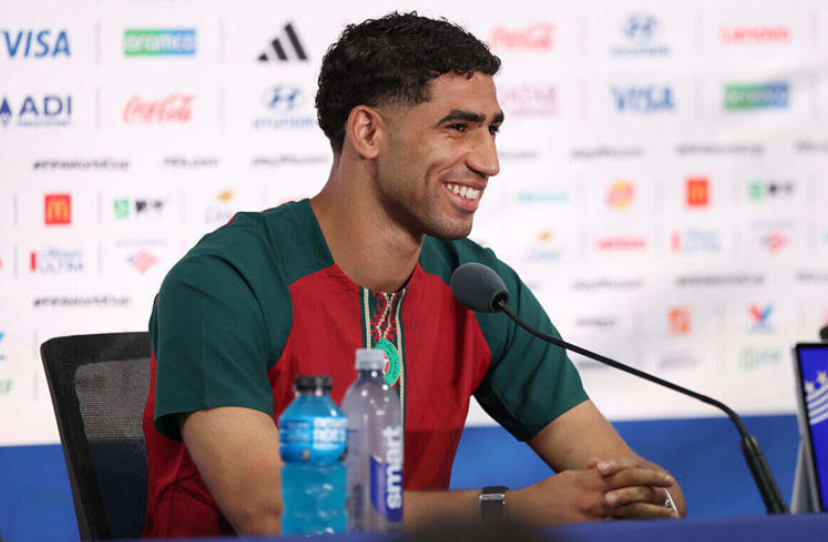
A similar situation occurred with Achraf Hakimi—born in the Spanish capital—who smiled when a Mexican journalist was cut off while asking a question.
“Okay, okay, I understand you…” Hakimi said, attempting to let the reporter continue without being stopped. In the end, the question was asked in Spanish, but the answer was given in English.
In a third instance, the Dutchman De Jong took center stage ahead of this Sunday’s match against Japan.
“I don’t mind,” the Barcelona midfielder said upon hearing the language of Cervantes, though the exchange ultimately took place in English.
Complaints mounted on social media: “Cultural bias against journalists and players who speak Spanish,” wrote one user on X.
“We are in Mexico; we are the hosts, and Spanish is spoken here,” posted another.
The rule stands in contrast to the morale-boosting presence of Mexican mariachis at some of the venues; on Sunday at the Houston stadium, Mexican classics like “Volver, Volver” and “Cielito Lindo” played during the breaks.
Source: msn