
For nearly three decades, the Mexican agricultural sector found in the United States a constantly expanding market. Since the implementation of NAFTA and later the USMCA, Mexico’s agri-food exports grew year after year until the country became one of the main food suppliers for the U.S. market.
That story, however, has begun to change. According to data from the United States Department of Agriculture (USDA), U.S. purchases of Mexican agricultural products recorded their first annual decline in almost 30 years in 2025. The value of imports from Mexico stood at 43.849 billion dollars, compared to 48.629 billion dollars the previous year, a reduction of nearly 10%.
The break in that trend coincides with a more complex environment for the trade relationship between both countries. Donald Trump’s return to the White House reignited uncertainty regarding the future of the USMCA, while internal factors such as drought affected the production of several strategic crops in Mexico.
The weakness did not disappear with the new year. Between January and April 2026, Mexican agri-food exports to the United States fell by 6% compared to the same period in 2025, a sign that the sector arrives weakened at the second round of talks for the review of the trade agreement taking place this week in Washington.
Fewer Purchases from the Agricultural Sector
The decline affects several of the most representative products in Mexico’s agri-food offering.
Fresh vegetables, a category that includes tomatoes, lettuce, onions, carrots, broccoli, and chayote, among other products, recorded a 20% decline in 2025 compared to 2024. Although they showed a 5% recovery during the first four months of 2026, the improvement is still insufficient to offset the previous year’s drop.
Mexican beer, one of the most successful products in the U.S. market, lost momentum. U.S. purchases decreased by 4.2% in 2025 and maintained a similar trend between January and April 2026, with an additional decline of 4%.
The situation is even more severe for Mexican alcoholic beverages. U.S. imports of tequila, mezcal, brandy, vodka, and other liquors from Mexico fell by 31% during 2025. At the beginning of 2026, the decline deepened to 42%.
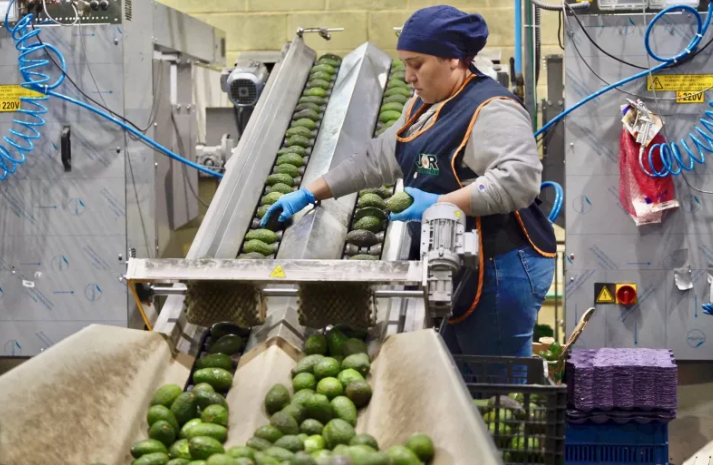
Mexican avocados, one of the emblematic products of bilateral trade and a regular feature during the Super Bowl season, were not spared. After a 5.8% reduction in 2025, U.S. purchases showed a 28% decline between January and April of this year.
Mexican berries followed a similar path. After an 11% decline in 2025, exports to the United States accumulated an additional 15% decrease during the first four months of 2026.
The performance of these products reflects a combination of factors that includes lower harvests, climate-related issues, rising costs, and greater trade uncertainty.
Where Mexican Agriculture Matters Most
A report by México ¿Cómo Vamos? indicates that 35% of the fresh vegetables available in the United States come from imports, and Mexico supplies 69% of that volume. Arizona, Texas, Michigan, and Ohio are among the main buyers.
Dependence is even greater in the case of Mexican tomatoes, as 70% of the U.S. supply comes from imports and Mexico accounts for 90% of that volume. In fresh fruits, California imported more than 2 billion dollars worth of Mexican berries during 2025. Furthermore, imports went from representing 17.3% of raspberry availability in 1994 to 82.3% in 2024.
Mexican avocados are also essential: 88.4% of the avocados consumed in the United States were imported. In alcoholic beverages, Florida, Kentucky, New York, and Indiana show a strong dependence on Mexican distilled spirits. Meanwhile, in Illinois, beer leads agricultural imports from Mexico.
The United States Grows
While Mexico loses momentum in the U.S. market, American products have grown, although only slightly.
U.S. agricultural exports to Mexico grew by 1.4% in 2025 compared to the previous year and increased another 3% between January and April 2026 compared to the same period in 2025.
Growth was concentrated in pork, dairy products, fresh fruit, nuts, eggs, and alcoholic beverages.
The importance of this trade relationship explains why a significant portion of the U.S. agricultural sector has become one of the strongest defenders of the USMCA.
The Agricultural Coalition for the USMCA, made up of agricultural organizations and agri-food companies from the United States, recently stated that the trade agreement represents one of the most important achievements of the Trump administration and an economic engine for farmers and rural communities.
The group emphasized that U.S. officials have shown willingness to renew the agreement with specific improvements and expressed confidence that the administration will reach an understanding with Mexico and Canada that benefits all three countries.
The defense of the treaty has a strong economic component. U.S. agri-food sales to Mexico amount to around 30 billion dollars annually and represent nearly 18% of U.S. agricultural exports.
However, not all voices in Washington share that view.
While some organizations promote the continuation of the agreement, U.S. producers and lawmakers continue pressuring against Mexican imports.
Republican and Democratic members of the House of Representatives, including members of the Agriculture Committee, sent a letter to U.S. Trade Representative Jamieson Greer requesting measures to address what they consider unfair competition in the agricultural market.
The lawmakers argue that numerous U.S. producers of fruits, vegetables, and nuts face increasing pressure from rising imports that coincide with local harvest seasons and reach the market at prices equal to or even below U.S. production costs.
In the letter, they noted that imports of fresh fruits and vegetables from Mexico have increased by more than 550% since 2001, driven by cost advantages and regulatory frameworks different from those in the United States.
Dependence and Challenges
For Jorge Esteve, president of the National Agricultural Council (CNA), Mexico arrives at the USMCA review during one of the most complex moments for the sector.
The leader recalled that since the implementation of NAFTA, Mexican agri-food exports have grown by more than 1,100%, but warned that this success also generated a strong dependence on the U.S. market, which receives around 80% of Mexico’s agri-food exports.
Esteve pointed out that measures such as the 17% tariff on Mexican tomatoes demonstrate the vulnerability created by that concentration and are already affecting domestic production.
Added to this are more frequent droughts, lower agricultural yields, and increasing climate volatility that complicates long-term planning.
The CNA president also warned about regulatory uncertainty, the lack of conditions for new investments, security issues in various agricultural regions, limited access to financing, technological gaps, and a reduction of more than 50% in the agricultural health and safety budget.
Given this scenario, he considers it essential to diversify markets toward Europe, Asia, and the Caribbean, strengthen technological innovation, and build a food security strategy that reduces the country’s vulnerability to future trade or climate crises.
Agriculture is among the central topics of the second round of discussions for the review of the USMCA taking place this week in Washington.
According to the work agenda, discussions will include agricultural market access, sanitary and phytosanitary measures (SPS), regulatory cooperation, and agricultural biotechnology.
The USTR identified the agricultural sector as one of the priorities of this phase of the review and has stated that it will seek to ensure that the agreement continues generating benefits for American farmers.
Mexico, for its part, will seek to preserve preferential access for its agri-food exports to the U.S. market and prevent new regulatory or sanitary provisions from disrupting supply chains that currently operate in an integrated manner among the three partners.
Agri-food trade between Mexico and the United States exceeds 70 billion dollars annually and constitutes one of the strongest pillars of North American economic integration. However, Mexico arrives at this new round of negotiations with a warning sign that had not appeared in almost three decades: the United States is buying fewer Mexican agricultural products.
Source: expansion