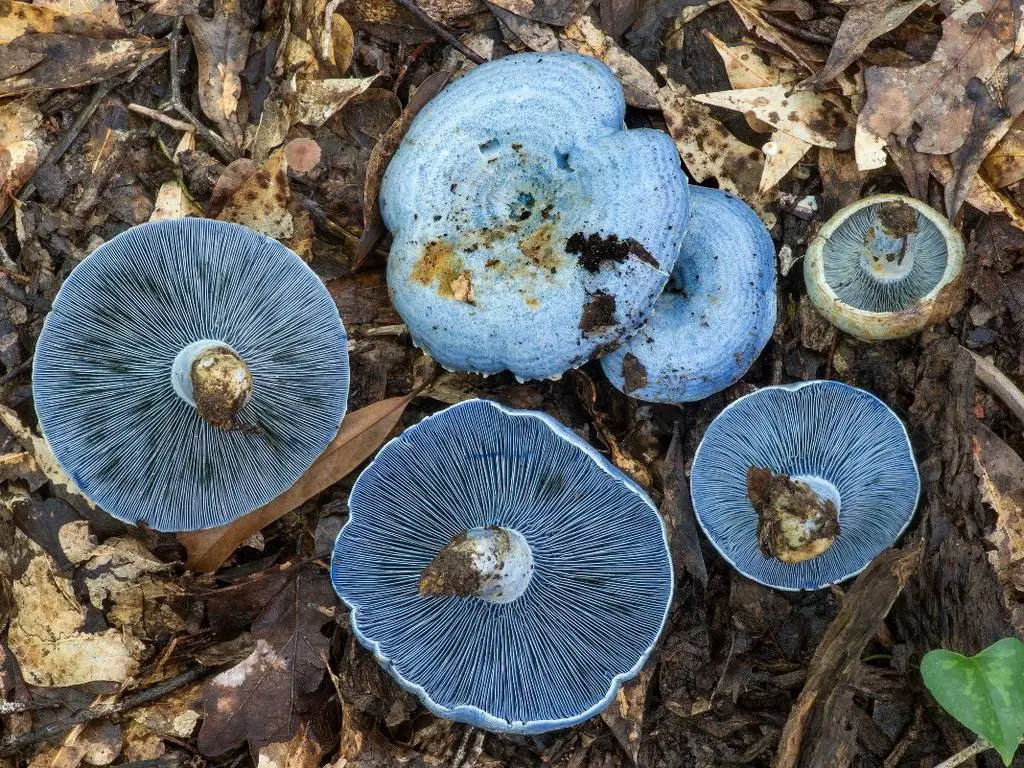

In the humid forests of central and western Mexico, when the rains cover the ground with wet leaves and the air takes on the scent of fresh wood, one of the strangest and most beautiful organisms in Mexican gastronomy emerges: the blue mushroom. Its appearance seems to come from a dream or a natural dye laboratory. Yet it has existed for centuries among pine and oak mountains, where entire communities recognize it as a seasonal ingredient that is as valuable as it is fleeting.
Its scientific name is Lactarius indigo, although in different regions it is also known as añil, quexque, zuin, or blue pig’s ear. What is extraordinary is not only its rarity, but the fact that it is truly blue. In cooking, natural blue color is almost nonexistent. Many foods we commonly call blue are actually violet, purple, or grayish. This mushroom, however, maintains a deep indigo tone that seems to absorb the light of the forest.
Mexico possesses one of the greatest diversities of wild mushrooms in the world, comparable even to regions traditionally recognized for their mycological culture, such as France or Italy. Even so, much of this richness remains invisible outside certain local markets and traditional kitchens. While supermarkets continue to offer cultivated button mushrooms and industrial oyster mushrooms, ancestral knowledge persists in rural communities for identifying, harvesting, and cooking species that appear only during certain weeks of the year.
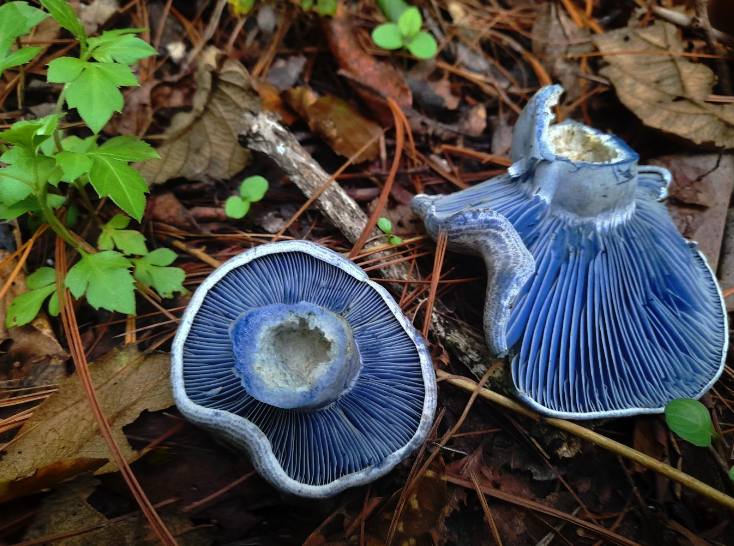
The blue mushroom grows mainly in the forested areas of the State of Mexico, Michoacán, Tlaxcala, and other nearby regions of central-western Mexico. It usually appears between August and October, especially after consistent rainfall. Its cap can measure up to ten centimeters, and as it ages, the intense blue gradually fades into grayish or greenish tones. When cut, it releases a blue latex that resembles natural ink.
A Delicate Flavor and a Living Tradition
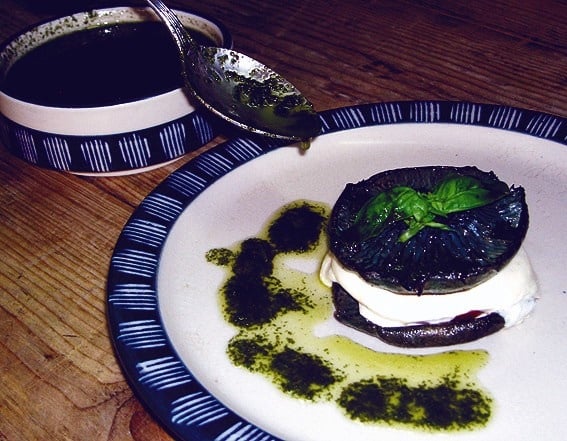
Beyond its hypnotic appearance, it stands out for its delicate and earthy flavor. Traditional cooks recommend preparing it simply to prevent it from losing both color and texture. It is often grilled directly over charcoal or sautéed with lard, onion, garlic, and epazote. It is also commonly served inside freshly made tortillas, accompanied by farm cream and spicy salsa. The result is a deeply Mexican dish: simple in ingredients, yet complex in aromas and memory.
The contemporary fascination with this mushroom does not come solely from its color. In recent years, chefs, researchers, and foragers have begun to see it as a symbol of a gastronomic biodiversity that was ignored for decades. While other world cuisines transform exotic ingredients into culinary luxuries, Mexico has possessed an immense wild pantry for centuries that is only now beginning to receive wider attention.
An Ecological Treasure at Risk
There is also an important ecological component. Lactarius indigo depends on healthy forest ecosystems to thrive. Illegal logging, forest degradation, and the loss of moisture have reduced its presence in several regions. Finding it has become more difficult than before, increasing its cultural and gastronomic value.
Unlike other ingredients that quickly become global trends, the blue mushroom still preserves an element of mystery. It does not belong to the world of artificial luxury or foods designed for social media. Its rarity remains tied to the land, the rains, and the knowledge of those who walk the forests each season to recognize it among wet leaves and roots.
Perhaps that is why it inspires so much fascination. In an era dominated by ultra-processed foods and standardized flavors, this blue organism reminds us that Mexican cuisine still holds living secrets beneath the earth.
Source: mxc