
Trump’s “War” Against Drug Cartels Continues Along the U.S.-Mexico Border
The “war” declared by President Donald Trump against drug cartels continues along the U.S.-Mexico border, with an operation that had cost $525 million by early May, according to the Pentagon.
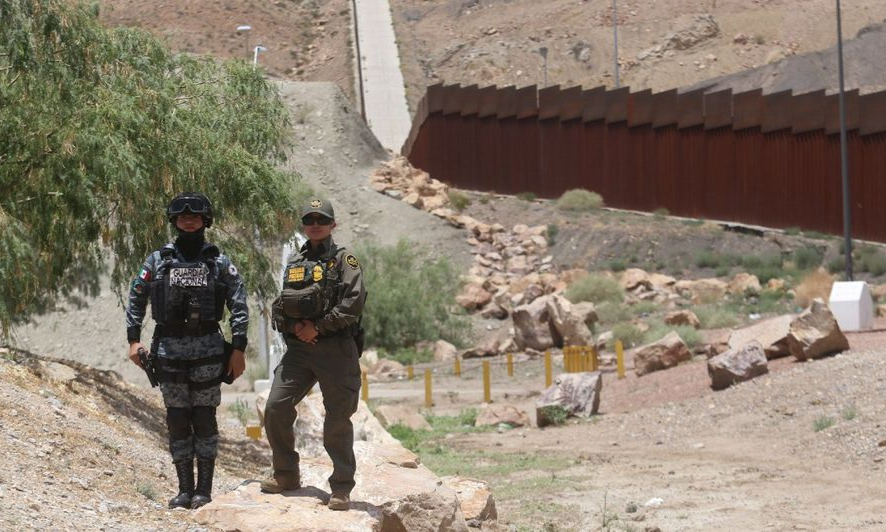
A report published by The New York Times states that for more than a year, the Department of Defense has deployed nearly 9,000 troops, covering more than 3,200 kilometers (2,000 miles) of border to control not only the flow of narcotics but also the crossing of undocumented migrants and smugglers.
However, security personnel have received threats from organized crime after the ground operation forced cartels and smugglers to move through increasingly remote mountainous areas to avoid detection.
Soldiers’ Cell Phones Hacked After the Death of “El Mencho”
The New York Times investigation revealed testimony from a U.S. congressional official regarding the alleged hacking of American soldiers’ cell phones, after which they began receiving threatening messages.
According to the report, this occurred after Mexican armed forces, with assistance from the Central Intelligence Agency (CIA), killed Nemesio Oseguera Cervantes, known as “El Mencho,” leader of the Jalisco New Generation Cartel (CJNG), during an operation in Tapalpa in February.
Following the cartel leader’s death, the report says cartel activity increased along the border. Likewise, threats against U.S. soldiers have also intensified, according to the congressional witness.
“Ardent Vanguard”: The New Border Operation
In May, Major General Curtis D. Taylor of the Army’s 1st Armored Division assumed command of Operation Ardent Vanguard, which is responsible for border control. Although the force is equipped with counter-drone protection systems, the general stated that many of his personnel still lack adequate technology for patrol operations.
According to The New York Times, the mission to detect and intercept illegal activities along hundreds of kilometers of border has also become a high-risk testing ground for emerging technologies, including counter-drone devices, remotely operated maritime vessels, and advanced sensors.
Major General David W. Gardner, commander of the 101st Airborne Division, explained that to address security threats posed by Mexican cartels, the Army has been disabling cartel drones while identifying the smuggling routes they use.
Despite concerns expressed by members of Congress and other U.S. officials, some commanders and soldiers defend the missions ordered by Trump, arguing that they give troops “a sense of purpose.”
“They use many of their skills—route planning, mission rehearsals, patrols, and surveillance flights—in real-world operations against Mexican smuggling networks and drug cartels, rather than simply practicing on bases or in training exercises,” they told the New York newspaper.
Not Only Against Drug Trafficking
In addition to operations targeting drug cartels, U.S. armed forces have expanded their responsibilities to intercept migrants. The Department of Defense has designated five sectors along the U.S.-Mexico border—one in California, one in Arizona, one in New Mexico, and two in Texas—to serve as military zones.
“Migrants who enter these areas are considered trespassers and may be temporarily detained by U.S. soldiers until Border Patrol agents arrive,” The New York Times reported.
According to journalist Eric Schmitt, as of the publication date (June 23), the Army reported having detained 116 individuals found within these five sectors before transferring them to the U.S. Border Patrol.

Source: milenio