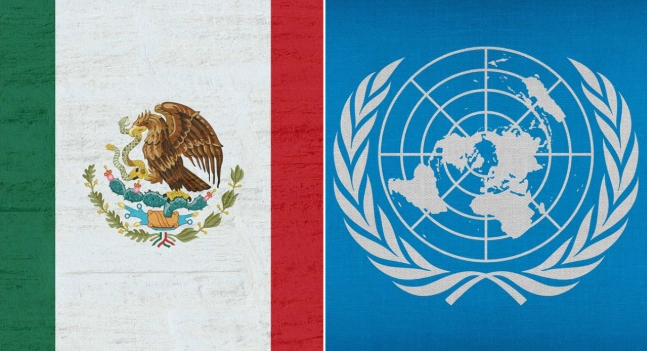

The activation of Article 34 of the International Convention against Enforced Disappearance by the UN marks a point of no return for Mexico. This emergency mechanism exposes a devastating truth: the State faces solid evidence that disappearances are practiced in a widespread and systematic manner. Bringing this case before the United Nations General Assembly represents the confirmation that the humanitarian crisis has completely overwhelmed national institutional capacities.
The gravity of enforced disappearance lies in its nature as a tool of terror, whose historical origin sought to erase identities and evade justice by concealing the evidence. It is a continuous and ongoing crime: it continues to be committed every second that the victim remains missing.
In the contemporary Mexican context, independent investigations and international reports demonstrate that it is not an isolated incident, but rather the direct result of collusion and links between authorities at various levels and organized crime, coupled with a systematic failure by the State to search for the victims and investigate the perpetrators.
As these acts become widespread, international law classifies them as crimes against humanity, a clear consequence of the Morena government led by and inherited by López Obrador. Omission becomes complicity.
Evading reality, the official narrative has resorted to sovereignist victimhood, dismissing the report as part of a “far-right wave” coordinated from abroad. The government discourse maintains the thesis of an alleged conspiracy orchestrated by the United States to undermine progressive projects and force a political shift in the lead-up to local elections, projecting this siege from the 2027 midterm elections through the presidential race.
This argument of ideological persecution collapses under its own weight when recent history is examined. Transnational scrutiny of serious human rights violations does not discriminate based on political affiliation, nor does it respond to right-wing plots.
This is the case with self-proclaimed left-wing regimes, such as Daniel Ortega’s regime in Nicaragua—born from Sandinismo—and that of Nicolás Maduro (who ruled de facto until the military intervention in early 2026), both of which have been accused by the UN of state crimes, arbitrary detentions, and persecution.
What is truly unprecedented about the decision of the UN Committee against Enforced Disappearances (CED) is that it is the first time in history that Article 34 of the Convention has been activated. This emergency protocol is reserved exclusively for scenarios where the violation is massive. The process will reach its critical point in October 2026, when the UN General Assembly begins formal discussion of the case. In this multilateral international forum, individuals will not be prosecuted, but rather the Mexican state will be exposed to global diplomacy.
At the institutional level, the impact will be profound. The debate will lead to resolutions that will mandate the redesign of local prosecutors’ offices, the imposition of external audits on search commissions, and the adoption of international missions for technical assistance, binding external expert reports, and mechanisms for direct international oversight on the ground.
The UN intervention is not due to electoral conspiracies, but rather to the principle of subsidiary justice when local institutions abdicate their most basic obligation: to protect the lives and safety of their citizens. Or when the judiciary is dismantled and handed over to criminal networks.
It is outrageous and provocative for the international community that an animal is received instead of the mothers searching for their missing loved ones, who carry the pain of a fractured nation.
Source: excelsior