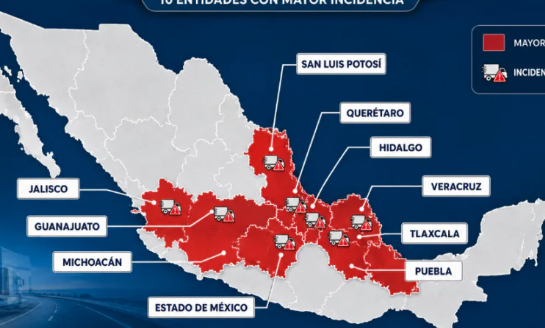

The National Chamber of Freight Transportation (Canacar) released a national highway risk map identifying ten states as the most critical hotspots for truck theft and extortion of truckers, according to El Heraldo de México. The map, presented as a prevention tool for the sector, complements data released by the chamber itself weeks earlier regarding losses of up to 900 billion pesos annually that highway blockades and insecurity generate for Mexican trucking, placing the figure within a more precise territorial analysis.
Canacar’s risk map coincides with recent reports from the Mexican Alliance of Transportation Organizations (AMOTAC), which this week documented up to 15 daily assaults on truckers on highways in central Veracruz, in addition to the blockades on access roads to the Valley of Mexico due to protests against robberies and extortion. These protests resulted in a three-month agreement between the federal government and the sector, negotiated directly with the Secretary of Security and Citizen Protection, Omar García Harfuch.
The usefulness of a highway risk map lies in its ability to allow trucking companies to plan their routes with up-to-date information on the sections with the highest crime rates, adjust their cargo insurance policies to the actual risks of each corridor, and demand specific territorial accountability from state and federal authorities, rather than general statements about highway safety. The chamber did not publicly specify which ten states were identified, but industry trends point to Puebla, Veracruz, the State of Mexico, Guanajuato, and Michoacán as being among the most frequently affected.
For the industry, publishing the map is also a tool for political pressure: making the problem visible geographically forces state governments to answer to their own populations about why their state is designated as a risk zone for an essential economic activity. Canacar has insisted that the solution requires coordination between the National Guard, state police forces, and the trucking companies themselves, with shared intelligence that goes beyond reactive deployments after each incident.
Source: transporte