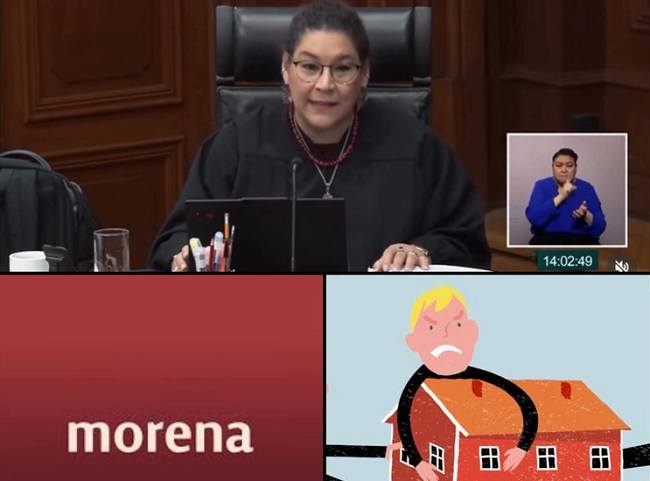

MEXICO CITY — Mexican Supreme Court Justice Lenia Batres Guadarrama has ignited a fierce nationwide debate after defending a proposal to tax inheritance wealth and the retirement accounts (Afores) of deceased workers.
The controversy erupted during a recent plenary session of Mexico’s Supreme Court of Justice of the Nation (SCJN). The magistrates were analyzing a legal project authored by Justice Sara Irene Herrerías Guerra, which aimed to settle conflicting federal court criteria. Herrerías’ project proposed that funds accumulated in a deceased worker’s individual retirement account should be subject to the country’s income tax (ISR) when transferred to their designated beneficiaries.
While the high court ultimately rejected the proposal by a majority of six votes, Batres’ vocal support for the measure drew swift public backlash. Batres, who frequently refers to herself as the “people’s minister,” expanded her argument during the session to advocate for broader fiscal restructuring. She explicitly targeted untaxed wealth transfers, describing them as drivers of systemic inequality.
“I think what is unfair is that inheritances and legacies are not taxed,” Batres stated during the court debate. “A person receives resources that did not come from their own effort. In a strict sense, this reproduces social inequalities.”
The magistrate’s remarks triggered a wave of criticism across social media platforms from citizens, legal experts, and business leaders. Critics sharply rejected her characterization of family legacies, pointing out that inheritances represent capital built through a lifetime of work by the deceased—wealth that was already heavily taxed when it was originally earned. High-profile figures, including billionaire businessman Ricardo Salinas Pliego, publicly condemned the stance, accusing the administration’s allies of attempting to seize family assets built on a lifetime of labor.
The push to tax these funds highlights ongoing political friction within Mexico regarding wealth redistribution and fiscal policy. Because the Supreme Court blocked the criteria, the specific judicial file will be reassigned to another magistrate to be rewritten. However, the ideological divide over state intervention in private family savings remains a highly sensitive flashpoint.
Source: DY