
From the Beginning, Carlota Recognized Indigenous Peoples and Criticized Governments. What Happened?
A large crowd welcomed Carlota and Maximilian in Orizaba in late 1864. The nightmare of their desolate arrival in Veracruz was now behind them, and for the first time, they truly felt at home.
“The emperors were received with enormous enthusiasm by a large crowd, including groups of Indigenous people dressed in their finest traditional clothing,” wrote Cristina Morató in her book “Queens of Legend.”
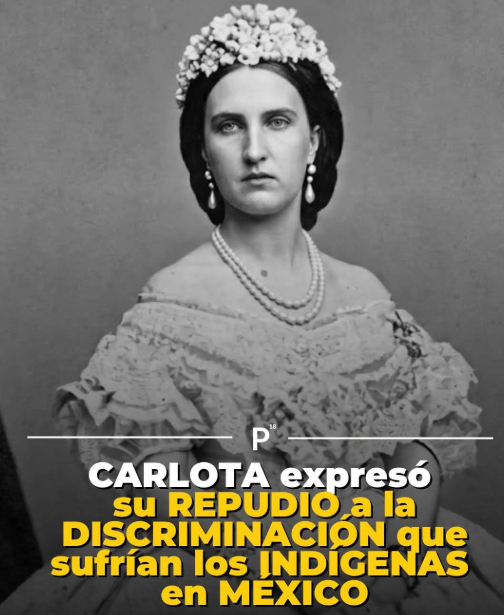
According to the author, photographs of Maximilian and Carlota had been circulated throughout the country a year earlier, “with the idea of allowing people to become familiar with their emperors.”
“The women, filled with curiosity, approached Carlota with smiles and threw bouquets of wildflowers at her,” Morató wrote, adding that from the very first moment, the couple felt deep affection and respect for the Indigenous people.
The author also cited a letter Carlota wrote to her family in which she expressed her disapproval of the discrimination Indigenous people faced despite being the majority in Mexico:
“Almost all Indigenous people know how to read and write. They are extremely intelligent, and if the clergy educated them as they should, they would become an enlightened people. The short-lived governments have never had roots among the Indigenous population, which is the only one that works and allows the state to survive.”
Carlota Turned Her Words into Action
Eventually, Carlota’s words became actions. Historian Susanne Igler explained that, as empress, Carlota enacted the Public Education Law, which guaranteed free and compulsory primary education, and she established schools and academies.
“She undertook improvements to transportation and communications, including the railway connecting Mexico City to the port of Veracruz. She limited working hours, prohibited corporal punishment, and restricted child labor,” Igler explained.
Support for Indigenous Communities
Carlota also created the Protective Board for the Needy Classes, an institution dedicated to defending the rights of Indigenous people and other vulnerable groups.
Source: mexicodailypost