
Washington rejected extending the USMCA through 2042 and instead placed the agreement under annual review until 2036. While the government insists that “nothing is happening,” the peso has weakened and the automotive industry has already lost 107,000 jobs in two years.
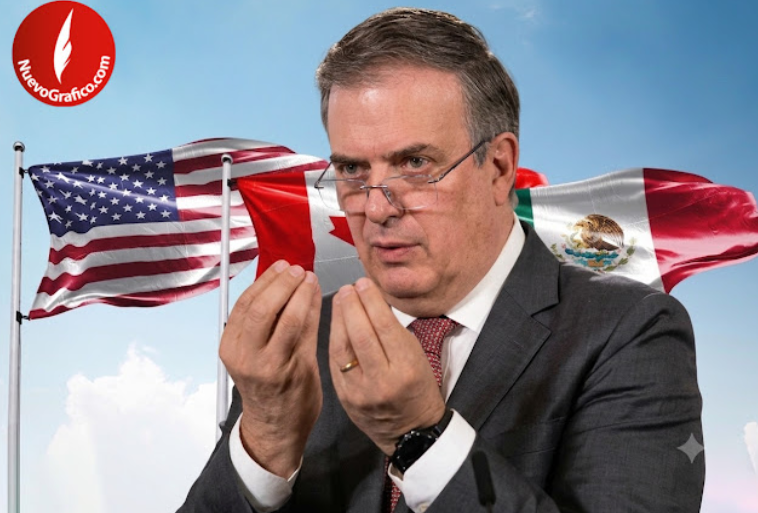
The United States confirmed on July 1 that it will not renew the USMCA in its current form. The Office of the United States Trade Representative (USTR) rejected the extension to 2042 that Mexico had formally requested—President Claudia Sheinbaum acknowledged that her administration signed a letter asking to extend the agreement for another 16 years, and that Canada submitted a similar request. Instead, the agreement will remain subject to annual reviews through 2036. Economy Secretary Marcelo Ebrard released a video later that day stating that the agreement remains unchanged. The difference between requesting 16 years of certainty and receiving 10 years of continuous review is not a minor distinction—it is precisely the outcome Mexico sought to avoid.
The cost is not abstract. On the same Wednesday the announcement was made, the Mexican peso depreciated by as much as 0.42%, closing at 17.55 pesos per U.S. dollar, according to Bloomberg. Analysts at Banco Base and Banorte attributed the movement directly to the uncertainty created by the new review framework. A weaker peso increases the cost of everything Mexico imports in U.S. dollars: fuel, medicines, agricultural inputs, and electronics. That ultimately translates into higher prices for consumers, not merely fluctuations on an investment firm’s chart.
The other cost is already measurable in jobs. The automotive industry—Mexico’s largest source of foreign exchange, exporting $59 billion between January and April, three times the value of remittances—employed 742,000 people in April, 50,000 fewer than a year earlier and 107,000 fewer than two years ago, according to Mexico’s Monthly Manufacturing Industry Survey conducted by INEGI. Banco Base attributed those job losses to declining investment caused by concerns over the rule of law, weakening business confidence, and uncertainty surrounding the future trade relationship with the United States. In other words, not everything can be attributed to Trump. Part of the explanation lies in decisions and conditions within the Mexican government itself, not in Washington.
That is the point the official narrative avoids. Ebrard may highlight an average tariff of 3.6% and emphasize that more than 80% of exports remain tariff-free, but those figures do not explain why assembly plants are cutting production shifts, why the peso loses value whenever Washington comments on the agreement, or why business confidence continues to deteriorate before the first annual review cycle has even formally begun. Calling this mechanism “certainty” after it has already been associated with job losses and exchange-rate pressure—even before implementation—is not optimism; it is leaving out the part of the story that directly affects people’s wallets.
The next round of bilateral negotiations is scheduled for the week of July 20. Mexico brought 13 issues to the table, while the United States presented 14. None of those agenda items has been disclosed in enough detail for a worker in Ramos Arizpe or Silao to know whether their job is among the matters under negotiation. As long as the government continues communicating through videos rather than transparent data, the question of who will bear the cost of this decade of annual reviews will remain unanswered officially.
Source: nuevografico