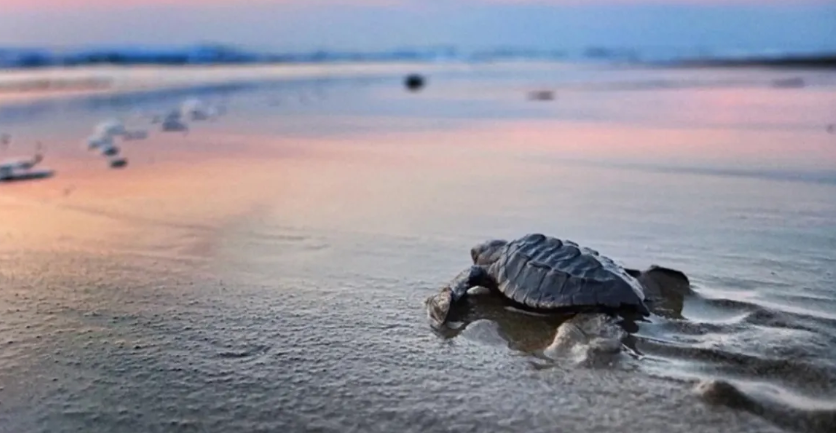

If you’re looking to release sea turtles this summer, the idyllic beaches of Nayarit offer options for this captivating experience that connects you with the beauty and fragility of marine life.
Nayarit is home to some of the most important nesting areas in the country for sea turtles; four protected species of sea turtles are born on its shores: olive ridley, green, leatherback, and hawksbill.
The Ministry of Environment and Natural Resources (SEMARNAT) indicates that the sea turtle nesting season in Mexico runs from May to September, while the incubation period averages 6 to 8 weeks, so the hatching and release of turtles generally occurs from July to November.
In Nayarit, August is the month when the season for releasing baby sea turtles begins on the Mexican Pacific coast, where several conservation camps offer this activity. Here are some places where visitors can participate in this activity:
This camp, located on Playa Borrego, the closest beach to downtown San Blas, is dedicated to the preservation of sea turtles and their hatchlings. Every summer, these turtles choose Nayarit’s beaches to begin their adventurous marine life. For some time now, this site has been the main nesting area in this destination, contributing to the conservation of this species. For more information, you can visit their official Facebook page: Campamento Tortuguero de San Blas Aayetsie Wakie.
This conservation project, located very close to San Francisco in Riviera Nayarit, is known for protecting olive ridley sea turtle nests and organizing hatchling releases at sunset, offering a unique educational experience. The releases are usually free and open to the public, although voluntary donations are welcome to support the conservation efforts. They also offer environmental awareness talks and mangrove tours.
At this camp located on the beach of the same name, in the municipality of Compostela, you can learn about the importance of environmental stewardship, especially regarding the lives of sea turtles. The species that arrive and nest here are olive ridley, leatherback, and occasionally, black or green sea turtles. Each year, they release 20,000 to 25,000 turtles into the sea, mostly olive ridleys. For more information, you can visit https://www.fundacionbiomar.org/el-naranjo.
Lo de Marcos beach is another important turtle nesting site. This local camp invites residents and tourists to participate in the release of hatchlings and learn more about the life cycle of these creatures. To find out more, you can call 322 168 3016 or visit their official Facebook page: Campamento Tortuguero LDM.
This conservation site is located at Punta Raza Beach, a protected natural area near the community of El Monteón, in the municipality of Compostela. Its main objective is the conservation of the olive ridley sea turtle through the collection and safeguarding of eggs, protection of nests, and the release of hatchlings into their natural environment.
Source: sinembargo