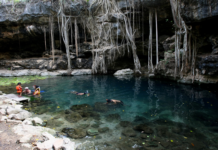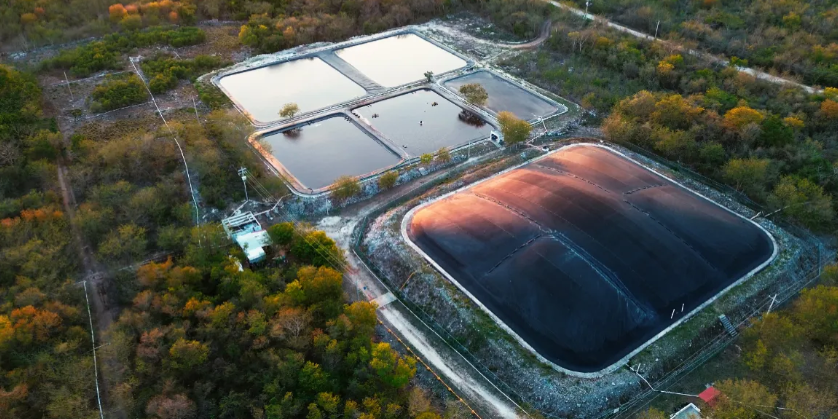

When we think of Yucatán, we usually imagine crystal-clear cenotes, archaeological sites, and one of the most important ecosystems in the country. We rarely think of industrial pig farms. However, according to the Ministry of Environment and Natural Resources (SEMARNAT), more than 500 pig farms operate in the state.
For more than a decade, the expansion of the pig farming industry has placed Yucatán at the center of an environmental, social, and health conflict that deserves far more attention than it has received.
Yucatán sits atop a karst system: a vast network of limestone, caverns, cenotes, and underground rivers. Unlike other regions of the country, there are practically no deep layers of soil here to act as a natural filter. What reaches the subsoil can easily end up in the aquifer on which hundreds of communities depend.
For years, academic research, scientific studies, and even official documents have warned about the risks that the concentration of pig farms poses to water quality and the ecosystems of the Yucatán Peninsula. A diagnosis prepared by the Ministry of Environment and Natural Resources itself already acknowledged the water, soil, and air pollution associated with this activity and the vulnerability of the Yucatán territory.
The impact of this industry doesn’t end with the environment. In the two main processing plants in Yucatán, around 70,000 pigs are slaughtered every week using carbon dioxide stunning systems, known as gas chambers.
A few years ago, I interviewed a former worker from one of these plants, who, on condition of anonymity, told me that some animals regained consciousness during the slaughter process. His testimony reflects a reality that remains practically invisible to most consumers.
Even so, the issue has long remained outside the national conversation.
In 2023, I had the opportunity to visit Sitilpech, a Mayan community that has become a symbol of this struggle for years. What I found was very different from the image often presented in public debate. I saw residents worried about the water they consume, the smells that are part of their daily lives, and a production model imposed without listening to those who have lived there for generations.
For those of us who observe this conflict from the outside, it’s easy to reduce it to a discussion between environmentalists and corporations. In Sitilpech, I understood that the problem is much more complex. It speaks to public health, the rights of Indigenous communities, institutional transparency, and the way we choose to produce food.
In recent years, we have seen environmental complaints, injunctions, the definitive closure of the Santa Maria Chi farm, investigations, citizen mobilizations, and increasing scientific evidence about the environmental impacts of this model.
Everything indicates that the discussion is just beginning, and perhaps that is the reason to talk about Yucatán today.
Jessica González Castro is the Latin American Director for the international organization Vegan Generation. She holds a degree in Hospitality Business Administration from the University of the Valley of Mexico. She founded Casa Animal, the first vegan community center in Mexico.
Source: sinembargo