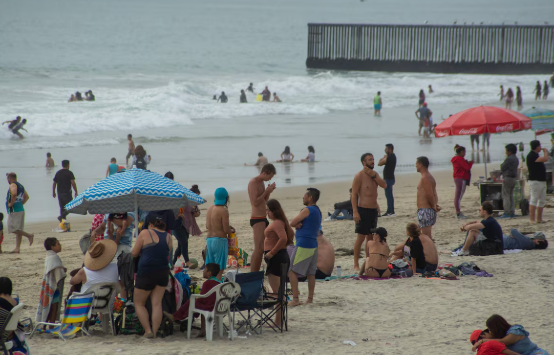

The Federal Commission for Protection against Sanitary Risks (Cofepris) has released the results of its pre-holiday monitoring of seawater quality. While most of the country’s beaches are in good condition and suitable for recreational use, five were classified as unsuitable.
The monitoring is part of the Clean Beaches 2026 program, which was conducted between June 15 and July 1. During that period, 2,279 seawater samples were collected and processed at 393 strategic points across the country’s 17 coastal states.
The report, published on July 10, 2026, indicates that five beaches have high concentrations of bacteria that exceed the risk threshold established by the World Health Organization (WHO).
According to the analysis, these five beaches have concentrations of more than 200 enterococci per 100 milliliters of water. The Federal Commission for Protection against Sanitary Risks (Cofepris) recommends that tourists and swimmers avoid swimming or other direct contact with the water in these areas:
Tijuana Beach, in Tijuana, Baja California
Cuale Beach, in Puerto Vallarta/Banderas Bay, Jalisco
Main Beach, in Puerto Escondido, Oaxaca
José Martí Beach, in Veracruz, Veracruz
Tumbao Beach, in Veracruz, Veracruz
Monitoring is conducted during each holiday season. In December 2025, the report indicated contamination at six Mexican beaches, including Mismaloya, in Jalisco; El Veneno/Miramar and San Francisco, in the state of Sonora; and Barra del Tordo, in Tamaulipas. In 2026, Tijuana Beach, in Baja California, and José Martí Beach, in Veracruz, reappeared on the list.
This summer, the overall picture at Mexican beaches is positive despite the five cases detected. Of the 284 beaches evaluated, 98.3% have the appropriate microbiological conditions for recreational activities involving direct contact and comply with WHO guidelines.
Health authorities in Baja California, Jalisco, Oaxaca, and Veracruz, along with clean beach committees and local governments, are already implementing urgent sanitation plans in the five affected areas.
These actions include placing preventative signage to inform the public while they work to restore these beaches to their safe condition.
Cofepris (Federal Commission for Protection against Sanitary Risks) recommends that beachgoers refrain from swimming or other recreational activities involving direct contact on the beaches designated as unsafe. It also emphasizes that preserving these healthy environments and protecting public health are shared responsibilities.
The work has been coordinated between Cofepris, the state Health Risk Protection Areas (APCRS), and the National Network of State Public Health Laboratories (RNLESP). Water quality monitoring at the beaches can be followed through the Playas Mx mobile application.
Source: elpais