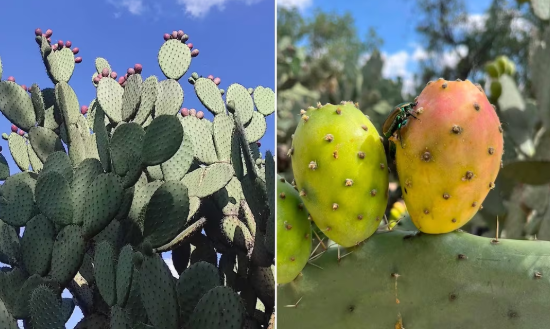

Every summer, the open-air markets, street markets, and intersections of San Luis Potosí fill up with one of the state’s most emblematic fruits: the prickly pear.
Its arrival marks one of the most anticipated seasons for consumers, who take advantage of July and August to enjoy it at its sweetest.
At a stall in a mobile market, a vendor named María explained that yellow prickly pears are the most sought after by customers because they have a more concentrated sweetness during this time of year.
“The yellow ones sell the most because they’re already very sweet. Right now is when people are looking for them the most, and the peak season is between July and September,” she commented.
The vendor noted that she usually sells a plate of prickly pears for 50 pesos, although she clarified that the price can vary depending on where they are sold and the availability of the product.
“Here we serve them already cleaned and ready to eat. The price may vary depending on the location, but a plate usually costs around 50 pesos,” he said.
Besides being a traditional fruit on the tables of San Luis Potosí residents, the prickly pear is part of the state’s culinary identity.
According to information from the Ministry of Agriculture and Rural Development, the highest national production is concentrated between July and September, the period in which the fruit reaches its best flavor and quality.
San Luis Potosí is among the leading prickly pear-producing states in the country.
The varieties found in the state include yellow, white, red, and purple prickly pears, although the yellow ones are usually the most prized for their sweet flavor and juicy pulp.
In addition to being eaten fresh, prickly pears are also used to make jams, ice cream, syrups, traditional drinks, and even the well-known prickly pear cheese, one of the typical products of San Luis Potosí’s cuisine.
As the season progresses, merchants expect sales to continue growing in the coming weeks, when the fruit reaches its peak ripeness and becomes one of the most representative flavors of the Potosí summer.
Source: sanluis.eluniversal