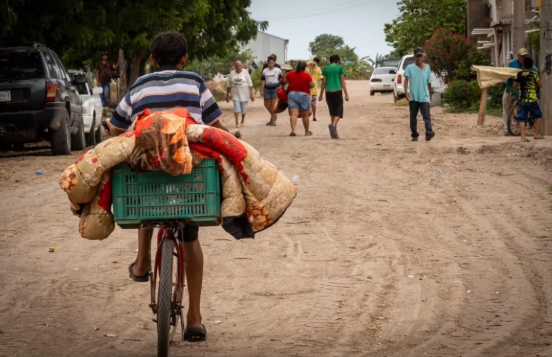

While new families continue to flee communities in Sinaloa due to violence, official records show a difficult-to-explain reduction: in three months, more than a thousand families disappeared from the count of displacements that occurred since September 2024.
A report prepared by Sibely Cañedo Cázarez, PhD in Social Sciences from the Autonomous University of Sinaloa and a specialist in internal displacement, warns of inconsistencies in the figures provided by the Ministry of Welfare and Sustainable Development (SEBIDES), as well as underreporting that makes it impossible to know the true extent of the phenomenon.
In February 2026, a response from SEBIDES to an information request submitted by the researcher reported 2,189 displaced families between September 2024 and January 2026.
Three months later, another response from the agency tallied 3,619 displaced families in Sinaloa up to April, but only 1,171 corresponded to the period beginning in September 2024, when the conflict between criminal groups escalated.
According to the researcher, this means that 1,018 families disappeared from the registry for the recent period.
One possible explanation, Cañedo points out, is the return of families who chose to do so. However, she warns that there is no systematic monitoring to determine how many returned, under what conditions, and whether their safety is guaranteed.
The specialist also notes that Sinaloa still lacks a complete registry of victims.
“Many people don’t approach the authorities, either out of fear, or because the very dynamics of the violence lead people to prefer to remain anonymous and avoid exposure,” he explained.
Added to this is the so-called silent or “drop by drop” displacement, when families gradually abandon their communities rather than as part of the more visible mass exoduses for the authorities.
“There are people who resist, who stay, but then, due to the same dynamics, they have to leave, but they do so in a more private, lower-profile way,” Cañedo noted.
Choix, an example of underreporting
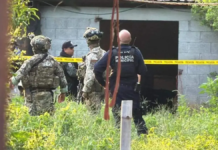
The discrepancies between the official registry and what is happening on the ground are evident in Choix. The May report counted only two recently displaced families in that municipality, but new episodes of violence have prompted residents of Aguacaliente de Baca and nearby ranches to leave.
Esperanza Hernández Lugo, an activist displaced for over a decade, recently visited the municipality and claims to have identified more than 100 families in this situation.
“There have been many families displaced, and since there has been no response of help in the municipality, they are passing through to the countryside looking for shelter and work,” she explained.
Among those who have left their homes are children, adults, and senior citizens. Some families remain in the municipal seat, while others continue on to other places in search of employment.
Hernández Lugo also stated that she knows of cases of families from Badiraguato who went to state authorities but were not recognized as displaced.
“There is no real census from when this situation of disputes began there until now,” she maintained.
For Cañedo, not knowing how many families were expelled, where they came from, and where they are now also limits the government’s capacity to design public policies and guarantee lasting solutions.
The report prepared by the specialist estimates that Sinaloa could already be approaching 4,000 displaced families, considering new exoduses that do not yet appear in official reports, while the real figure remains uncertain.
Source: revistaespejo