
Quintana Roo’s Economy Slows Down as Industrial Activity Falls Sharply, INEGI Report Shows
For years, Quintana Roo was considered one of Mexico’s economic engines thanks to tourism, construction, and the constant growth of cities such as Cancún, Playa del Carmen, and Tulum. However, the latest State Economic Activity Quarterly Indicator (ITAEE), prepared by INEGI, shows that the state’s economy is going through a period of slowdown. Although services continue to grow, the sharp decline in industrial activity placed the state in an unfavorable position within the national economic landscape.
The report, corresponding to the first quarter of 2026, indicates that Quintana Roo registered a 1.9 percent decrease compared to the previous quarter and a 2.6 percent drop compared to the same period in 2025, figures that place it among the states with the poorest economic performance in the country during that period.
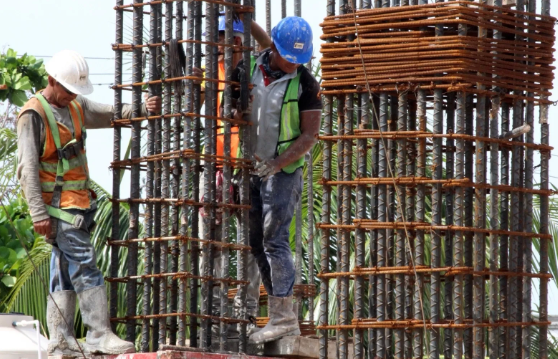
However, the figure that draws the most attention is not found in the overall behavior of the economy, but rather in one of its components. Secondary activities, which include construction, manufacturing, mining, energy generation, and other industrial activities, recorded an annual decrease of 22.7 percent. No other state reported such a significant decline in this sector during the first quarter of the year.
The magnitude of this setback helps explain the state’s overall result. In recent years, construction had been one of the main drivers of Quintana Roo’s economy, fueled by large tourism developments, real estate projects, and major infrastructure works. Now, INEGI’s data reflects a different scenario, with considerably weaker industrial performance. The report does not identify the specific causes of this decline, only confirming the result observed in the indicator.
Tourism Continues to Move Forward
Despite this situation, the report also shows that not all sectors evolved in the same way. Tertiary activities, where tourism, commerce, transportation, hotels, restaurants, and most services are concentrated, grew 1.2 percent compared to the same quarter of the previous year. This means that Quintana Roo’s most representative sector continues advancing, although that growth was not enough to offset the strong industrial contraction.
The agricultural sector also contributed positive results. Primary activities, related to agriculture, livestock, fishing, and forestry, increased 7.2 percent compared to the first quarter of 2025. Although this sector has a much smaller weight in the state economy compared to tourism or construction, the figure confirms that not all economic activities followed the same trend during the analyzed period.
Yucatán Grows, Campeche Contracts
One of the most interesting aspects of INEGI’s report is that it allows observation of how three neighboring states, which share the Yucatán Peninsula and maintain close economic and tourism relationships, followed very different paths during the first quarter of 2026. While Quintana Roo faced a slowdown marked by the collapse of its industrial activity, Yucatán showed sustained growth and Campeche once again ranked among the states with the greatest economic decline in the country.
Yucatán was the state in the region with the best results. In seasonally adjusted figures, it registered a 0.4 percent growth compared to the previous quarter and 2.2 percent compared to the first quarter of 2025. In original figures, the annual increase was 2.1 percent, allowing the state to appear among those that contributed positively to national growth.
The most relevant aspect is that Yucatán’s progress did not depend on a single economic sector. Primary activities, related to agriculture and fishing, grew 14 percent; secondary activities, where industry and construction are located, increased 3.6 percent; and tertiary activities, which include commerce and services, advanced 1.6 percent. In other words, the three main engines of the state economy showed positive results during the analyzed period, a behavior that contrasts with the situation observed in Quintana Roo.
The situation was very different in Campeche. The state registered the largest annual economic decline in the country, with a decrease of 5.3 percent in seasonally adjusted figures and 5.2 percent in original figures. In addition to occupying the last national position in economic growth, Campeche was also among the states that contributed the most negatively to Mexico’s overall economic performance due to the importance of its productive activities.
Although INEGI’s document does not explain the causes of this decline, the data shows that the drop was widespread. In tertiary activities, where commerce and services are included, the state recorded an annual decrease of 1.6 percent. In secondary activities, which include industry, construction, and mining, the decline was 6.7 percent. In contrast, primary activities grew 7.3 percent, although this increase was not enough to reverse the negative overall result of the state’s economy.
National Economic Landscape Shows Uneven Results
At the national level, INEGI’s report also reflects a mixed scenario. Hidalgo led annual growth with 8.2 percent, followed by Tamaulipas with 5.3 percent, Colima with 3.8 percent, Tabasco with 3.3 percent, and Puebla with 3.1 percent, according to seasonally adjusted figures.
On the opposite side are Campeche, Coahuila, Morelos, Oaxaca, and Quintana Roo, states that recorded the greatest annual decreases. The contrast between both groups shows that Mexico’s economic performance was not uniform during the first quarter of the year and that regional differences remain significant.
The report also identifies the states that contributed the most to national growth. This classification highlights Tamaulipas, the State of Mexico, Hidalgo, Nuevo León, and Puebla. This means that, in addition to growing, they had an important impact on Mexico’s overall economic results due to the size of their economies.
The State Economic Activity Quarterly Indicator (ITAEE) is considered by INEGI as an indicator that helps identify the short-term direction of each state’s economy. By incorporating information from agricultural, industrial, commercial, and service activities, it provides an updated overview of the economic evolution of Mexico’s states.
In the case of Quintana Roo, this economic snapshot shows a state economy that continues to rely on tourism and services, but faces a major challenge due to the decline in industrial activity, a factor that ultimately placed the state among those with the weakest economic performance in the country during the first quarter of 2026.
Source: laverdadnoticias