
Sheinbaum Highlights Sargassum Recycling Strategy in Quintana Roo: Companies Turn It Into Bricks, Textiles, Fertilizers, and Biogas
While presenting a comprehensive strategy for the management and handling of sargassum in Quintana Roo, President Claudia Sheinbaum Pardo stated that after being collected, different local companies recycle the macroalgae and transform it into bricks, concrete, textiles, biodegradable sandals, while others produce biogas and fertilizers.
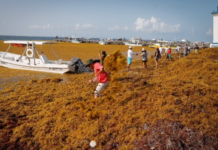
During the morning press conference on Thursday, July 30, the federal president highlighted that the Secretariat of the Navy (Semar) transports the sargassum to docks, where local entrepreneurs recycle it. Therefore, the main objective of her administration and that of Mara Lezama, governor of Quintana Roo, is that the thousands of tons of this algae that reach the coasts of the Mexican Caribbean can be reused.
In this regard, Governor Mara Lezama indicated that 14 million pesos were invested for the installation of a biogas plant with the support of specialists and young entrepreneurs. She pointed out that currently, sargassum represents 94% of the raw material needed to produce biofertilizers, which is why she will seek for the corresponding authorities to grant more certifications.
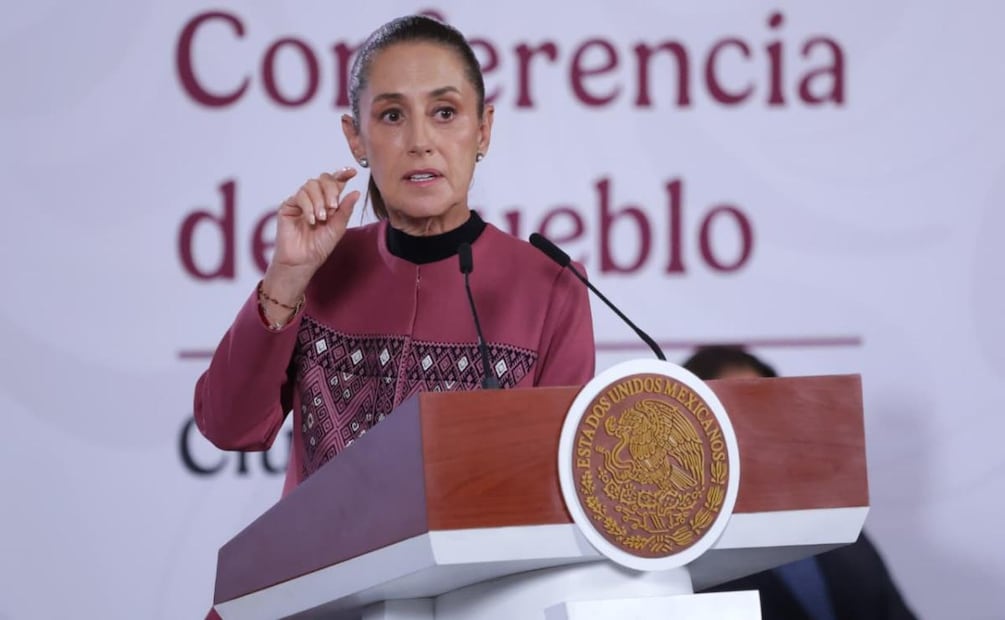
“These scientists provide certainty to all of these possible products that exist today, in addition to highly innovative people working on sandals, colored pencils, and the certification of how they can be converted into this asset. Today, Cofepris has approved the biofertilizer, and we are 100% certain that it can be used to produce jewelry. We are in the process so that authorities, scientists, academics, and whoever is responsible for granting certifications can provide them, allowing more companies to continue being created,” she said.
On the other hand, Félix Navarrete, president of CarbonWave, explained that sargassum recycling can produce cosmetics, textiles, and bioplastics, with approval from the Federal Commission for Protection against Health Risks (Cofepris). He reported that these products are already being exported to other countries.
“Sargassum has been viewed as a harmful entity, and that has limited the perspective of how it can be used. Today I can clearly say that sargassum can be refined, these toxic elements and heavy metals can be isolated, and sargassum has great benefits within itself. It is an algae, it is a wonderful organism,” he explained at the National Palace.
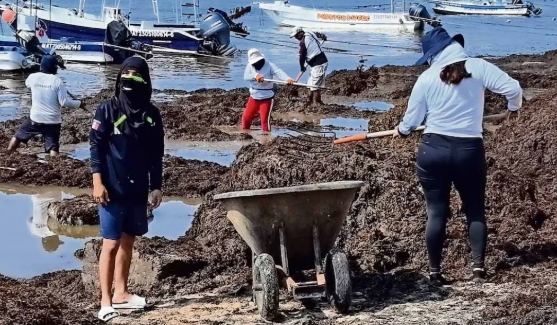
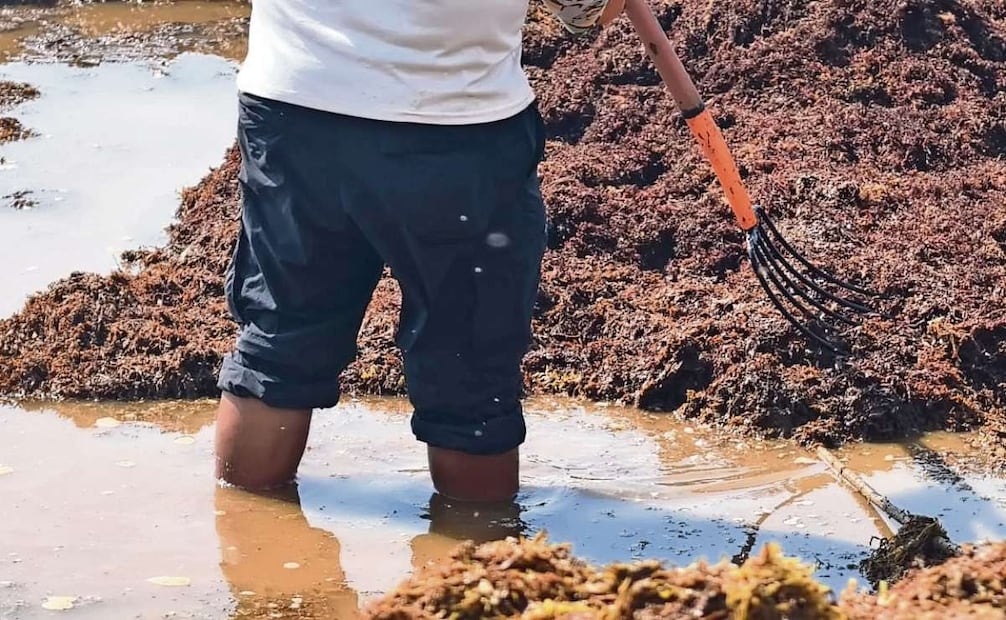
President Claudia Sheinbaum also stated that sargassum collection in the state represents a significant source of employment, as each hotel employs up to 70 people for this task. In addition, she expressed that Mexico is a leader in implementing strategies to recycle and reduce algae in the oceans, which is why a meeting will be held with specialists, hotel operators, and authorities.
“Therefore, it has many recycling possibilities. In particular, this company, CarbonWave, produces fertilizer with certain nutrients that help agricultural development. So it has many possibilities. The important thing is capturing it in the sea for recycling, and when it reaches the beach, having special management so that it does not create any contamination problems,” she explained.
Source: eluniversal