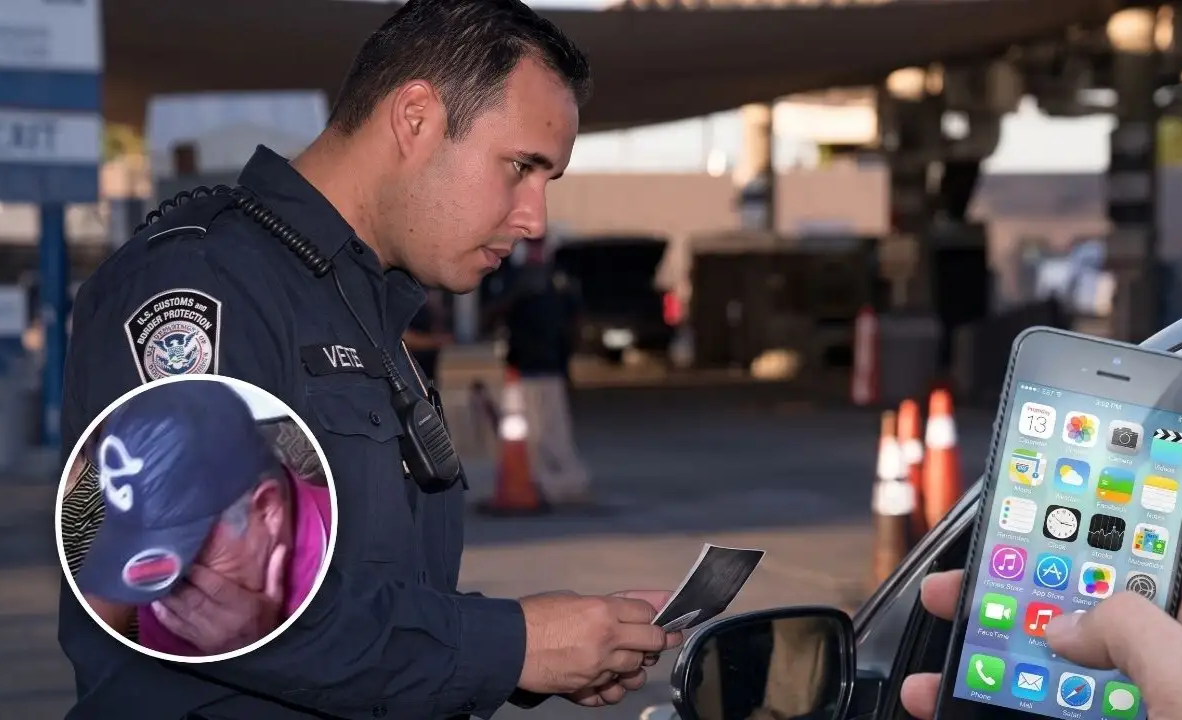

Thousands of people cross from Nuevo Laredo into Texas every day for work, shopping, or tourism. A court case in the United States has raised concerns because it could set a precedent regarding what happens if someone deletes information from their phone while officers from U.S. Customs and Border Protection (CBP) are attempting to inspect it.

The case centers on Samuel Tunick, a 30-year-old American activist who is facing federal charges after activating a security feature that erased all the data on his cellphone while federal agents were attempting to inspect it during an airport screening in the United States.
Although the incident occurred at Hartsfield-Jackson Atlanta International Airport, legal experts believe the outcome of the case could influence future border inspection procedures throughout the United States.
What Happened to Samuel Tunick and Why Could He Face Up to Five Years in Prison?

According to the federal indictment and reports published by 404 Media, the incident occurred in January 2025 when Tunick returned from a trip to the Dominican Republic.
Upon arriving in Atlanta, he was stopped by agents from the Department of Homeland Security (DHS) and CBP, who searched his luggage but found no illegal items. They then requested to inspect the contents of his cellphone.
According to the published reports, Tunick asked to speak with an attorney and refused to provide his regular phone passcode. Instead, he entered what is known as a duress password, a feature available in GrapheneOS, a privacy-focused mobile operating system.

After entering that code, the device performed a complete factory reset, deleting all stored data before agents could access it.
Months later, federal prosecutors filed charges of obstruction of justice and destruction of property to prevent seizure. If convicted, Tunick could face up to five years in federal prison.
It is important to note that Tunick has not been found guilty. The case remains pending, and a court will determine whether he bears criminal responsibility.
What Does This Mean for People Crossing from Nuevo Laredo into Texas?
For residents of Nuevo Laredo, where thousands of people cross into the United States every day for work, family visits, medical appointments, or business, the case has particular significance.
CBP has broad authority to conduct inspections at U.S. ports of entry. Under the border search exception, U.S. authorities may inspect luggage and even electronic devices without necessarily obtaining a search warrant, although the scope of those powers continues to be debated in courts and by civil rights organizations.

That does not mean that anyone who deletes files from a cellphone will automatically face criminal charges. What makes Tunick’s case unusual is that, according to prosecutors, the data was erased during an official inspection, while agents were already attempting to access the device.
The Debate Between Digital Privacy and Border Security Continues
The case has also drawn responses from organizations such as the Electronic Frontier Foundation (EFF) and the Electronic Privacy Information Center (EPIC), both of which argue that smartphones contain vast amounts of personal information and that searches of these devices should be subject to stronger privacy protections.
Tunick’s defense argues that authorities acted without a warrant and contends that the prosecution is intended to send a message about the limits of digital privacy protections. Federal prosecutors, meanwhile, maintain that intentionally deleting the data constituted obstruction of an official investigation.
For travelers crossing from Nuevo Laredo to Texas, the key takeaway is not that protecting personal information is prohibited, but rather that actions taken during a border inspection can have legal consequences depending on the specific circumstances of the case.

Source: elmanana