
The Maya World Textile Center (CTMM), which houses a collection of 3,400 pieces from Chiapas, Guatemala, and Yucatán, has won an award granted by the British Museum. Through this recognition, the museum will be able to receive material documenting the traditional indigo dyeing technique and make it available to the general public through an open-access platform as part of its Endangered Material Knowledge Programme.
Karla Faro Ruiz, coordinator of the Educational Services area at the CTMM, explained that the award is a grant provided by the British Museum through Arcadia as part of the EMKP, which will allow the center to improve its photographic equipment and produce higher-quality audiovisual documentation to be submitted to the British Museum.
She added that once the photographic and video documentation is completed, the information will be uploaded to a British Museum database, where the public will be able to access it freely.
For example, she explained that anyone interested in learning about natural dyes and the indigo dyeing technique traditionally used by Francisco Álvarez Montoya, who passed away last December, will be able to visit the website and download the available information, including videos, photographs, and transcriptions of the formula.
She expressed pride in continuing the CTMM’s efforts to preserve traditional techniques, such as the indigo dyeing technique associated with the Mexicanos neighborhood, one of the traditional areas of the city. She explained that the center began a collaborative project with one of its main practitioners, Francisco “Panchito” Álvarez, to rescue and document the technique.
Álvarez Montoya, a dyer and weaver from the Mexicanos neighborhood in San Cristóbal, received the Living Human Treasure recognition from the State Council for Culture and the Arts (Coneculta) last year.
Faro Ruiz explained that the grant application was submitted together with collaborators including Katarin Laurelle from Canada; Jorge Jiménez, an anthropologist from Ixtapa; Cecilia Gómez, a weaver and dyer from San Andrés; and Francisco’s grandson, José Emanuel Hernández.
Together, they will recreate an indigo dyeing vat using the traditional process practiced by Francisco. Afterwards, a group of women artisans from the Highlands of Chiapas will reproduce the technique so that it can be passed down and promoted within their communities and textile projects.
Karla Faro explained that 156 projects competed for the grant, with 28 ultimately selected, including the center, which is located in the former Santo Domingo convent in San Cristóbal.
She added that the information provided by the center will become available through the British Museum beginning next January.
The grant consists of 300,000 pesos, which will be used for fieldwork, interviews in communities, photography, video production, and ultimately the creation of a documentary video containing the complete record of the project.
The CTMM houses four collections: one belonging to Fomento Cultural Banamex, another belonging to the Pellizzi Foundation, the center’s own collection, and another consisting of 186 pieces from a religious association, all originating from the Highlands of Chiapas.
The CTMM also has several specialized areas, including conservation and restoration, research, educational services, and training for women artisans, in addition to its administrative department.
Its work focuses on educating the public and rescuing ancestral techniques, including natural dyes, backstrap loom weaving, and embroidery.
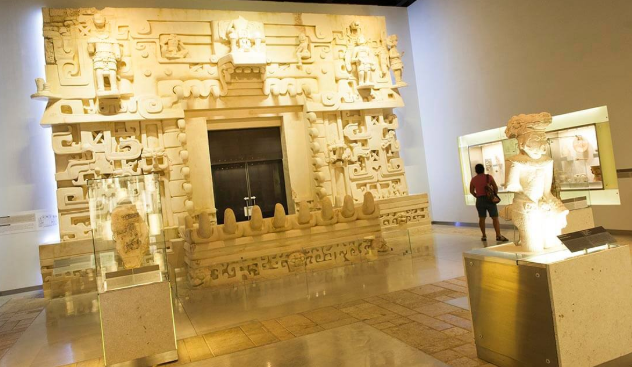
The center also has an exhibition room where visitors can view its collections. Its museum work includes preventive conservation and research. Several artisans have visited the center to consult historical textiles in order to create replicas, which provides them with valuable knowledge and helps preserve traditional textile techniques.

Source: jornada