
Oaxaca is one of the areas of Mexico with the highest seismic activity due to its location in a zone where tectonic plates interact. Therefore, earthquakes can occur in different parts of the state and vary in both magnitude and depth. The National Seismological Service (SSN) will provide the official report on seismic activity.
It is important to note that, during an earthquake, authorities recommend remaining calm, moving away from windows and objects that could fall, and following the instructions of Civil Protection. If the movement is strong, it is important to check the condition of the building before returning to areas that could pose a risk.
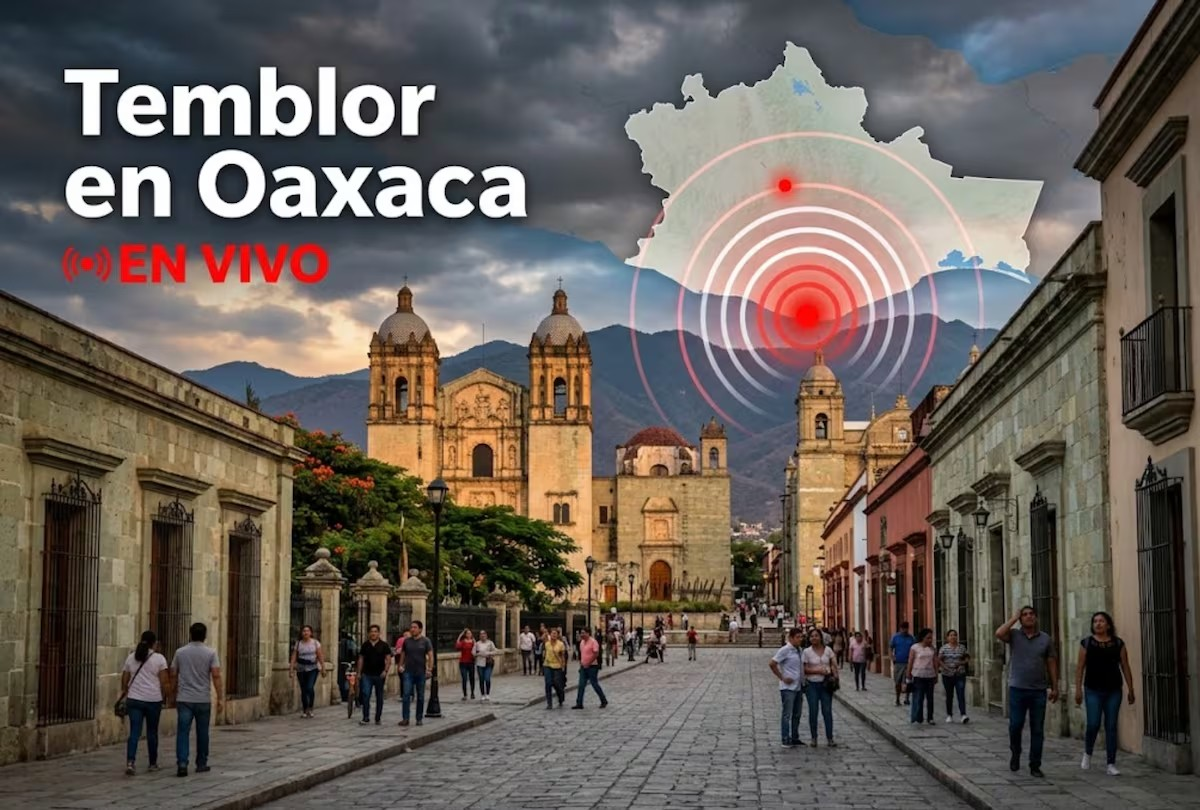
Earthquake in Oaxaca LIVE today, Monday, August 17
The National Seismological Service (SSN) will provide updated information on today’s seismic activity, Monday, August 17.
Oaxaca is one of the areas with the most seismic activity in Mexico
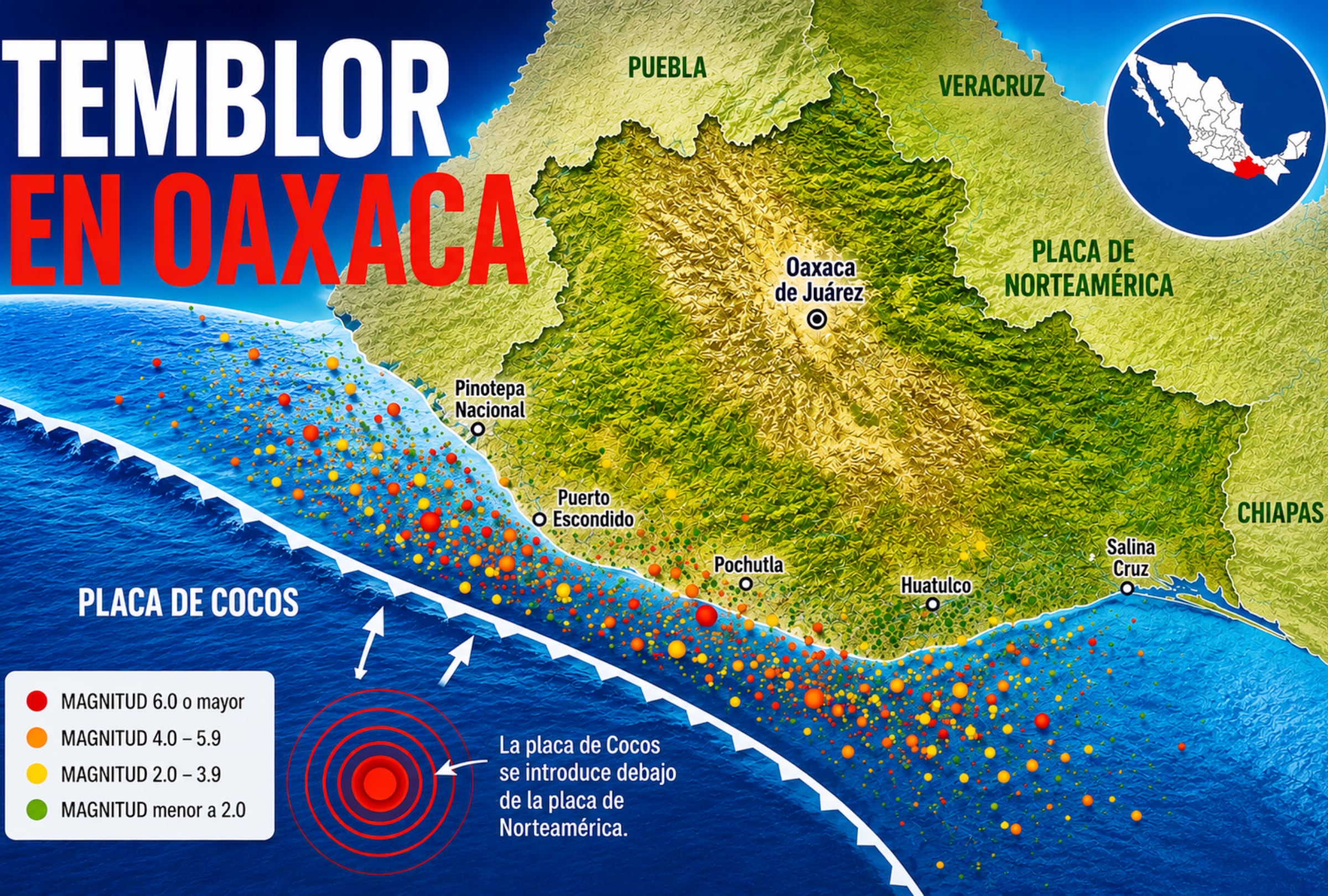
Oaxaca is one of the states with the highest seismic activity in Mexico. According to SSN reports, it records approximately 25% of the earthquakes that occur in the country, a situation mainly related to the interaction between the Cocos Plate and the North American Plate.
The activity is not concentrated exclusively in one area. The coast of Oaxaca and regions such as Puerto Escondido, Pochutla, Puerto Ángel, Huatulco, and Pinotepa Nacional are among the areas historically affected by seismic activity.
How does the SSN monitor earthquakes in Oaxaca?
The National Seismological Service has stations distributed throughout practically all of Mexico to detect and analyze seismic activity. The data collected makes it possible to establish parameters such as the origin time, magnitude, epicenter coordinates, reference location, and depth.
There are seismological stations in Oaxaca that are part of this infrastructure. Among them are those in Oaxaca and Huatulco, whose records can be consulted through the SSN’s broadband seismograms.
The organization warns that the initial data from an earthquake may be modified later because new records are received from the stations and the calculated parameters are reviewed.
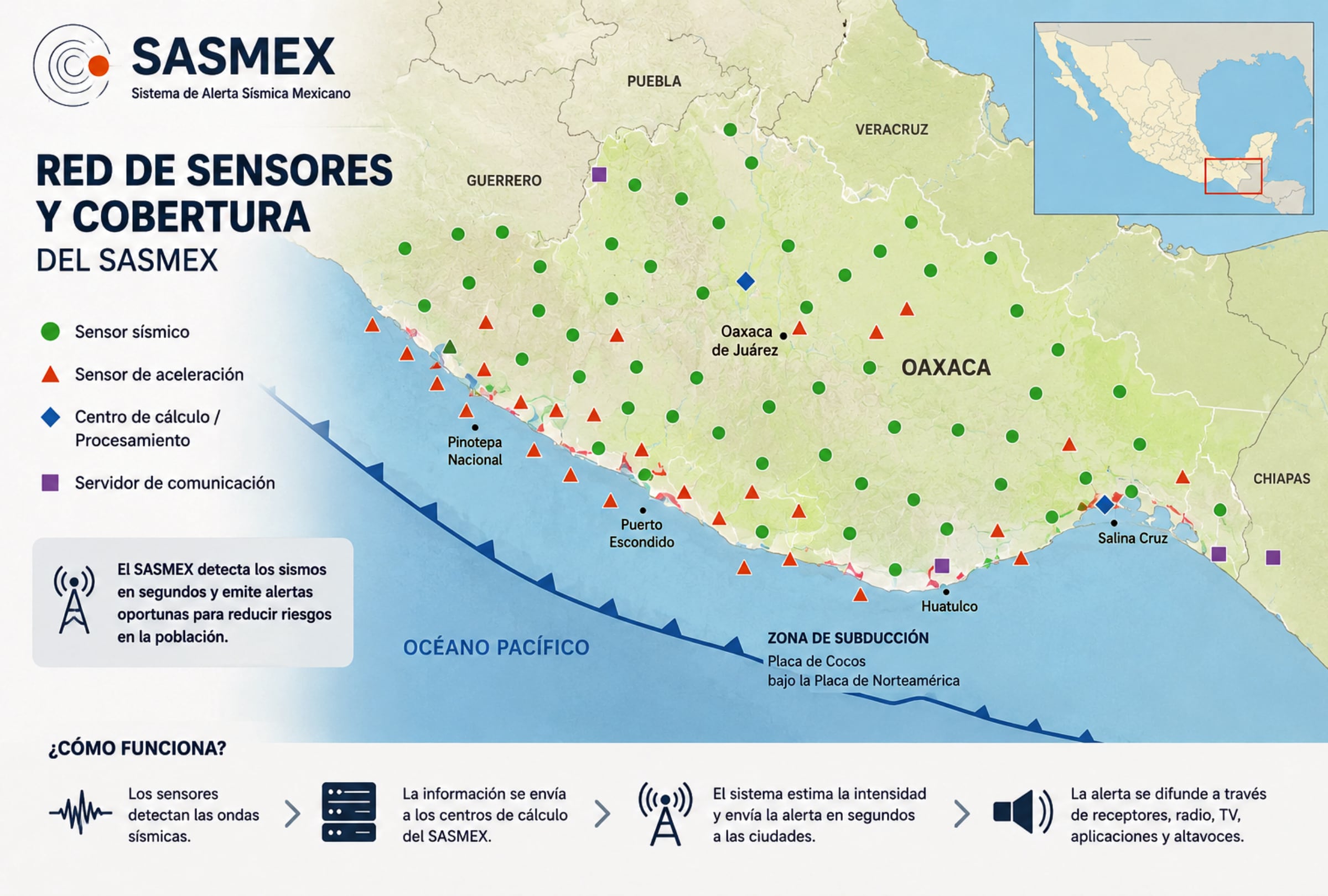
The Mexican Seismic Alert System (SASMEX) uses a network of sensors to detect seismic activity and transmit information that allows early warnings to be issued in areas with coverage. PHOTO: SASMEX
What is the Mexican Seismic Alert System and how does it work in Oaxaca?
The National Seismological Service does not operate the seismic alert system. The Mexican Seismic Alert System (SASMEX) is operated by the Center for Seismic Instrumentation and Recording (CIRES).
The system has sensors covering seismic subduction regions of the Cocos Plate and the southern Trans-Mexican Volcanic Belt, including Oaxaca. When an earthquake that meets established criteria is detected, the system can issue warnings to certain cities before the strongest seismic waves arrive.
What should you do before, during, and after an earthquake?
An earthquake can occur without warning, which is why preparation is one of the main tools for reducing risks.
Before an earthquake
- Prepare a family emergency plan and establish a meeting point.
- Have water, food, a flashlight, a first-aid kit, and other basic supplies available.
- Secure furniture, shelves, and heavy objects that could fall.
- Identify the safest areas inside your home, office, or school.
- Know the evacuation routes and meeting points.
During an earthquake
The main recommendation is to drop, cover, and hold on. If you are inside a building, seek protection under a table or sturdy structure and protect your head and neck.
Stay away from windows, glass, shelves, and objects that could fall. Do not run toward the exit while the shaking continues and do not use elevators.
If you are outdoors, stay away from buildings, poles, cables, and other elements that could fall. If you are driving, stop in a safe location and remain inside the vehicle until the shaking ends.
After an earthquake
Check whether anyone is injured and inspect for possible damage only when it is safe to do so. Watch for gas leaks, electrical problems, or structural damage.
Stay informed through official sources and remain alert for possible aftershocks. Avoid entering damaged buildings until authorities determine that they are safe.
The main seismic zones of Oaxaca
Oaxaca’s seismic activity is closely related to its location along the Mexican Pacific coast and the interaction between the tectonic plates that converge offshore.
The coastal region concentrates a significant portion of the activity associated with the subduction of the Cocos Plate. Locations such as Puerto Escondido, Huatulco, Puerto Ángel, and Pinotepa Nacional appear in historical SSN records as areas that have experienced the effects of significant earthquakes.
However, the distribution of earthquakes does not mean that the risk is limited to the coast. Seismic activity can occur in different parts of the state, and its effects will depend on factors such as depth, magnitude, distance from the epicenter, and local ground conditions.
OAXACA (MEXICO), 06/17/2026.- Information about where and at what time the latest earthquakes in Oaxaca were recorded this Monday, August 17, as well as their magnitude, depth, and epicenter, according to the National Seismological Service (SSN) report. PHOTO: NOÉ YACTAYO
Can earthquakes be predicted?
There is currently no scientific method that can determine precisely when, where, and with what magnitude an earthquake will occur.
The SSN explicitly states that earthquakes cannot be predicted. Monitoring allows seismic movements to be detected and analyzed once they occur, while early-warning systems seek to provide several seconds of notice before the strongest waves arrive in certain areas.
FAQ: Frequently asked questions about earthquakes in Oaxaca
Where can I check the latest recorded earthquakes?
The SSN has a “Latest Earthquakes” platform where recorded events and their main parameters can be consulted, including magnitude, date and time, epicenter location, and depth.
Why does Oaxaca experience so many earthquakes?
Oaxaca is located in a region of high seismic activity, mainly due to the interaction between the Cocos Plate and the North American Plate. The subduction of the former beneath the latter off the Pacific coast generates significant seismic activity.
Do all areas of Oaxaca have the same seismic risk?
No. Seismic activity can vary from one region to another. The location relative to rupture zones, earthquake depth, ground characteristics, and buildings all influence the effects that each community may experience.
What is an aftershock?
An aftershock is an earthquake that occurs after a main event in the same area or nearby. Although it is normally smaller in magnitude, it can be significant if it affects structures that have already been damaged.
What is the difference between magnitude and intensity?
Magnitude describes the size of the earthquake at its source, while intensity refers to how the movement is perceived and the effects it produces in a particular location. Therefore, the same earthquake can have a single magnitude but different levels of intensity depending on the location.
Source: gestion.pe