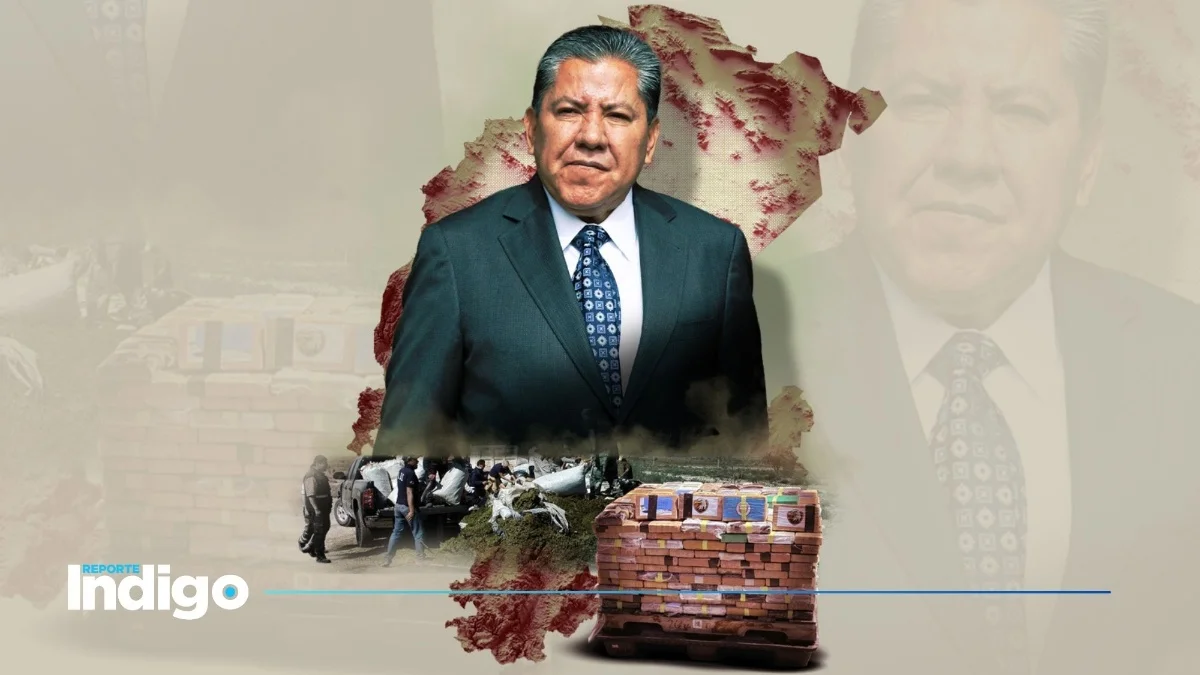

This bleak outlook on the current conditions in Zacatecas was identified by U.S. authorities, who even warned that the CJNG has regional bosses stationed in the state to oversee the operation of this entire criminal infrastructure for the production of narcotics.
The alleged territorial control exercised by the criminal organization over areas of Zacatecas, according to descriptions provided by the U.S. Department of the Treasury, contrasts with the narrative of the government of Monreal Ávila. That official account maintains that the current state administration has, in some way, managed to gain the upper hand against the criminal groups operating in the state.
Zacatecas, a CJNG stronghold for producing fentanyl and other drugs
The consolidation of Zacatecas as one of the CJNG’s strongholds for the production of fentanyl and other illicit drugs in Mexico, while the Monreal Ávila government implements its public security strategy, was revealed by U.S. authorities on July 23, 2026, when new sanctions were announced against members of the criminal organization.
“Among the regional bosses subordinate to ‘El Jardinero’ are José Octaviano García Martínez (García Martínez), Cuauhtémoc Rivera Zepeda, and Uriel Hernández Morales. García Martínez is the CJNG’s regional boss in Florencia, Zacatecas. These regional bosses produce large quantities of fentanyl, cocaine, and methamphetamine in clandestine laboratories in Jalisco and Zacatecas, and operate extensive distribution networks to transport narcotics to cities in the United States,” the U.S. Department of the Treasury stated in a communiqué.
‘El Jardinero’ and the CJNG criminal network in Zacatecas
In that excerpt from its report, the agency refers to Audias Flores Silva, alias “El Jardinero,” one of the CJNG’s main leaders, who was even considered a possible successor to the group’s top leader, Nemesio Oseguera Cervantes, who was killed by military personnel in February.
Flores Silva, who would therefore be linked to the criminal infrastructure established in Zacatecas for narcotics production, was arrested by the Mexican government in April. However, the same Office of Foreign Assets Control, part of the Department of the Treasury, warns in its report that the criminal structure allegedly built by the cartel leader continues to operate today.
U.S. warns that CJNG maintains territorial control in Zacatecas
In the report, U.S. authorities state that Flores Silva, known as “El Jardinero,” has maintained control over considerable areas of territory in Zacatecas, as well as in Jalisco, Nayarit, Michoacán, and Guerrero. This deepens the contradictions with the discourse of the Monreal Ávila government, which claims that homicides have declined as a result of its administration’s security strategy.
Just on August 11, 2026, for example, the Monreal Ávila government stated: “Zacatecas ranked among the states with the greatest reduction in intentional homicide in Mexico, recording a 53.2 percent decrease in its daily average during the January–July 2026 period, compared with the same period in 2025 (…). Permanent coordination between the State Government and the Security Cabinet of the Government of Mexico, through the State Coordination Table for Peacebuilding, has made it possible to coordinate the capabilities of the Secretariat of Security and Citizen Protection, the Secretariat of National Defense, the Secretariat of the Navy, and the National Guard with state law enforcement agencies, under an intelligence and investigative framework that has resulted in a sustained reduction in crime rates.”
Laboratories and camps reveal organized crime presence in Zacatecas
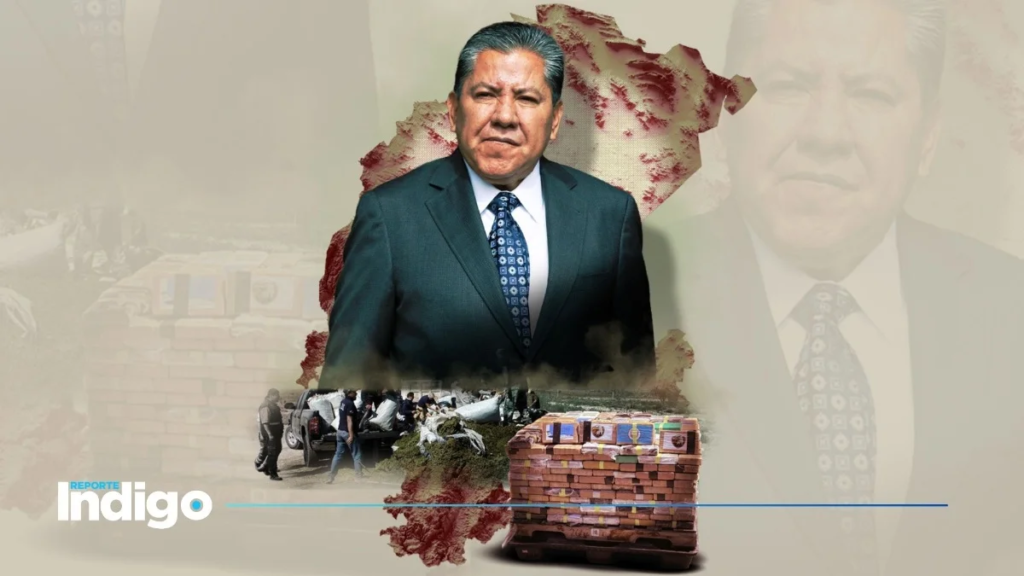
Despite this narrative maintained by the Monreal Ávila government, local authorities themselves have been able to verify in the field how widespread organized crime is in the state, with numerous criminal camps, clandestine laboratories, and safe houses. This was confirmed during Operation Rastrillo, launched after dozens of bodies were discovered in Zacatecas municipalities, some of them hanging in public spaces.
“With a deployment of 629 personnel from the Mexican Army (Defense), the National Guard (GN), and the state Public Security Secretariat (SSP), Operation Rastrillo has resulted in 20 arrests, two clandestine laboratories being disabled, nine organized crime camps dismantled, and 29 vehicles seized, members of the Peacebuilding Coordination Table reported,” the Zacatecas government stated.
Source: reporteindigo