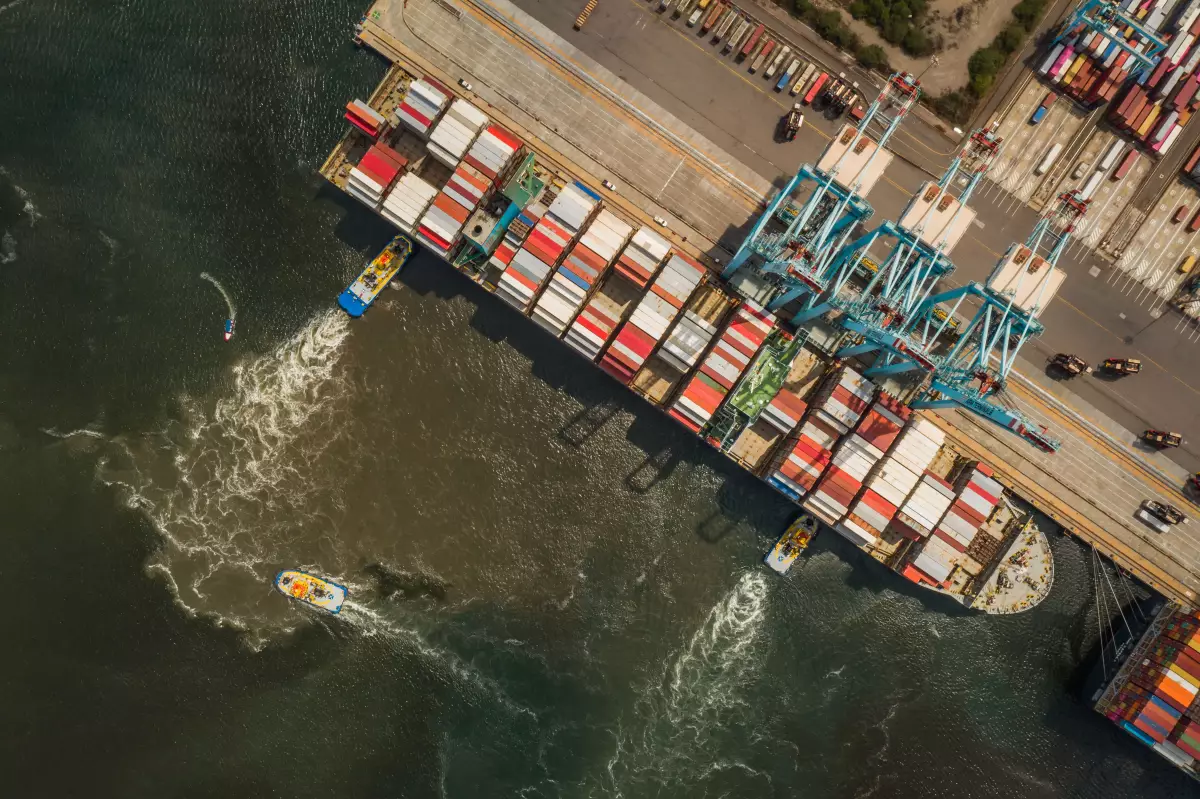

The increase in tariffs on products made in China, including auto parts, textiles and footwear, among others, which began on the first day of this year, has not dampened demand for products manufactured on the other side of the world. The situation is already being reflected in Mexico’s ports.
On the Pacific coast, where containers arriving from Asia enter the country, the situation is more evident. From January to July, the total number of containers handled increased 8.1%, reaching 4,460,043 TEUs (20-foot equivalent units), while on the Gulf of Mexico coast, the figure was 1,303,964 TEUs, representing a 7.8% contraction, according to data from the Secretariat of the Navy (Semar).
The port of Manzanillo, Colima, which leads the country in container volume, handled 2,455,956 TEUs, representing an 11.7% increase. Some port operators, such as Contecon, have prepared their infrastructure to receive increasingly larger vessels.
At the end of 2021, the subsidiary of Filipino group International Container Terminal Services announced a $230 million investment aimed at increasing its annual capacity from 1.3 million TEUs to 2 million through the acquisition of specialized cranes.
The situation is similar at the port of Lázaro Cárdenas, Michoacán. From January to July, 1,583,892 TEUs were handled, representing a 6.7% increase compared with the same period last year.
Likewise, investments have been focused on this port with the goal of increasing its capacity. Throughout last year, private investment totaled 7.86 billion pesos, while public investment amounted to 327 million pesos, according to data from Asipona Lázaro Cárdenas.
The increase in imports has been significant enough that some companies, such as Contecon, have reported problems with delays in customs clearances, which used to operate at a slower pace than required by the daily dynamics of logistics operations, where every minute counts.
Today, companies in the sector such as 99 Minutos say that port congestion is still ongoing, meaning that container accumulation and waiting times end up generating additional charges, known as demurrage, which directly affect importers’ financial margins.
“When a container sits at the port for days waiting for a truck, the entire supply chain slows down. It is not just about the storage penalty, but also the opportunity cost of not having the product on the shelf or in the warehouse when the customer needs it,” said Manuel Brenner, operations director at Freight99 at 99 Minutos.
On the Pacific coast, other ports are also experiencing growth in containerized cargo, such as Guaymas, Sonora, which handled 8,787 TEUs, representing an increase of 25%.
Source: expansion