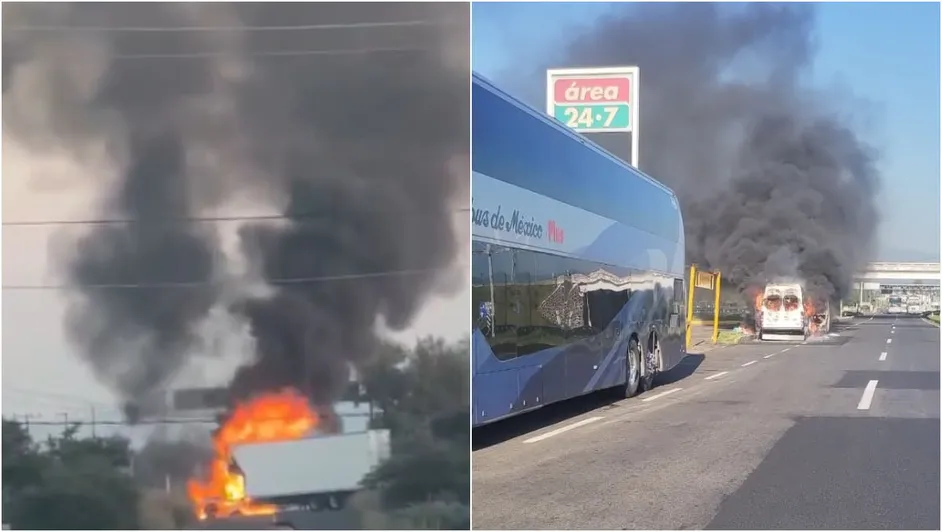

Michoacán was once again the scene of an intense wave of violence. The incidents began in the early hours of August 19, 2026, when state and federal authorities launched an operation against the Jalisco New Generation Cartel (CJNG).
According to initial reports, the road blockades and burning of vehicles at at least 24 points across the state were the result of the dismantling of a criminal cell linked to Heraclio Guerrero Martínez, alias “Tío Lako,” a regional leader of the “four-letter cartel.”
Following the recent events, here are the key details of Wednesday’s operation.
Road blockades and vehicle burnings
Early Wednesday morning, a federal operation was ordered in Michoacán with the objective of dismantling a criminal cell linked to organized crime.
Following operations in the municipalities of Tanhuato and Ecuandureo, members of the CJNG began blocking various points across the state.
The first affected areas were reported in Morelia, Tzintzuntzan, Coeneo, Zamora, Chilchota, Ecuandureo, and Tangancícuaro.
At 7:37 a.m., Michoacán’s C5 reported blockades at at least seven locations. One hour later, the number of affected roads and highways had increased to a total of 24.
Which roads were affected in Michoacán?
At 8:30 a.m., the reported affected locations were:
- Morelia–Quiroga Highway, near El Correo.
- Pátzcuaro–Tzintzuntzan Highway, near Sanabria.
- Comanja–Coeneo Highway, near Comanja.
- Crucero Franco Reyes.
- La Piedad–Ecuandureo Highway, near La Esperanza.
- La Piedad–Ecuandureo Highway, near the Libramiento Marti Mercado.
- La Piedad–Vista Hermosa Highway, near Estación Patty.
- La Piedad–Numarán Highway, near Villas de Las Lomas.
- La Piedad–Carapan Highway, in Churintzio.
- La Piedad–Carapan Highway, near Zináparo, in the community of El Salvador.
- Zamora–Ecuandureo Highway, in the community of El Sauz.
- Ecuandureo–La Piedad free highway, in the community of Quiringüicharo.
- Zamora–La Barca Highway, near El Pochote.
- Purepero–Tlazazalca Highway.
- El Pochote–Ario de Rayón Road.
- Zamora–Carapan free highway, in the community of Los Nogales.
- Chilchota–Carapan free highway, in the community of Tanaquillo.
- Zamora–Ixtlán free highway, at the boundary between both municipalities.
- Entrance to Ecuandureo, between the communities of Ucácuaro and Ecuandureo.
- Carapan–Zacapu Highway, near the CFE substation.
- Tangancícuaro–Carapan State Highway, at kilometer 124, near Los Nogales.
- La Barca Highway, near Los Sauces.
As of 10:20 a.m., traffic had been restored at only seven of the blocked locations.
President Claudia Sheinbaum confirms operation in Michoacán
At approximately 9:00 a.m., President Claudia Sheinbaum Pardo confirmed during her morning press conference that a federal operation was underway in Michoacán.
At the National Palace, the president explained:
“There is an operation to detain a target, or several relevant targets. Later, the security cabinet will provide the information, which is why some locations were taken.”
She also stated that the Secretariat of National Defense and other security agencies were present in the affected area.
Meanwhile, the Michoacán Secretariat of Public Security (SSP) reported the deployment of Civil Guard personnel at various points across the state to address the road blockades.
“From the very beginning, we have maintained a presence and operational deployments to clear the roads, maintain order, and guarantee the safety of the population,” the agency stated.
Governors of Jalisco and Michoacán respond to blockades and vehicle burnings
At 9:06 a.m., Jalisco Governor Pablo Lemus Navarro reported that, as a result of the security operation in Michoacán, operational coordination had been established with the Secretariat of National Defense, the Secretariat of Security and Citizen Protection (SSPC), and the National Guard (GN).
“So far, no incident has been recorded in our territory, but we remain attentive to any eventuality. We will continue reporting,” he wrote on social media.
For his part, Michoacán Governor Alfredo Ramírez Bedolla confirmed “reactions from criminal groups” following a series of effective arrests carried out by authorities.
As a result, he reported that state security forces, in coordination with the Defense Ministry and National Guard, reinforced operations in the regions of Zamora, La Piedad, and Pátzcuaro to restore free movement following the road blockades.
SSPC confirms arrest of members of Los Guerrero
At 1:00 p.m., the federal security cabinet confirmed the arrest of nine members of the criminal cell known as “Los Guerrero.”
Among those arrested were Marisol “N” and Lourdes “N,” identified as the daughter and romantic partner, respectively, of “Tío Lako.”
Through a statement, the SSPC identified the man as the regional leader of Los Guerrero in Michoacán and Jalisco.
Authorities reported that the operation resulted in the seizure of two properties, 64 vehicles, 16 firearms, grenade-launcher attachments, ammunition and magazines, drugs, eight improvised explosive devices, motorcycles, a drone, and tactical equipment.
The operation was carried out through intelligence and investigative work in Michoacán by personnel from the Defense Ministry, Secretariat of the Navy, SSPC, and Attorney General’s Office (FGR).
Michoacán governor confirms roads have been cleared
Following the federal security cabinet’s report, Governor Alfredo Ramírez Bedolla announced that, as of 1:15 p.m., all roads had been cleared, ensuring traffic and public safety.
“We are maintaining surveillance and operational actions in the region to preserve order and tranquility for everyone,” he added.
He also stated that the nine arrests represent significant progress in the security strategy and in the “weakening of criminal groups that affect the peace of Michoacán families.”
Source: milenio