
When looking at photographs from when she was younger in Mexico, Katherine Melero knows they represent much more than happy memories. For her, the images are a reminder of everything her mother left behind when she came to the United States from Mexico.
“This is me with my mom, and then there’s our whole family over there,” Melero said.
But now, she is not so sure that the American dream her mother pursued still exists, and that is one of the reasons she recently obtained Mexican dual citizenship.
“I think for us, we see it more as long-term planning. Obviously, we have a life here, we have friends here. It’s not easy to just pack up and move. But I think having it allows us to do things like start acquiring property in Mexico,” Melero said.
She is not the only one reconsidering where she wants to live. Last year, the Mexican Consulate in Los Angeles recorded a 160% increase in dual citizenship registrations.
Registrations increased to 6,338 in 2025, up from 2,428 in 2024, and everything points to the trend continuing this year, as 3,476 cases had already been registered between January and June.
Mexico’s consul general, Carlos González Gutiérrez, said that although the data does not provide a definitive reason for every applicant, they are identifying several factors that could explain the increase.
“I think if you ask why, there would be three main explanations. One is the times of uncertainty we are living through. For many immigrants, the possibility of returning to Mexico becomes more attractive,” González Gutiérrez said.
In addition to politics, he noted that the baby boomer generation is retiring and considering settling in Mexico. Finally, a new law that made the process of obtaining dual citizenship easier is also playing an important role.
“The government of President Claudia Sheinbaum, very deliberately, tried, on the one hand, to digitize much of the process and, on the other, eliminated requirements that perhaps were not necessary to make acquiring Mexican nationality as easy as possible,” González Gutiérrez said.
He added that witnesses and additional documentation had previously been required.
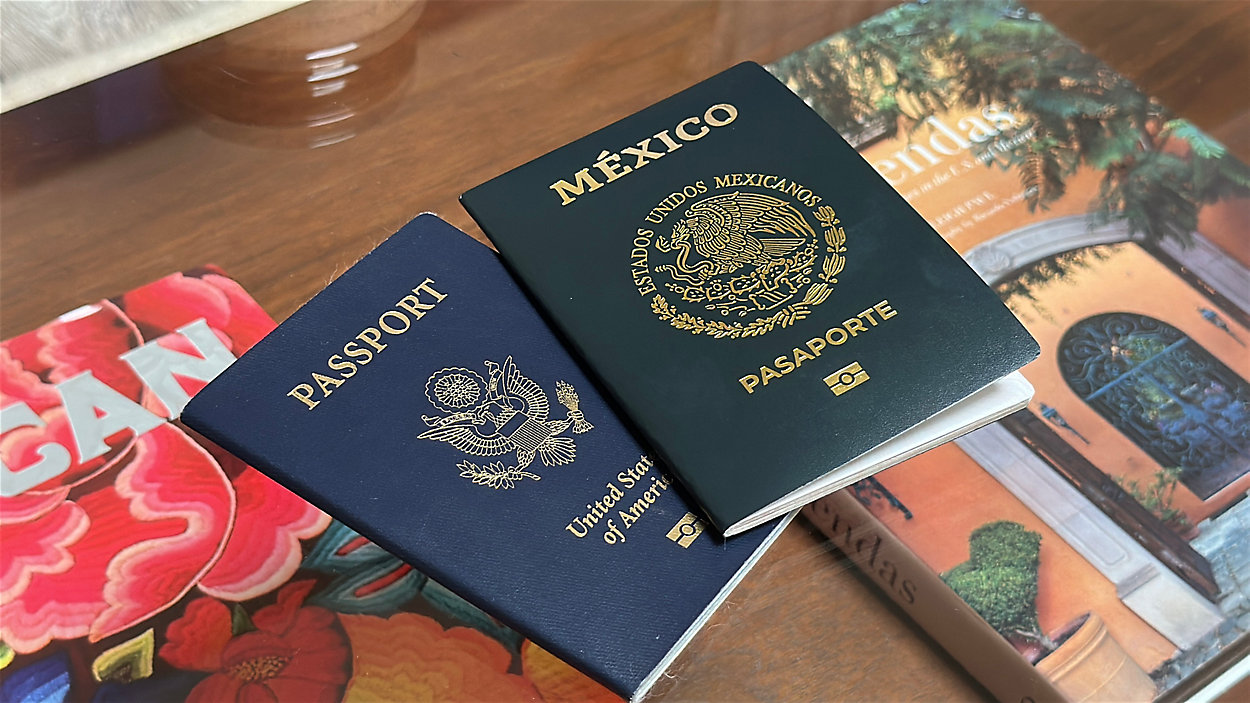
“Today, someone who has lived their entire life abroad can, if they are the son or daughter of a Mexican citizen, obtain a Mexican passport,” González Gutiérrez said.
And although the numbers may not be as surprising in Los Angeles, where the largest Mexican population outside Mexico lives, González Gutiérrez said the trend is also being seen at the other 53 Mexican consulates in the United States.
He noted that globalization could also be contributing to this trend.
“Now that there is so much remote work, they find that Mexico allows them to work there and travel to the United States every weekend, and perhaps it is a place where their money goes further,” González Gutiérrez said.
For Melero, the process took about five weeks, and her reasons align with what González Gutiérrez has observed.
“Politics is the main factor, if I’m being honest,” Melero said.
She explained that the current administration’s policies, specifically those related to immigration, were her main motivation for making this decision.
“I think there’s this feeling that now I know what people think about people who look like me or who come from a background like mine. People simply don’t even care. And I think that’s one of the main reasons people are considering other options,” Melero said.
After graduating from college, working in the American corporate world, and becoming a homeowner, Melero felt that she had fulfilled all the expectations placed on her. Although she said she is grateful for the opportunities she has had, she believes her work has not allowed her to achieve the quality of life she wants.
“Now I feel that if I stay in the United States, I would literally have to work all day, every day, just to make ends meet,” Melero said.
The decline in quality of life is also something she is considering as she plans to have children in the future.
“I just feel like I want them to know that there is more to life than just working. And I think that, as a society, because of all the factors that exist in the United States, that simply isn’t a reality here,” Melero said.
For her, dual citizenship is more than a second passport: it means expanding her options beyond the United States.
Source: spectrumnoticias