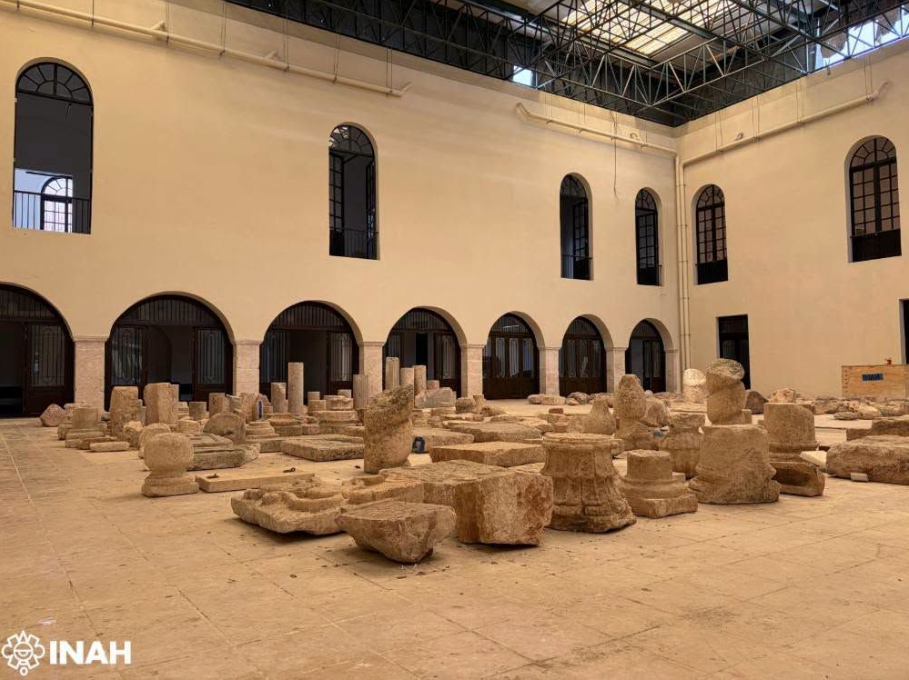

With the incorporation of the upper floor of the Ateneo Peninsular into the custody of the National Institute of Anthropology and History (INAH), the historic building in downtown Mérida will expand its cultural and conservation functions, with the goal of turning it into a new cultural landmark for residents and visitors to Yucatán.
The restoration of the building, which began in 2022 and was carried out in different stages through 2024, required an investment of more than 210 million pesos. After the work was completed, the building gradually began to recover its public use, and INAH now seeks to strengthen various activities there in addition to the spaces already in operation.
“The idea is to work together to turn this Ateneo Peninsular into a cultural landmark. It should be a cultural center for the people of Yucatán, of course, but also for visitors,” explained Anna Goycoolea, national coordinator of INAH Centers.
The ground floor continues to house spaces already open to the public, including the Maya Train Museum and the Site Museum, as well as a Fonart store.
Archaeological laboratories have also been established for the preservation and study of artifacts recovered during archaeological salvage work associated with the Maya Train.
A laboratory for the restoration and conservation of cultural heritage has also begun operating. Its infrastructure is expected to be strengthened so that it can become one of the country’s most important specialized facilities.
These spaces are joined by the INAH Photo Library in Yucatán, which houses historical materials, including photographic records related to archaeological excavations carried out in the state. The intention is for part of this collection to be displayed through temporary exhibitions.
The incorporation of the upper floor into INAH’s custody will also allow progress on new cultural initiatives, including conferences, colloquiums, congresses, concerts, and exhibitions, in coordination with the Secretariat of Culture and the Arts of Yucatán (Sedeculta).
“What will be very important is that we manage to bring this space to life; that people recognize it as a cultural landmark, that they can visit it, and that they also recognize it as a place for cultural activities,” she said.
The Ateneo Peninsular is located in a building constructed during the colonial period, next to Mérida Cathedral. It originally served as the Bishop’s Palace and remained associated with the Archdiocese of Yucatán until 1915, when Governor Salvador Alvarado promoted its transformation into a public and secular space, giving rise to its name as the Ateneo.
The building is also part of the history of the Yucatecan feminist movement, as it served as the main headquarters of the Rita Cetina Gutiérrez Feminist League, founded in 1919 and later promoted by Elvia Carrillo Puerto.
With this new stage under INAH’s custody, the goal is for the Ateneo Peninsular to become more than a space for housing collections and laboratories. It is intended to serve as a meeting point for cultural activities and heritage outreach, while also strengthening the tourism offering in Mérida’s Historic Center.
Source: lajornadamaya