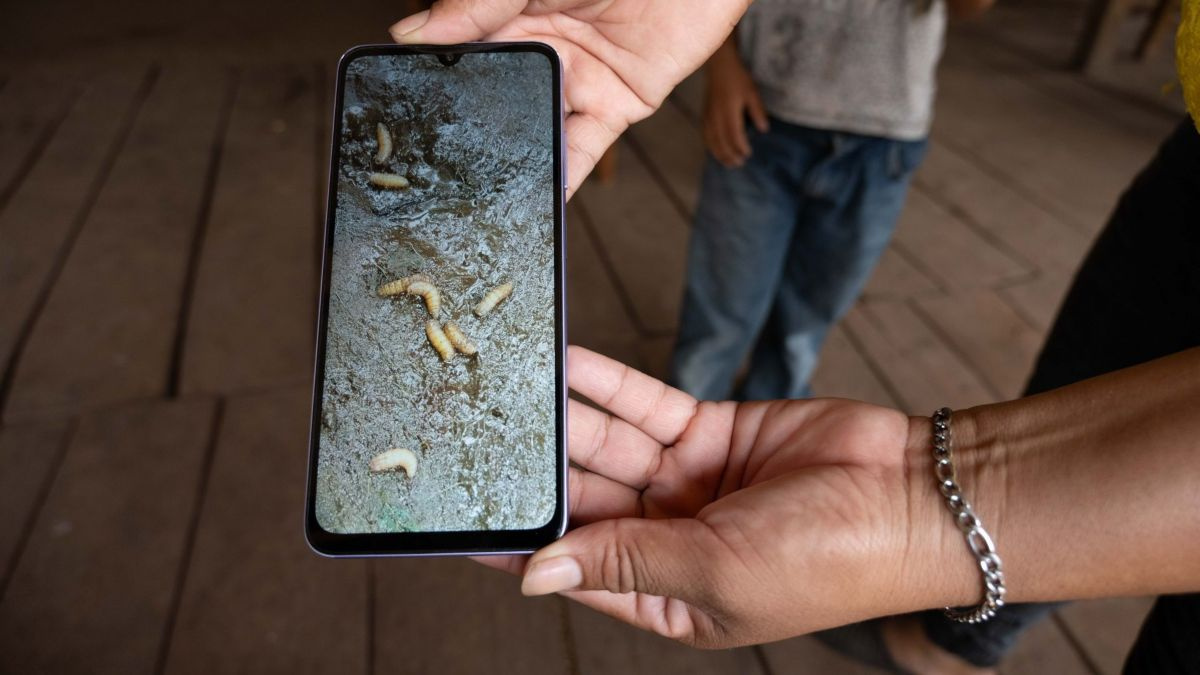

Thirty Mexican states have now recorded cases of New World screwworm, after Sonora confirmed its first case last Wednesday.
Only two states, Baja California and Baja California Sur, have not reported any cases, according to a report from the National Service for Agro-Alimentary Public Health, Safety and Quality (Senasica).
How many New World screwworm cases are there in Mexico?
According to the New World screwworm active cases report, as of August 18, 2026, there are 1,963 active cases. By state, they are distributed as follows:
- Zacatecas, 179
- Puebla, 166
- Chiapas, 122
- Oaxaca, 122
- Veracruz, 122
- Yucatán, 117
- Jalisco, 100
- San Luis Potosí, 98
- Nayarit, 97
- Querétaro, 86
- Chihuahua, 74
- Guanajuato, 69
- Hidalgo, 59
- Colima, 58
- State of Mexico, 57
- Morelos, 55
- Quintana Roo, 52
- Nuevo León, 49
- Durango, 42
- Guerrero, 41
- Sinaloa, 40
- Tamaulipas, 37
- Aguascalientes, 30
- Coahuila, 26
- Mexico City, 17
- Tabasco, 15
- Campeche, 12
- Tlaxcala, 11
- Michoacán, 9
- Sonora, 1
Regarding active cases by species, there are more active cases among cattle and dogs:
- Cattle, 876
- Canine, 726
- Equine, 117
- Swine, 112
- Ovine, 77
- Caprine, 41
- Feline, 8
- Avian, 5
- Leporid, 1
Cumulative New World screwworm cases in Mexico
Meanwhile, according to the Report on cumulative cases of New World screwworm in Mexico, from November 20, 2024, through August 18, 2026, there have been 38,820 cumulative cases.
Chiapas and Oaxaca are the states with the highest number of cumulative reports, while Sonora is currently the only state with just one reported case.
Cumulative cases by state are:
- Chiapas, 7,604
- Oaxaca, 5,074
- Veracruz, 4,720
- Yucatán, 2,792
- Puebla, 2,200
- San Luis Potosí, 1,708
- Tabasco, 1,360
- Tamaulipas, 1,308
- Hidalgo, 1,218
- Guerrero, 1,217
- Quintana Roo, 1,159
- Jalisco, 1,093
- Campeche, 1,076
- Querétaro, 893
- Nuevo León, 793
- Guanajuato, 718
- Michoacán, 641
- Zacatecas, 576
- Nayarit, 483
- State of Mexico, 448
- Colima, 442
- Morelos, 425
- Coahuila, 267
- Chihuahua, 160
- Durango, 156
- Aguascalientes, 106
- Sinaloa, 70
- Mexico City, 57
- Tlaxcala, 55
- Sonora, 1
Likewise, cumulative cases by species are:
- Cattle, 22,770
- Canine, 9,089
- Swine, 2,526
- Equine, 2,048
- Ovine, 1,116
- Caprine, 623
- Feline, 259
- Avian, 63
- Wildlife under professional care, 17
- Free-ranging wildlife, 9
- Leporid, 8
What is known about Sonora’s first New World screwworm case?
Last Wednesday, the Sonora government confirmed the first case in a cow located in the community of Munihuasa, in the municipality of Álamos.
Following the detection, state authorities activated measures to prevent the pest from spreading. These include the release of 360,000 sterile flies, as well as surveillance and technical assistance efforts in the area.
“We ask producers to maintain surveillance of their livestock and immediately report any suspicious signs. We will continue providing information through official channels,” explained Alfonso Durazo, governor of the state, through his official social media accounts.
What is New World screwworm?
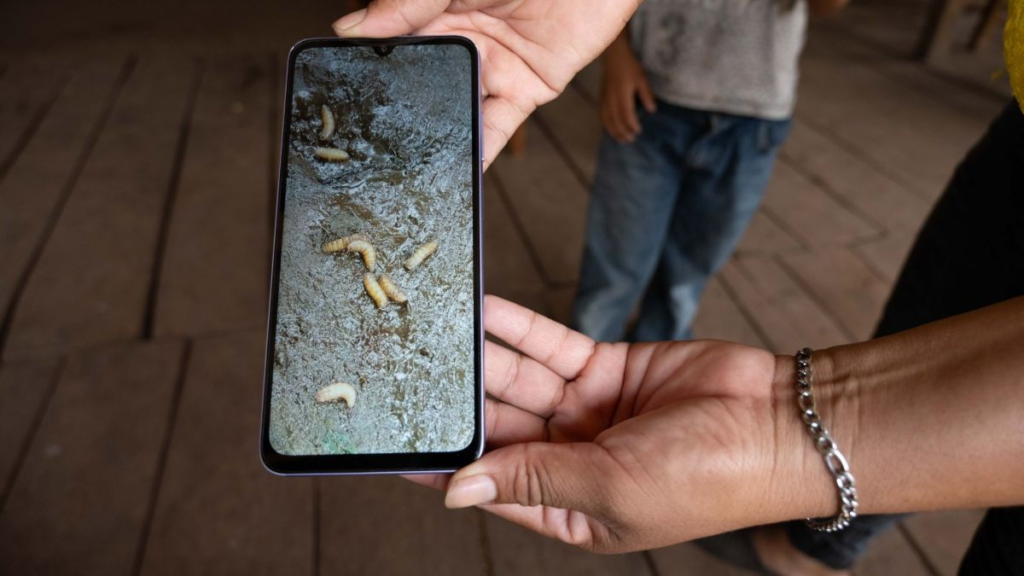
New World screwworm is an infestation caused by the larvae of the fly Cochliomyia hominivorax, which feed on the living tissue of mammals.
This parasitic species causes a disease known as myiasis, according to the Faculty of Veterinary Medicine and Zootechnics of the National Autonomous University of Mexico (UNAM).
What is the New World screwworm fly like?
The Cochliomyia hominivorax was first described in 1858 by French physician Charles Coquerel.
It measures between 8 and 10 millimeters (mm) and has a steel-blue body with greenish reflections and reddish eyes. It has three black bands on its thorax and a rounded, hairy abdomen.
Unlike other species of the same genus, it does not feed on dead tissue, but instead requires living flesh to survive, according to the Faculty of Veterinary Medicine and Zootechnics of UNAM.
What should you do if you find a larva of this fly?
According to Senasica, the following recommendations should be followed.
For livestock producers:
- Inspect your livestock daily, especially if they have wounds.
- Apply larvicidal products to any suspicious lesions.
- Immediately notify Senasica if you detect signs of myiasis.
For veterinarians:
- Immediately treat any suspicious wound.
- Report any possible case to health authorities.
- Monitor vulnerable species.
For transporters:
- Check the health of livestock before transportation.
- Ensure that they have received larvicidal treatments.
- Comply with official health inspections.
In case of suspicion:
- Contact official veterinary services without delay.
- Do not attempt to remove the larvae yourself.
- Isolate affected animals to prevent the spread.
Source: unotv