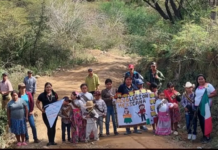

Integrantes de civil society called for a demonstration rejecting the return of Rubén Rocha Moya to the Government of Sinaloa, following the leave of absence that temporarily kept him away from office.
The protest was announced for Monday, August 24, at 08:00 hours at the esplanade of the Government Palace in Culiacán.
The call was disseminated by Miguel Taniyama Ceballos, a restaurateur and former congressional candidate, who invited citizens to participate in what he described as a demonstration.
“On Monday at 08:00 in the morning, at the Government Palace esplanade. We’ll be waiting for you at the demonstration for the dignity of the people of Sinaloa. We’ll be there,” he said.
Meanwhile, Martha Elena Reyes Zazueta, leader of Coparmex Sinaloa, questioned the fact that public discussion surrounding authorities is based on suspicions and statements, and demanded that institutions support their actions with facts.
“It is a disgrace for Sinaloa, and we cannot allow the politics of suspicion to replace the politics of evidence. We need institutions that speak with facts and not just statements,” she said.
The call comes amid expectations surrounding Rocha Moya’s return to the state executive branch and public questions regarding his continued tenure in office.
The organizers called on citizens to gather at the Government Palace esplanade to publicly express their position.
Rocha Moya returns and the 4T distances itself
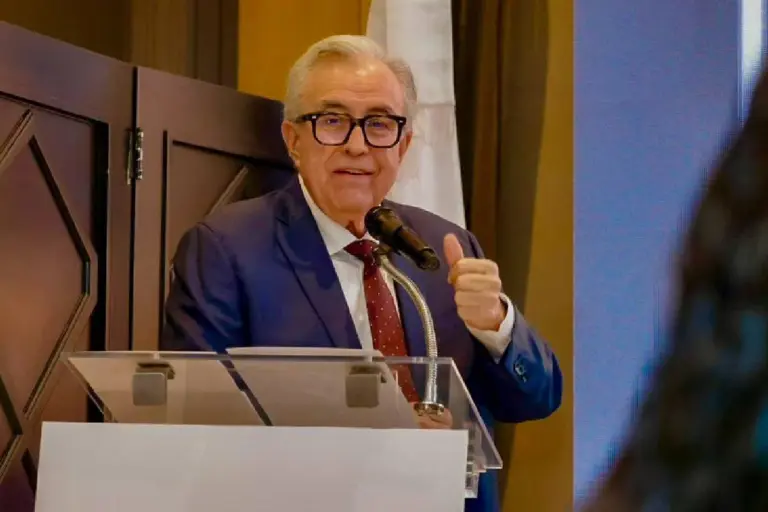
On Friday morning, Rubén Rocha Moya announced his return to the office of governor of Sinaloa after being temporarily separated from his duties for more than three months, following allegations by the United States government that he had criminal ties.
Through a message addressed to the people of Sinaloa, Rocha Moya announced that he would once again assume responsibility for governing the state and said he would continue working to address the state’s affairs.
You can read: “No personal interest can ever be above the interests of the people”: Sheinbaum on Rocha Moya’s return
The governor said he was resuming his duties with a commitment to work “with firmness and dedication” for Sinaloa and its population. He also justified his temporary departure from office by saying it was intended to avoid interfering in any proceedings following the U.S. allegations.
The return came two days after the arrest of Fausto Corrales Rodríguez, the main living witness in the alleged kidnapping of Ismael “El Mayo” Zambada and the murder of Héctor Melesio Cuén Ojeda, when, according to Zambada’s accounts, they were heading to a meeting with the governor of Sinaloa.
However, the decision was not well received by the Federal Government, the Morena party and its allies, nor by the governors who are part of the 4T.
This Saturday, President Claudia Sheinbaum commented that “no personal interest can ever be above the interests of the people and the nation. Much less when what one seeks to place above Mexico is not the well-being of its people, but the naked ambition of power for the sake of power.”
On Friday, the Secretariat of the Interior (Segob) published a statement saying that the official’s return was “exclusively a personal decision” and maintained that it is the responsibility of the Attorney General’s Office (FGR) to provide additional information regarding the investigations opened against him.
The Segob recalled that, at the time, the FGR reported that it had ongoing investigative files related to the 10 people identified by the United States Department of Justice, including the governor of Sinaloa.
The Morena party also distanced itself from Rocha Moya’s decision and said that it had no prior knowledge of the governor’s return.
“Regarding the reinstatement of Dr. Rubén Rocha Moya to the functions of the Government of the state of Sinaloa, Morena informs that this leadership had no prior knowledge of the governor’s personal decision. Therefore, Morena distances itself from this decision.”
Meanwhile, both in the Chamber of Deputies and in the Senate, Morena lawmakers signed a statement calling on the governor to reconsider his decision and not damage the image of the Federal Government, President Sheinbaum, or relations with the United States.
The parliamentary group of the Ecologist Green Party of Mexico (PVEM) in the Senate also stated, through its coordinator Manuel Velasco, that it neither supports nor shares Rocha Moya’s decision to return to the Sinaloa government. Velasco described the decision as “imprudent” because the FGR has ongoing investigations against him. The PT also expressed its support for the federal government.
In a joint letter, the 23 governors belonging to the Morena-led coalition issued a “forceful” statement emphasizing that individual decisions would not take precedence over the collective project.
The politicians criticized the attempt at “personalism” and “unilateral decisions.” Without specifying their request, they called on Rocha Moya to act with “maturity” and expressed their strong support for Claudia Sheinbaum.
Rocha Moya returned this Friday, when President Claudia Sheinbaum was absent due to illness. Photo: Cuartoscuro
U.S. allegations
On April 29, the United States Department of Justice filed a formal indictment against current and former officials from Sinaloa, including Rubén Rocha Moya, as well as commanders of state and municipal police forces.
According to the U.S. prosecution, the accused allegedly conspired with leaders of the Sinaloa Cartel to import large quantities of drugs into the United States in exchange for political protection, institutional support, and millions of dollars in bribes.
The indictment names Senator Enrique Inzunza Cazarez; Enrique Díaz Vega; Dámaso Castro Zaavedra; Marco Antonio Almanza Aviles; Alberto Jorge Contreras Nunez, identified as “Cholo”; former Sinaloa Security Secretary Gerardo Mérida Sánchez; José Antonio Dionisio Hipolito, alias “Tornado”; Culiacán Mayor Juan de Dios Gámez Mendivil; and Juan Valenzuela Millan, alias “Juanito,” for drug-trafficking offenses and conduct related to firearms.
The individuals named allegedly participated in a corrupt and violent conspiracy in which they protected Sinaloa Cartel leaders from investigations, arrests, and judicial proceedings; provided confidential information from security forces and the Army to allied drug traffickers; instructed state and municipal officers to escort drug shipments; and allowed acts of violence to occur without consequences. In exchange, they allegedly received millions of dollars in bribes.
As a result of the allegations, former Sinaloa Public Security Secretary Gerardo Mérida Sánchez surrendered to U.S. authorities on May 11 and four days later pleaded not guilty at his initial hearing before a federal court in New York.
That same day, the surrender of Enrique Díaz Vega, former Secretary of Administration and Finance of Sinaloa under Rubén Rocha Moya, was also announced. The former official was reportedly in Europe and traveled to New York to make himself available to the authorities.
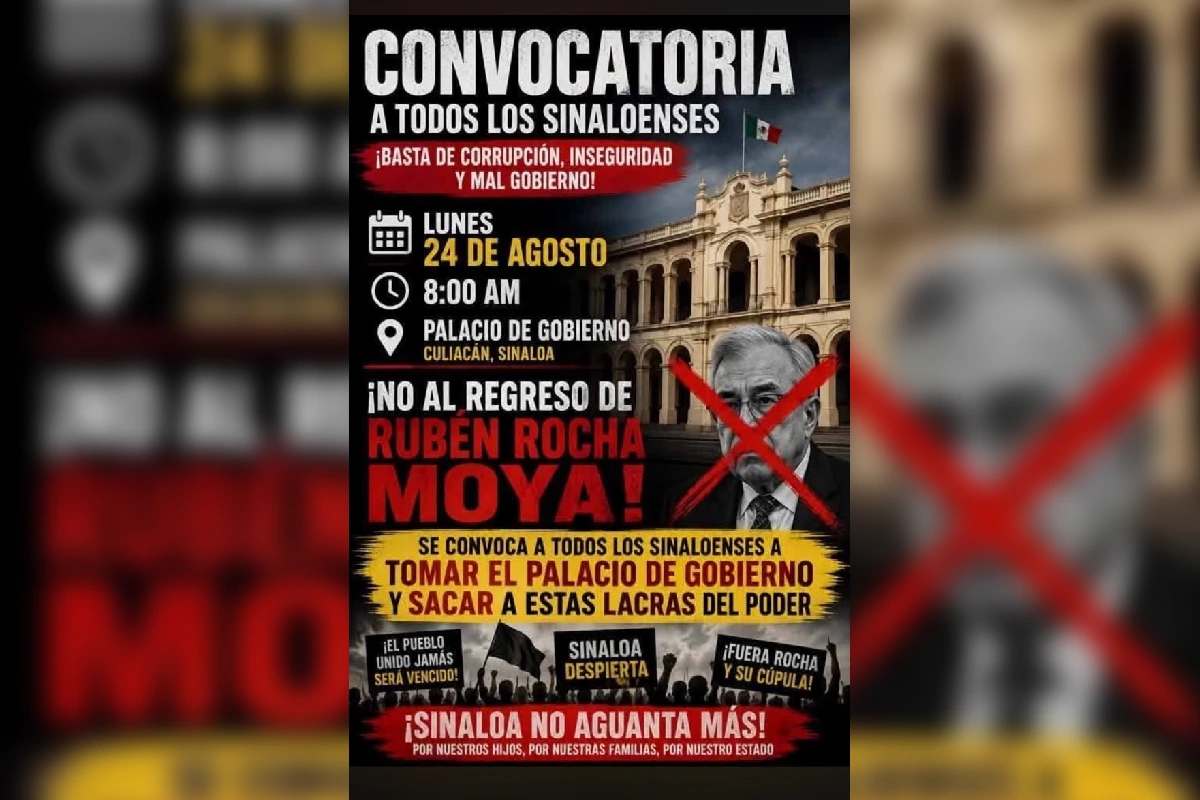
Source: grupoanimal