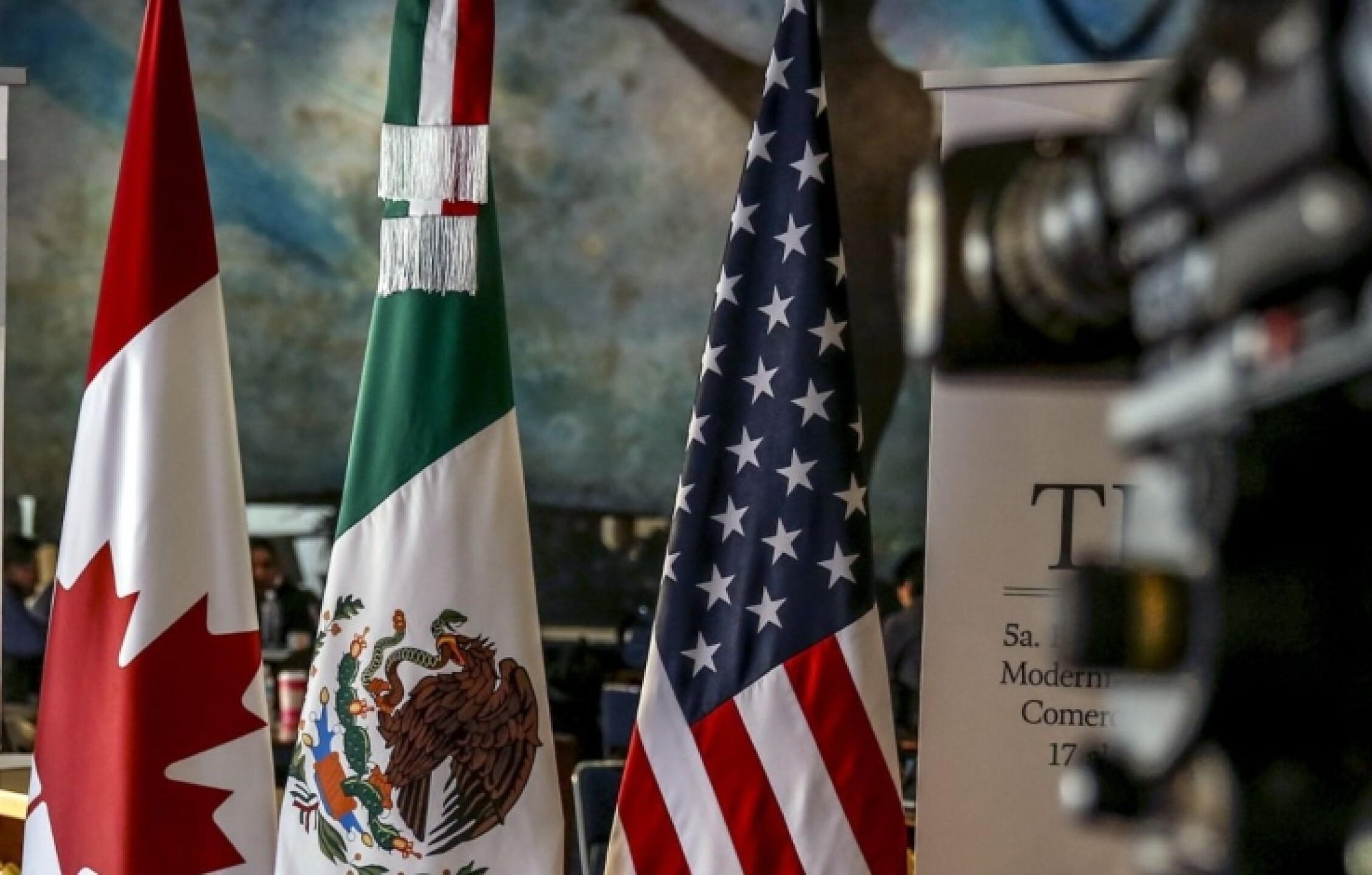

The decision by Canada to suspend its trade talks with the United States introduces a new dose of uncertainty in North America. But for Mexico, the relevant question is not whether it should follow Canada’s path. The real question is how much room it still has to negotiate with Washington without compromising strategic sectors of its economy, including one that is particularly sensitive: agribusiness.
Canada’s position sends a signal that extends beyond its borders. When a trade negotiation begins to incorporate new demands, tariff threats, and conditions that go beyond what was originally agreed, the discussion is no longer solely about trade. It begins to concern power, productive integration, and each country’s ability to defend its value chains.
And Mexico has a great deal at stake.
Mexico cannot simply walk away from the table
The Mexican economy is deeply integrated with the United States. Decades of building production chains, first under NAFTA and later under the USMCA, have turned the border into more than a point of exchange: it is shared economic infrastructure.
The same is true in agriculture. Fruits, vegetables, livestock, meat, grains, processed foods, and agricultural inputs move through chains that depend on logistics, phytosanitary regulations, traceability, and trade predictability. A significant alteration in market-access conditions ultimately affects everyone from producers to consumers.
For this reason, Mexico can hardly afford to abandon negotiations every time a new U.S. demand emerges. But remaining at the negotiating table does not mean accepting every condition.
This will probably be one of the greatest challenges for the government of Claudia Sheinbaum and the negotiating team led by Marcelo Ebrard.
Agriculture is once again on the front line
Among the most sensitive issues are once again the so-called agricultural seasonal restrictions. The issue may seem technical, but behind it lies a significant trade dispute.
The United States has faced domestic pressure for years to establish mechanisms that would facilitate measures against Mexican agricultural imports during certain seasons. The argument comes from U.S. producers who believe that certain imports create distortions during their harvest periods.
Mexico views the issue differently: introducing seasonal restrictions could weaken one of the main advantages of North American agricultural integration.
One fundamental point should not be overlooked: Mexico and the United States are not simply agricultural competitors. They are also deeply interdependent partners.
U.S. consumers depend on Mexican production at different times of the year, while Mexican producers and agribusinesses depend on the U.S. market, its inputs, and cross-border logistics that took decades to establish.
Breaking this balance through tariff or non-tariff barriers could offer an immediate political victory to a particular sector, but it could also generate higher costs, lower efficiency, and pressure on food prices.
Canada changes the playing field
Canada’s decision adds another dimension. If Washington succeeds in moving toward increasingly bilateral negotiations, the trilateral architecture of the USMCA could begin to lose importance in favor of trade relationships managed on a country-by-country basis.
Mexico must therefore proceed cautiously.
The appeal of the USMCA lies precisely in providing common rules, institutional mechanisms, and long-term certainty for companies that invest with an integrated North American market in mind.
If the rules are constantly changed through trade investigations, new tariffs, or sector-specific threats, the problem is no longer simply how much a particular export will cost. What begins to deteriorate is the predictability necessary for investment.
This is especially important in agriculture, where an investment decision may involve irrigation systems, genetics, refrigeration infrastructure, processing plants, certifications, technology, storage, or export logistics.
Capital can tolerate risk. What it tolerates much less is not knowing the rules under which it will have to operate.
Defending the USMCA without ignoring its tensions
It would be premature to conclude that the USMCA is doomed. The United States also derives significant benefits from integration with Mexico and Canada, from market access to regional supply chains capable of competing with Asia.
But the context has changed.
U.S. trade policy is increasingly linked to economic security, industrial reshoring, employment, control of strategic supply chains, and competition with China. Trade is no longer analyzed exclusively in terms of economic efficiency.
For Mexico, this requires combining pragmatism with a long-term strategy.
Continuing to negotiate with Washington appears inevitable. At the same time, however, Mexico should accelerate market diversification, strengthen logistics infrastructure, increase the value added of its agricultural exports, and reduce vulnerabilities to unilateral decisions.
There is also a lesson here for the rest of Latin America.
A signal for all of Latin America’s agricultural sector
What is happening between Canada, Mexico, and the United States is not merely a North American issue. It is an example of how global agricultural trade is changing.
Brazil, Argentina, Chile, Peru, Colombia, Uruguay, Paraguay, and the Central American economies face, to varying degrees, the same phenomenon: markets increasingly shaped by geopolitics, environmental standards, sanitary regulations, traceability, and industrial policies.
Latin America possesses an extraordinary comparative advantage in agribusiness, but having food, energy, and natural resources no longer guarantees unrestricted access to international markets.
Future competitiveness will also depend on infrastructure, technology, sustainability, trade diplomacy, and the ability to build lasting agreements.
Mexico will probably continue sitting at the negotiating table. And it has reasons to do so. But the Canadian experience is a reminder that negotiating is not simply about avoiding tariffs: it is about preserving rules capable of surviving political changes.
A significant part of the future of the USMCA is at stake in this discussion. And for Mexican agriculture, so is the possibility of continuing to grow within the continent’s most integrated food market.
Source: agrolatam