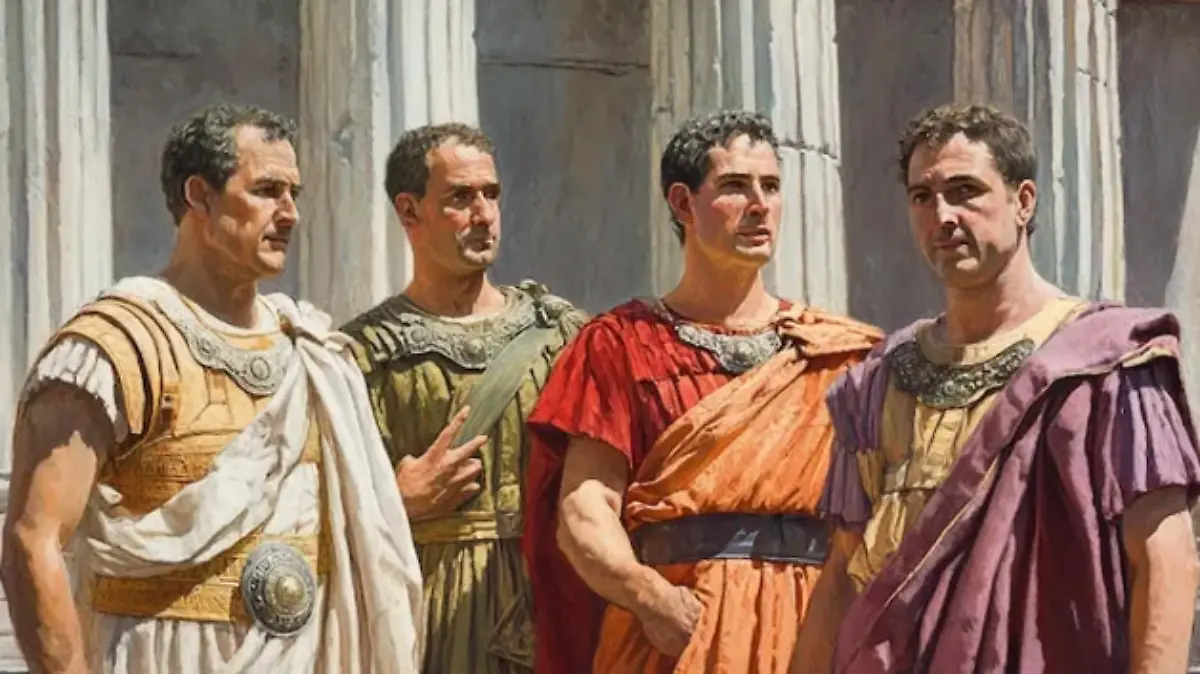

The municipality is one of the fundamental institutions of Mexican public life. Although its current structure is the result of centuries of political and legal transformations, its origins can be traced back to the Roman world, where the municipium emerged as a way of organizing communities incorporated into the Roman political system.
In Mexico, the municipality continues to be the government closest to the population and is responsible for many of the services and decisions that directly affect people’s daily lives.
What Is a Municipality?
The municipality is a form of territorial, political and administrative organization through which local communities are governed.
Under the Mexican constitutional system, the municipality is recognized as the basic territorial division and political and administrative organization of the states.
Its government is exercised through a municipal council, generally made up of a municipal president, trustees and council members.
The municipality therefore represents the level of government closest to citizens, dealing with matters that range from public services to urban development and local regulations.
A Roman Origin
The word and concept of municipality have their origins in Ancient Rome.
The Roman municipium referred to communities incorporated into Roman territory that could retain certain elements of their own organization while becoming part of the Roman political system.
This model allowed Rome to govern an enormous and diverse territory without eliminating every existing local institution.
The municipal concept eventually became part of the political and legal traditions that developed in Europe and later reached the territories colonized by Spain.
The Municipality Arrives in Mexico
The municipal institution was introduced into the territory that would become Mexico during the Spanish conquest and colonial period.
One of the best-known examples is the Villa Rica de la Vera Cruz, founded in 1519, which is commonly recognized as the first Spanish municipality established in Mexico.
From there, municipal organization became an important mechanism for administering the territories controlled by the Spanish Crown.
Over the centuries, the institution underwent different transformations until becoming part of the constitutional organization of modern Mexico.
The Municipality in the Mexican Constitution
The current legal foundation of the Mexican municipality is found primarily in Article 115 of the Constitution.
This article establishes the municipality as the basis of the territorial division and political and administrative organization of the states.
Municipal governments have authority over important areas of local administration, including public services, urban development, public security in the terms established by law, and municipal finances.
Among the services associated with municipalities are drinking water, drainage, sanitation, streets, parks, public lighting, garbage collection, markets, cemeteries and slaughterhouses, among others, depending on the applicable legal framework.
The municipality therefore has a direct relationship with many of the services that citizens encounter every day.
A Government With Changing Rules
Although the municipality has remained a fundamental component of Mexico’s political organization, its responsibilities and institutional structure have changed over time.
Constitutional reforms, changes in state legislation and modifications to public administration have progressively altered the way municipalities operate.
One of the most important transformations was the strengthening of municipal autonomy, particularly through reforms to Article 115.
However, municipalities do not operate in isolation. Their responsibilities intersect with those of the federal and state governments, creating a complex system of shared or coordinated responsibilities.
This can create challenges when determining which level of government must address a particular problem.
The Enormous Territorial Inequality
Mexico’s municipalities are extremely different from one another.
There are municipalities with large populations, significant economic activity and extensive administrative capacities, while others have small populations and very limited financial and institutional resources.
This inequality is reflected in differences in public services, infrastructure, government capacity and access to resources.
The municipality therefore does not represent a uniform institution throughout the country.
Its reality depends heavily on the territory, population, economic structure and resources available to each local government.
The Municipality and Everyday Life
Despite its historical origins, the municipality is not an abstract or distant institution.
Its decisions can directly affect streets, water, garbage collection, public lighting, parks, permits, markets, urban development and other aspects of everyday life.
For this reason, municipal government is one of the most immediate forms of interaction between citizens and the Mexican state.
The municipality is also one of the first places where citizens can demand solutions to problems affecting their communities.
A Historical Institution That Remains Relevant
The Mexican municipality has survived major political transformations, from the colonial period through independence and the development of the modern Mexican state.
Its historical evolution demonstrates how an institution originating in the Roman world was adapted to very different political and social contexts.
Today, more than a historical legacy, the municipality remains a fundamental component of Mexico’s system of government.
Its importance lies precisely in its proximity to citizens and its responsibility for many of the conditions that determine the quality of life within local communities.
Source: oem