
Records 293 illegal burial sites between 2019 and September 2024; between 2013 and 2018 there were 32; there are 30 per 100,000 inhabitants | Sonora and Baja California Sur follow on the list, with rates of 12 and six per 100,000 inhabitants, according to a study by Universidad Iberoamericana
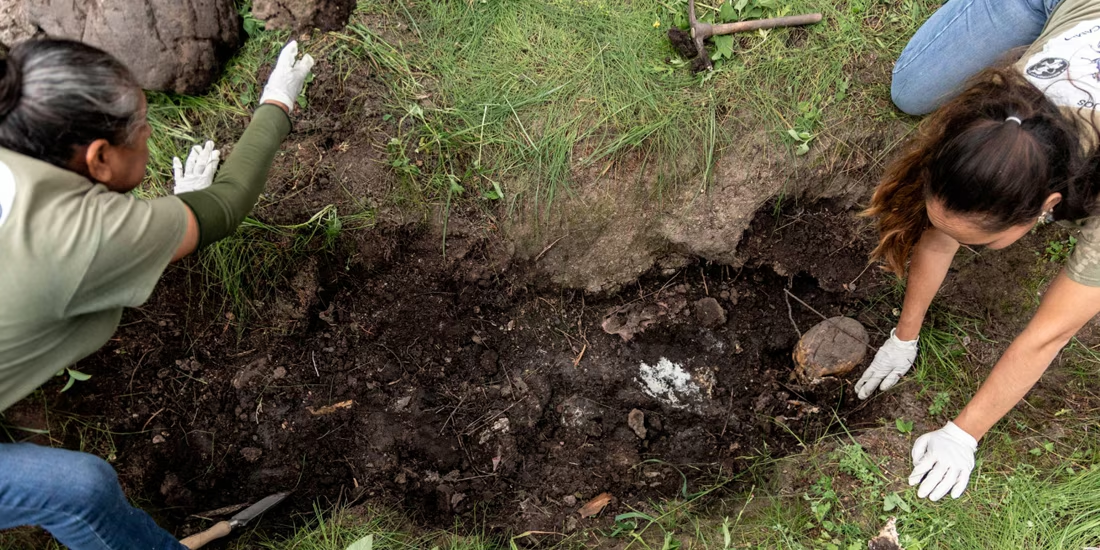
Colima recorded the highest rates of clandestine graves and recovered bodies in the country between 2019 and September 2024. For every 100,000 inhabitants, media outlets documented 30 illegal burial sites and 97 exhumed people, levels that placed the state above the rest of Mexico in both indicators, according to the report “Tracing Absence, Walking Hope,” by Universidad Iberoamericana (UIA) Mexico City.
The increase was concentrated in the most recent years of the series. The research indicates that discoveries in Colima during the 2019-2024 period increased 22-fold compared with those documented between 2013 and 2018.
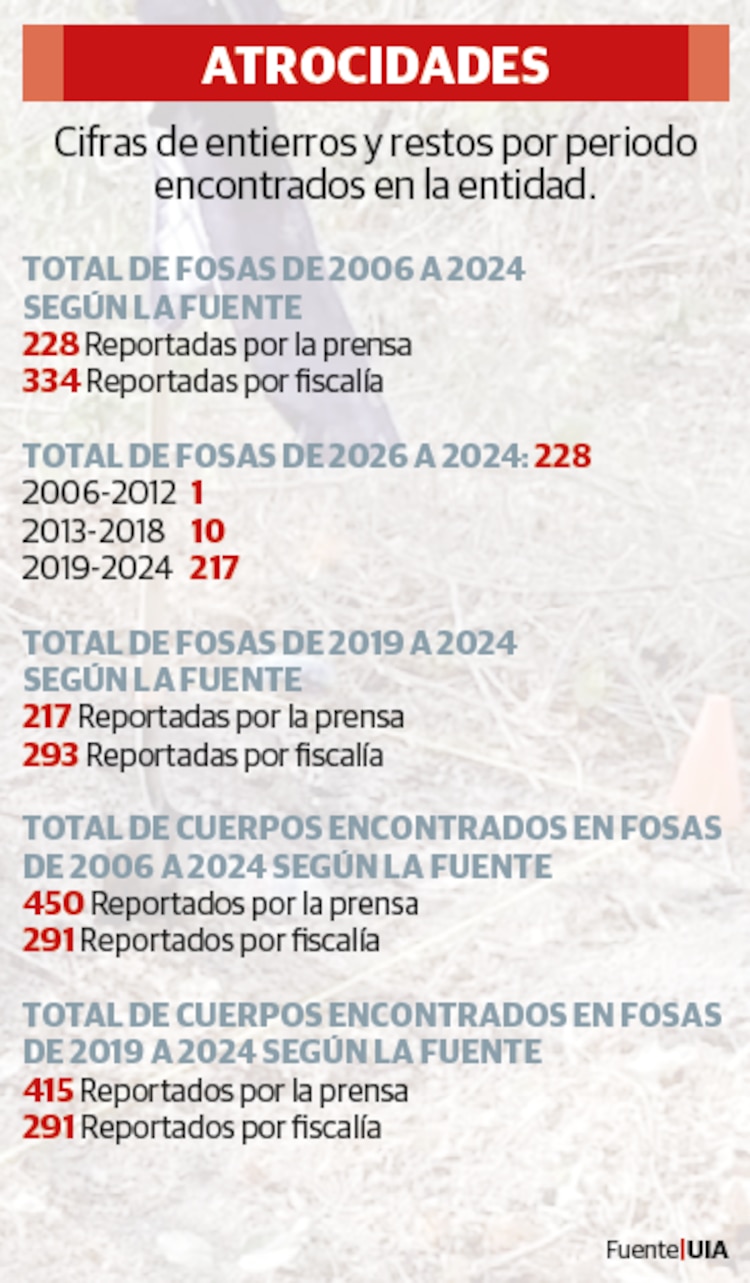
The same trend appears in institutional records, although with different figures. The Colima State Attorney General’s Office reported 293 graves during the most recent period analyzed, nine times the number reported in the previous period.
- The Fact: The state attorney general, Alejandro García Ramírez, stated that the discovery of clandestine graves during 2026 has been considerably lower than in previous years.
The scale of the phenomenon when adjusting the figures according to population distinguishes Colima from states with higher absolute numbers. Sonora led media reports between 2019 and 2024, with 361 graves, but its rate was 12 per 100,000 inhabitants. Colima reached 30, more than double that figure. The report places Baja California Sur in third place, with six.
This position coincides with another indicator of violence that the study incorporates to contextualize the clandestine burials. In 2024, Colima also had the highest intentional homicide rate in the country, with 123 cases per 100,000 inhabitants and 906 victims. Manzanillo became a strategic point for drug trafficking, particularly synthetic products arriving through the port, and the increase in disputes over this strategic position drove up violence across the state.
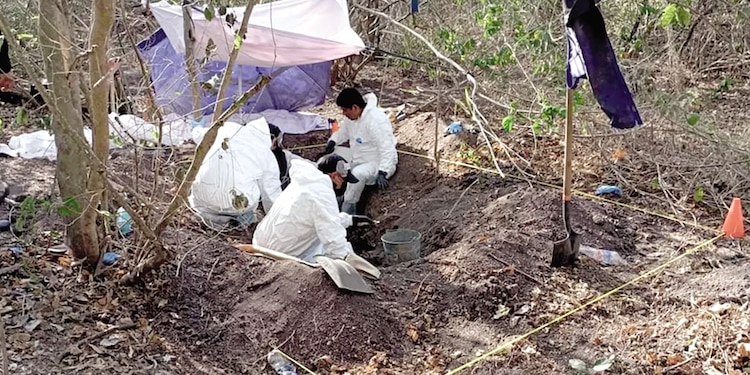
Within the state, the concentration is even more pronounced. Tecomán accumulated 184 graves between 2006 and September 2024, equivalent to eight out of every 10 sites documented by the press over nearly two decades.
However, most of the bodies recovered in Tecomán correspond to recent years. Of the 213 people recorded there throughout the entire series, 200 were exhumed between 2019 and 2024. This means that 94 percent of the records accumulated since 2006 are concentrated in the final five years of the research.
Ixtlahuacán offers another perspective on the same concentration. Media outlets documented 170 bodies in that municipality, all corresponding to the 2019-2024 period. Unlike Tecomán, the number of graves there is much lower compared with the number of people recovered. The report calculates an average of 85 bodies per site, the highest ratio highlighted among the municipalities examined.
The locations used for the burials also show a particular characteristic. In the detailed review of news reports, 44 percent of Colima’s graves were found on private properties or private land located in urban areas. In addition, four out of every 10 discoveries analyzed were classified as large sites, either because they contained multiple excavations or because of the number of bodies recovered. The largest of these sites contained 20 graves, while three cases recorded 22, 23, and 44 people, respectively.
One of the documented discoveries occurred in 2020 on farmland in Tecomán, located along a dirt road near the highway connecting to Cerro de Ortega. Media reports indicated that 13 graves and 22 bodies were found at the site.
The differences between what was documented by the press and what was reported by authorities add another layer to the problem. For 2019-2024, media outlets recorded 415 bodies in Colima, while the prosecutor’s office counted 291, a difference of 124 people. In the cumulative period from 2006 to 2024, the newspaper review reaches 450 bodies, 159 more than official records.
This discrepancy is compounded by problems with the quality and detail of the available information. The Universidad Iberoamericana analysis warns that prosecutors’ offices do not provide data using standardized criteria, and some report the existence of graves without specifying how many bodies were recovered.
Media outlets may also face difficulties distinguishing human remains from complete bodies, although the report notes that they tend to provide more precise descriptions of discoveries and victims.
In Colima, the combination of both records reveals a defined characteristic within the national analysis. It is not the state with the highest absolute number of graves, but it is the one where the discoveries carry the greatest weight when compared with the size of its population.
This rate is accompanied by the territorial concentration in Tecomán and Ixtlahuacán and by the fact that nearly the entire volume of bodies documented in both municipalities corresponds to the most recent years of the research
Source: razon