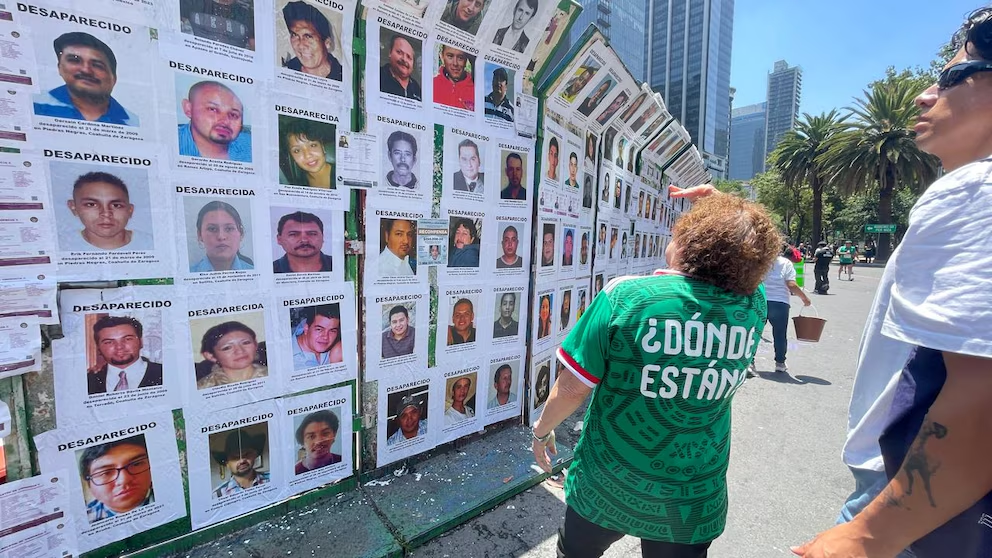

Amnesty International called, through a statement, on the Mexican State to recognize women searchers as human rights defenders and incorporate them into the official Protection Mechanism, as violence against them worsens and the crisis of disappearances exceeds 132,000 people who remain missing.
The organization warned that the vast majority of those searching for missing persons in Mexico are women who operate without institutional support and under constant threat. “Faced with the State’s inaction in search efforts, they have managed to locate, with scarce resources, hundreds of bodies in clandestine graves throughout the country,” stated Edith Olivares Ferreto, Executive Director of Amnesty International, Mexico Section.
Why the State should recognize them as defenders
Amnesty International demanded that women searchers become beneficiaries of the Mechanism for the Protection of Human Rights Defenders and Journalists, the federal body created to safeguard those who defend human rights in high-risk situations.
The demand stems from a documented reality: institutions that have the legal responsibility to search for missing persons are not achieving results. Faced with this vacuum, it is families, and particularly women, who assume this burden.
“The State must recognize the right of families to search for their loved ones, since the institutions responsible for doing so are not searching for them,” Olivares Ferreto stated.
The figures behind violence that refuses to subside
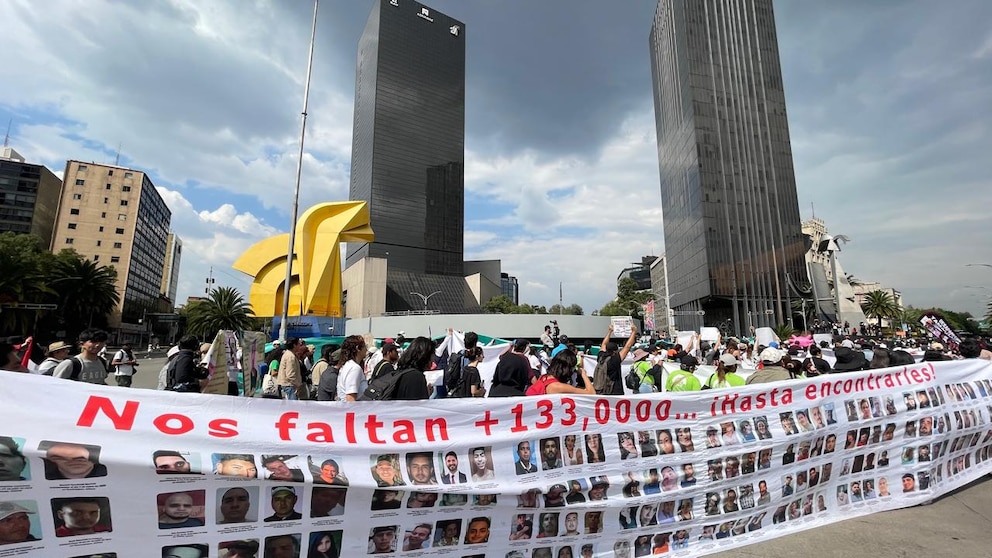
The organization Article 19 documented that since 2010, at least 45 women searchers have been murdered or disappeared. Cases from 2026 illustrate the seriousness of the situation: on March 14, Cecilia García Ramblas, a member of the collective Salamanca Unidos Buscando Desaparecidos, was kidnapped from her home in Valtierrilla. Her body was found four days later on a dirt road, and her identity was confirmed on March 31 through forensic examinations.
On June 23, Patricia Negrete Tafoya, a member of the collective Una Promesa por Cumplir, was shot and killed in Pénjamo as she was leaving her work shift at the municipality’s Regional Hospital. She had joined search brigades in 2021 following the disappearance of her sister, Laura Angélica Negrete Tafoya. Her death made Guanajuato the state with four women searchers murdered so far this year.
What the report Disappear Again documented
In July 2025, Amnesty International published the report Disappear Again: Violence and Harm Faced by Women Searchers in Mexico, which portrayed the conditions under which these women carry out their work.
The document describes constant threats from criminal organizations, revictimization and stigmatization by authorities at all three levels of government, illnesses resulting from search efforts, and a precarious economic situation affecting most members of the collectives.
Alongside its publication, Amnesty International launched the #BuscarSinMiedo campaign, which on August 22, 2026, held one of its most visible activities: groups of women searchers and activists painted a section of the border wall at Playas de Tijuana alongside visual artist Enrique Chiu.
What the #BuscarSinMiedo campaign demands
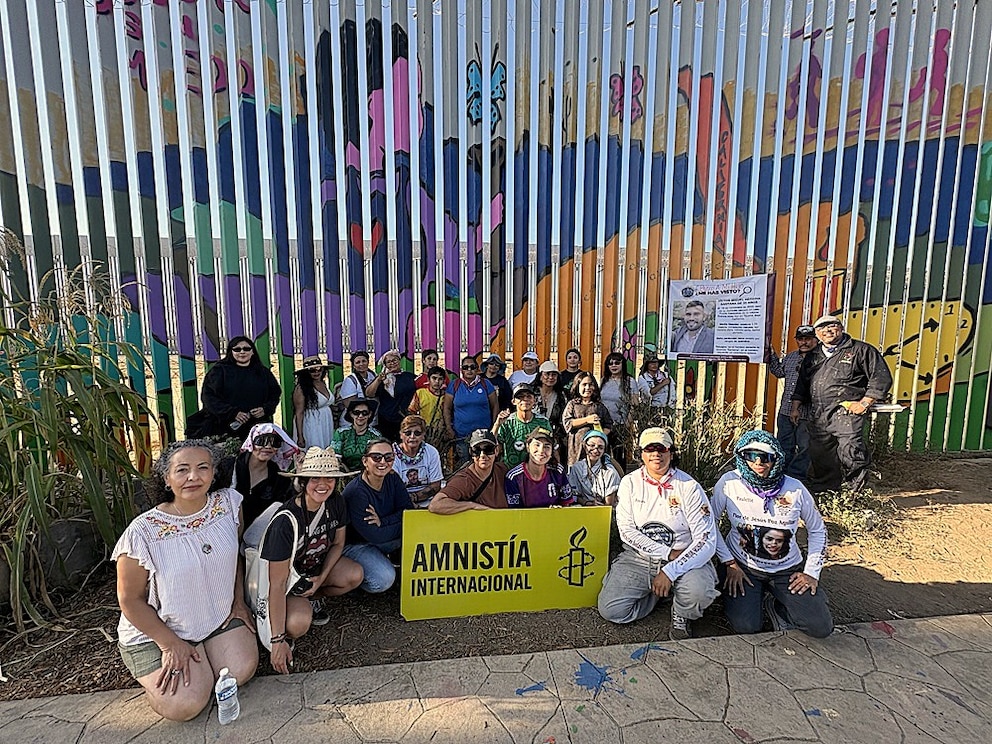
The campaign demands that authorities guarantee the physical, psychological, and emotional safety and integrity of women searchers. It also calls for access to protection measures, the investigation and punishment of all forms of violence committed against them, and public policies incorporating a gender and intersectional perspective.
These demands also include effective medical, psychological, and legal assistance. The campaign continues to maintain a public petition that anyone can support.
The crisis forcing them to search
The National Registry of Missing and Unlocated Persons (RNPDNO) recorded, as of August 29, 2026, 132,844 missing and unlocated persons in the country. This figure is accompanied by more than 72,000 bodies that remain unidentified in morgues throughout the country.
Mexico has legislation considered robust regarding disappearances, which mandates the creation of institutions with explicit responsibility for preventing and addressing this crime. However, these agencies are not achieving results, which has led families for years to turn to international human rights organizations.
The United Nations as support for families
The United Nations Committee on Enforced Disappearances (CED) announced on April 4, 2025, the activation of the procedure under Article 34 of the International Convention for the Protection of All Persons from Enforced Disappearance, marking the first time in the organization’s history that this measure had been applied.
On March 19, 2026, the Committee adopted its final decision. On April 2, it made the decision public, requesting that the UN Secretary-General urgently refer the situation in Mexico to the General Assembly. On May 12, 2026, the Secretary-General transmitted the letter to the member states.
The CED concluded that there are well-founded indications that enforced disappearances have been and continue to be committed in Mexico as crimes against humanity, based on multiple widespread or systematic attacks against the civilian population at different times and in different regions of the country. Documented cases have involved State agents, as was established in the Rancho Izaguirre case in March 2025 and in the case of the 43 students from the Isidro Burgos Rural Teachers’ College of Ayotzinapa in September 2014.
“In mid-September, the international community could address the serious crisis of disappearances facing Mexico at the United Nations General Assembly. But above all, it is an opportunity for the international community to demonstrate its commitment to victims and to contribute decisively to the search for truth, justice, and reparation for them and their families,” Olivares Ferreto stated.
Source: infobae