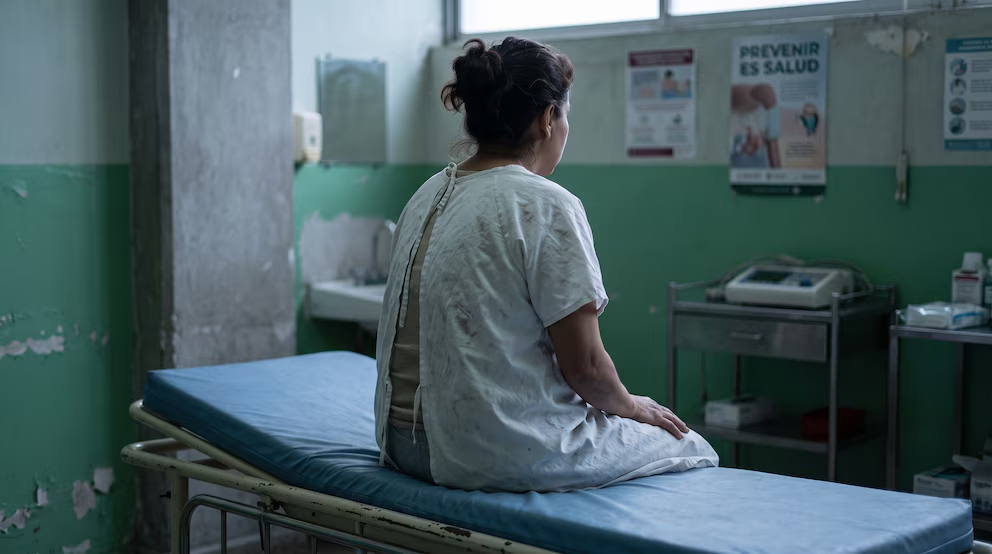

Obstetric violence remains in Mexico as a structural health problem, even with greater legal recognition, according to the report Obstetric Violence in Three Dimensions: Data, Voices and Practices, prepared by the Group for Information on Reproductive Choice (GIRE), the Uehiro Institute at the University of Oxford, and the Institute for Legal Research of the UNAM.
The document examines three layers: statistical data, legally supported cases, and the perspective of healthcare personnel.
However, the message is direct: criminalization, by itself, is not enough to eradicate entrenched practices in the way healthcare services operate.
ENDIREH shows only a minimal decrease and a floor that does not give way
The 2021 ENDIREH reports that 31.4% of women who gave birth between 2016 and 2021 experienced some type of obstetric violence. Between 2011 and 2016, the proportion was 33.4%. The difference is marginal: the phenomenon is declining, but it is not being broken.
The report also describes an unequal pattern. Incidence increases among women under 30, among IMSS users, with 39.8% of cases, and among those without a partner, at 38.57%.
The economic gap is reflected in the lowest income deciles, where the rate is 35%, while in the highest decile it falls to 18.4%.
The highest figure occurs among women with disabilities: 43.9% during their most recent childbirth, compared with 30.4% among women without disabilities or limitations. Among adolescents aged 15 to 19 with disabilities, the percentage reaches 55.4%.
By age, risk decreases with maturity: among women aged 40 to 49 without disabilities, the incidence is 22.3%.
In contrast, among women aged 20 to 29 with disabilities, it reaches 45.5%. The interpretation is intersectional: age, disability status, and income accumulate and increase the risk.
Contraceptive pressure and C-sections: practices that are increasing
Among the documented manifestations, the report points to an increase in pressure to accept a contraceptive method or sterilization.
This form of violence increased from 27.7% in 2016 to 31.5% in 2021. Forced sterilization recorded the largest increase, with direct implications for reproductive rights.
Another area of concern is C-sections. The percentage increased from 42.8% (2011–2016) to 47.4% (2016–2021). In 2021, the rate reached 49.1%, above the 10–15% range recommended by the WHO.
Case files: when care fails and the system protects itself
The qualitative component analyzes 64 cases legally supported by GIRE. In these cases, obstetric violence does not appear as an isolated incident, but rather as a chain of failures: incomplete clinical communication, decisions made without sufficient information, degrading treatment, and delays in care.
The report documents institutional practices that complicate access to justice: shifting blame, loss of case files, and pressure on families to accept official versions.
In cases involving Indigenous women, the patterns are more severe: 100% received delayed clinical responses and 88% required transfer because of inadequate infrastructure.
In 88%, institutional blame-shifting was reported, while only 63% received some acknowledgment of responsibility.
In 12 cases involving maternal mortality, the report identifies insufficient infrastructure in 75%; inadequate risk assessment in 67%; delayed clinical response in 58%; and blame-shifting in 42%.
What healthcare personnel say: conditions that drive violence
The report incorporates a workshop with 39 healthcare professionals held in June 2025. According to the document, the consensus is that obstetric violence has institutional roots: failures in training, excessive workloads, shortages of supplies and equipment, confusion over roles, and an administrative logic focused on productivity. They also warn that criminalizing the phenomenon could encourage defensive practices without addressing the underlying problems.
Among the proposals are reforms to curricula in medicine, nursing, and midwifery to include respectful childbirth, gender-based violence, reproductive rights, and bioethics; ongoing training in informed consent and interpersonal skills; standardized protocols; multidisciplinary teams; and quality assessment systems that measure health outcomes and patients’ experiences, rather than merely the volume of care provided.
The report concludes with a thesis that runs throughout the entire assessment: obstetric violence cannot be eliminated through sanctions alone, but requires fundamental changes to the healthcare system, including prevention, reparation, and guarantees of dignified, timely, and discrimination-free care.
Source: infobae