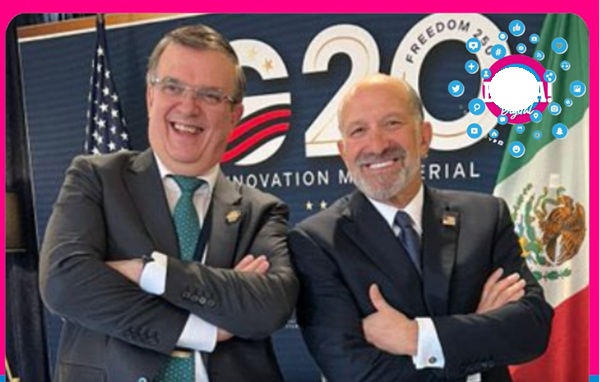

CHAPEL HILL, N.C. — Mexican Economy Minister Marcelo Ebrard met with U.S. Commerce Secretary Howard Lutnick on Wednesday, September 2nd, to press Washington for key concessions on automotive and steel tariffs, addressing a persistent friction point in the bilateral trade relationship.
Speaking at her daily morning press conference in Mexico City, Mexican President Claudia Sheinbaum confirmed that Ebrard traveled to the United States to negotiate agreements on the levies. The high-level bilateral meeting took place on the sidelines of a G20 innovation gathering hosted by Lutnick in Chapel Hill, North Carolina. According to Mexico’s Ministry of Economy, the discussions focused on resolving tariff disputes, expanding bilateral trade, and advancing regional technological innovation.
The negotiations come as both nations engage in preliminary discussions surrounding the review of the United States-Mexico-Canada Agreement (USMCA). Mexico has consistently argued that U.S. tariffs—including a 50% duty on steel and aluminum under Section 232 and a 25% tariff on Mexican-assembled vehicles exported outside the USMCA framework—are economically unjustified. Mexican officials emphasize that these trade barriers undermine the deeply integrated manufacturing supply chains across North America.
Ebrard’s agenda centers on requesting tariff reductions for vehicles, pointing out that Mexican automotive exports utilize a higher percentage of U.S.-made components than imports from Europe or Asia, which often face lower tariff rates. Additionally, Mexican negotiators argue that steel tariffs distort regional commerce given that Mexico runs a trade deficit in steel with the United States.
Washington, meanwhile, has raised concerns regarding its expanding trade deficit with Mexico and is advocating for stricter rules of origin, including proposals that would require qualifying vehicles to contain a higher percentage of U.S.-specific content.
Despite the policy friction, economic ties between the two partners remain strong. Mexico continues to send approximately 80% of its total exports to the United States, with a vast majority entering under preferential USMCA terms. Both governments expressed commitment to ongoing communication ahead of broader formal evaluations to preserve supply chain stability and regional competitiveness.
With information from REUTERS