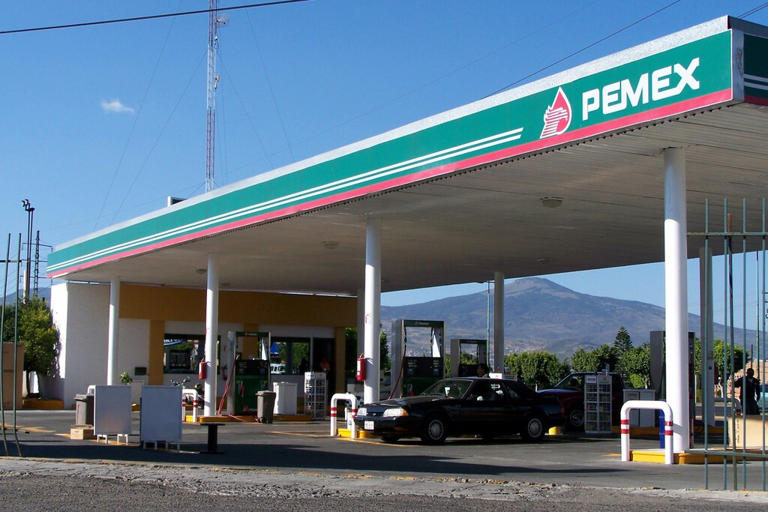

Mexico ranked in an unusual position during the Strait of Hormuz crisis: it was the second country in the world that lost the most money due to the increase in the price of imported gasoline. Between March and August 2026, the additional net cost reached $2.5 billion, according to an analysis by the Centre for Research on Energy and Clean Air (CREA). Only Indonesia suffered a larger impact, with $2.6 billion.
The difference with the third country on the list shows the magnitude of the impact. Australia recorded an additional net cost of $1.1 billion, less than half of what Mexico and Indonesia incurred during the same period. Together, the two countries accounted for nearly one-quarter of the $20.4 billion in additional net costs that CREA calculated for the global gasoline market, after the analysis deducted additional revenues from energy exports.
A variation of this size has a direct effect on the energy bill.
Gasoline became more expensive rapidly after the conflict began. Between March and August, it had an average price of $133 per barrel, compared with the $93 that futures markets had expected before the war. The difference was 43%. For a country that needs to import refined products to cover part of its consumption, a variation of this size has a direct effect on the energy bill.
Diesel and gas oil faced even greater pressure. Their average price reached $161 per barrel, compared with the $101 expected before the conflict, a premium of 59%. Crude oil also exceeded pre-war forecasts, with a price 35 percent higher than what markets had anticipated. The crisis therefore did not affect a single fuel or a single link in the energy chain.
If diesel, gasoline, jet fuel, and natural gas are considered together, Mexico paid $4.705 billion more than what had been expected before the war. This gross calculation placed the country in twentieth place worldwide among those most affected by higher energy prices. The figure helps put the $2.5 billion specifically associated with gasoline into context: there were other products whose imports also increased costs for Mexico.
Mexico ended with a negative balance of $1.804 billion.
The International Rise in Crude Oil Prices, Which Increased Import Costs
The final result was less severe thanks to Mexican exports. During those six months, the country obtained $2.9 billion in additional revenue from energy sales compared with what had been expected before the conflict. Nearly $2.5 billion of that amount, equivalent to 86%, came from crude oil. The international rise in crude oil prices, which increased import costs, also increased the revenue Mexico obtained from its exports.
This difference changes the interpretation of the energy bill. When both additional import payments and additional export revenues are taken into account, Mexico ended with a negative balance of $1.804 billion compared with the scenario markets had anticipated before the war. Gasoline alone had a net impact of $2.5 billion, but additional revenue from crude oil and other energy products reduced the overall balance.
Mexico’s case is part of a much larger blow to countries that depend on maritime routes to purchase fossil fuels. CREA calculated that importers paid an additional $330 billion during the six months following the start of hostilities, compared with what markets had expected before the war. The calculation included crude oil, petroleum products, and liquefied natural gas transported by sea. Of the gross increase, $164.1 billion corresponded to crude oil, $73.8 billion to diesel and gas oil, $35.7 billion to gasoline, $38 billion to LNG from the Atlantic and Pacific basins, and $20 billion to aviation fuel.
The country was among those most affected by the price of refined fuels.
Gasoline provides a particularly clear picture of Mexico’s position during an international energy crisis. Indonesia had a net bill only $100 million higher, while Australia remained far behind both countries. At the same time, Mexican oil exports prevented the overall energy balance from becoming even worse. The figure leaves Mexico with a dual outcome: the country was among those most affected by the price of refined fuels and, at the same time, crude oil provided a source of revenue capable of offsetting a considerable portion of the impact.
Source: msn