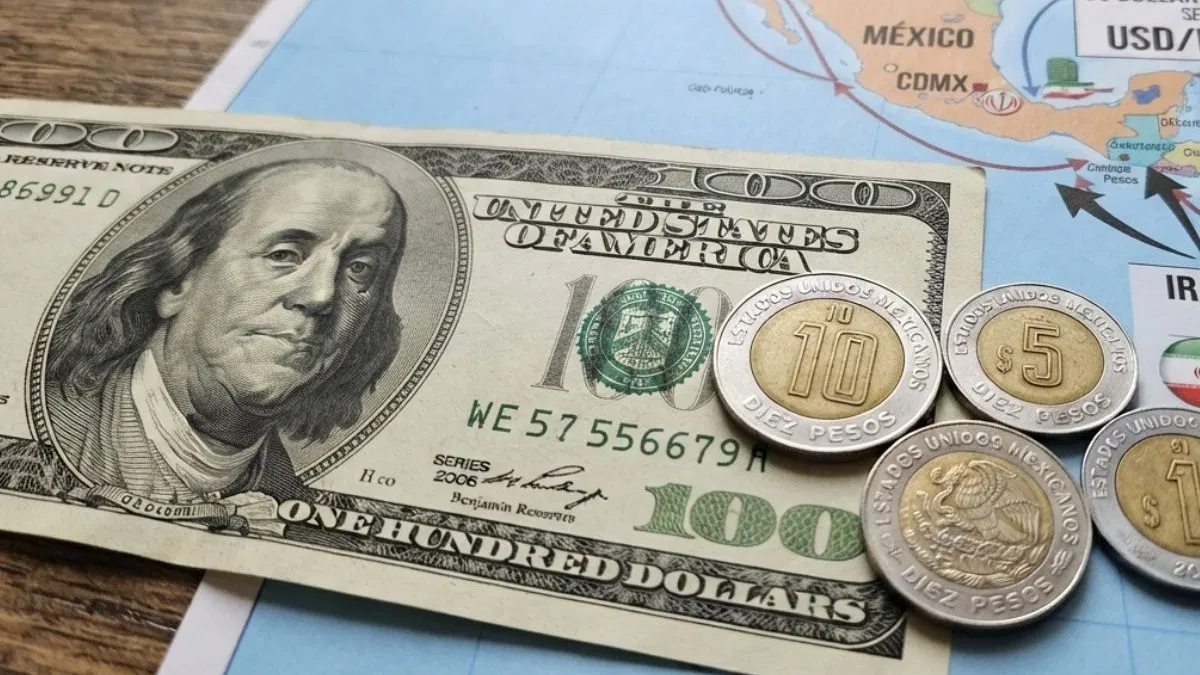

The price of the dollar is once again drawing the attention of Mexicans this Wednesday, September 2, 2026. Although the peso remains close to 17 units per dollar, the military tension between the United States and Iran is beginning to generate new movements in international markets and increase demand for assets considered safe havens.
For those who purchase imported products, are planning a trip, receive income in dollars, or simply follow the performance of their finances, the behavior of the U.S. currency has a very concrete consequence: small changes in the exchange rate can modify costs, budgets, and consumer decisions.
According to Banco de México, the FIX exchange rate for September 2 stood at 16.9755 pesos per dollar. Meanwhile, the value published by the Official Gazette of the Federation for obligations denominated in dollars is 17.0147 pesos.
In the first transactions of the day, the dollar hovered around 17.02 pesos, with a moderate increase compared with the previous session, in a market attentive both to the conflict in the Middle East and to upcoming decisions by the U.S. Federal Reserve.
How much is the dollar today, September 2, 2026?
Official references show that the peso is still relatively close to the 17-unit threshold, but the session began with slightly greater pressure on the Mexican currency.
Banxico reported a FIX rate of 16.9755 pesos per dollar for September 2. This reference should not be confused with the price a consumer will necessarily find at a bank counter, since financial institutions establish their own buying and selling rates and may incorporate different margins.
For its part, the DOF reported 17.0147 pesos per dollar for September 1. Banco de México itself explains that the FIX is determined based on wholesale foreign-exchange market quotations and is subsequently published in the Official Gazette.
The difference between these references and the counter price is important for anyone who needs to purchase physical dollars. If the goal is to travel, pay for a purchase in the United States, or cover an obligation in U.S. currency, comparing selling prices among institutions can represent a saving.
The conflict between the United States and Iran moves the dollar again
The main external factor influencing markets this Wednesday is the escalation of hostilities between Washington and Tehran.
Reuters reported that the United States carried out new attacks against Iranian military infrastructure, while Iran responded with missiles and drones against U.S. facilities in several countries in the region. The exchange increased concern about a possible disruption to energy supplies and heightened risk aversion among investors.
In scenarios of geopolitical tension, the dollar tends to benefit from its role as a safe-haven currency. This means that when investors perceive an increase in international risk, they may reduce positions in assets considered more vulnerable and seek dollar-denominated instruments.
This behavior helps explain why the dollar regained ground internationally while other currencies came under pressure.
The dollar index advanced toward 99.86 points, while the U.S. currency reached an approximately two-week high against a basket of currencies.
Expensive oil, inflation, and a new concern for the peso
The conflict also has another channel through which it can affect the foreign-exchange market: oil.
Tensions around the Strait of Hormuz increased concern over the international flow of crude oil. Brent crude reached $97.04 per barrel during the session, although it later moderated part of the increase and stood at around $94.
Why does this matter for Mexico?
A prolonged increase in energy prices can be passed on to different components of global inflation. If oil remains expensive, companies face higher transportation and production costs, while consumers may end up paying more for certain goods and services.
The problem for central banks is that more persistent inflation reduces their room to lower interest rates.
And this is where the United States comes in.
The Fed also puts pressure on the exchange rate
The market is not only reacting to the conflict in the Middle East. Investors are also recalculating their expectations regarding the Federal Reserve.
According to data reported this Wednesday, markets assigned approximately a 68% probability of a Fed rate hike in September, compared with around 40% one week earlier. The change reflects concerns that more expensive energy could reignite inflationary pressures.
When U.S. interest rates rise or there is an expectation that they will remain high for longer, dollar-denominated assets may become more attractive to investors.
This can put pressure on emerging-market currencies, including the Mexican peso.
In addition, the yield on the U.S. 10-year Treasury note approached 4.82%, another factor markets are monitoring because of its impact on international capital flows.
What does this mean for Mexicans?
It does not mean that the dollar will necessarily skyrocket immediately or that the peso has entered an irreversible depreciation trend.
In fact, the movement observed during the first hours of Wednesday was relatively moderate. Siker recorded the exchange rate at around 17.0195 pesos per dollar, with an approximate increase of 0.24%, within an intraday range of 16.94 to 17.02 pesos.
The lesson for personal finances is different: during times of uncertainty, it is advisable to avoid impulsive decisions.
Those with an upcoming trip can compare prices and purchase foreign currency gradually rather than concentrating the entire transaction at a single moment. For those making international purchases, it is also advisable to check whether the charge is made directly in dollars and to know the commission applied by the card.
Small businesses that import merchandise have an additional consideration. A weaker peso can increase the cost of products, supplies, or components purchased in the United States. In that case, following the exchange rate is no longer exclusively a financial matter and becomes a tool for planning prices and profit margins.
What is coming for the dollar during September
The market will have several indicators capable of changing exchange-rate expectations.
One of the first will be the U.S. private employment report, followed by official labor-market figures expected on Friday. Investors will use this data to assess the strength of the U.S. economy and anticipate the Fed’s next moves.
At the same time, any news related to the conflict between the United States and Iran could trigger rapid movements in oil, bonds, stocks, and currencies.
For Mexico, the behavior of the peso will depend on a particularly sensitive combination: the evolution of the conflict, oil prices, expectations regarding U.S. interest rates, and the relative attractiveness of Mexican assets.
A 17-peso dollar does not tell the whole story
The picture this Wednesday shows a peso still close to 17 units per dollar, but behind that apparent stability is a market processing several risks at the same time.
The most important factor for consumers is not simply whether the dollar rises or falls by a few cents during a morning, but understanding what is behind that movement and how it can affect their decisions.
For now, Banxico’s FIX remains below 17 pesos, while the market is operating slightly above that threshold. Tensions between the United States and Iran, oil prices, and expectations regarding the Fed will be the variables to watch over the coming days.
In such a scenario, comparing exchange rates, avoiding impulsive dollar purchases, and anticipating expenses in U.S. currency are simple decisions that can protect one’s budget. Because when international markets move, the best defense for personal finances remains being prepared rather than reacting after the movement has already occurred.
Source: debate