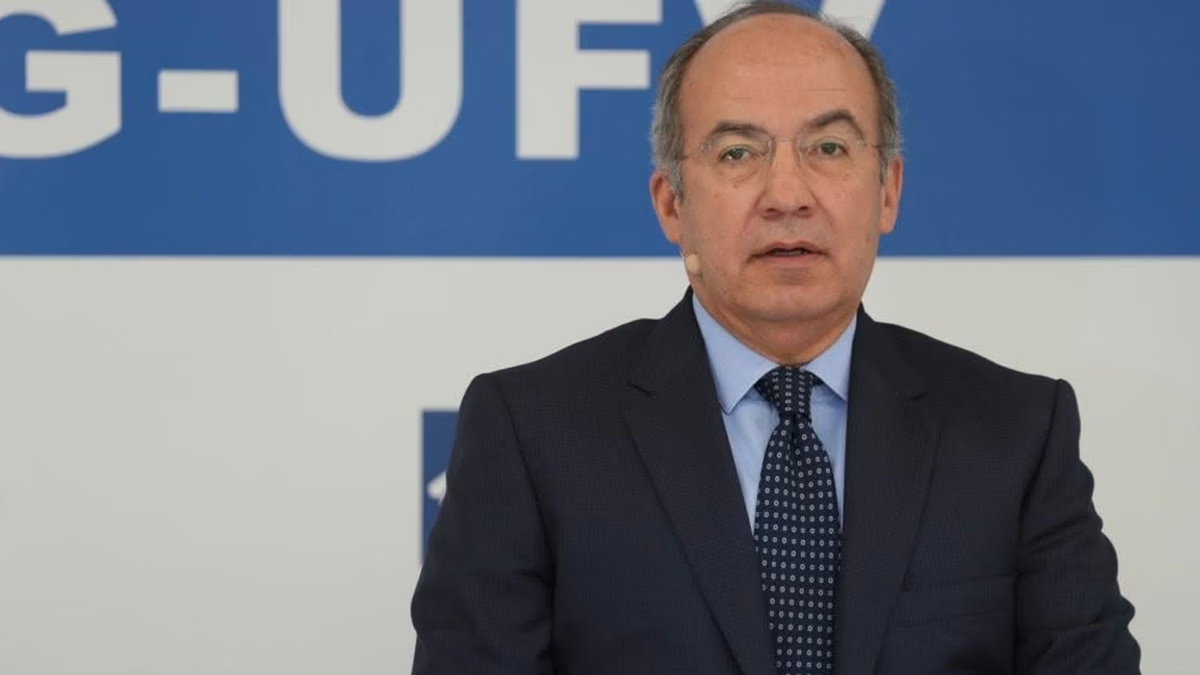

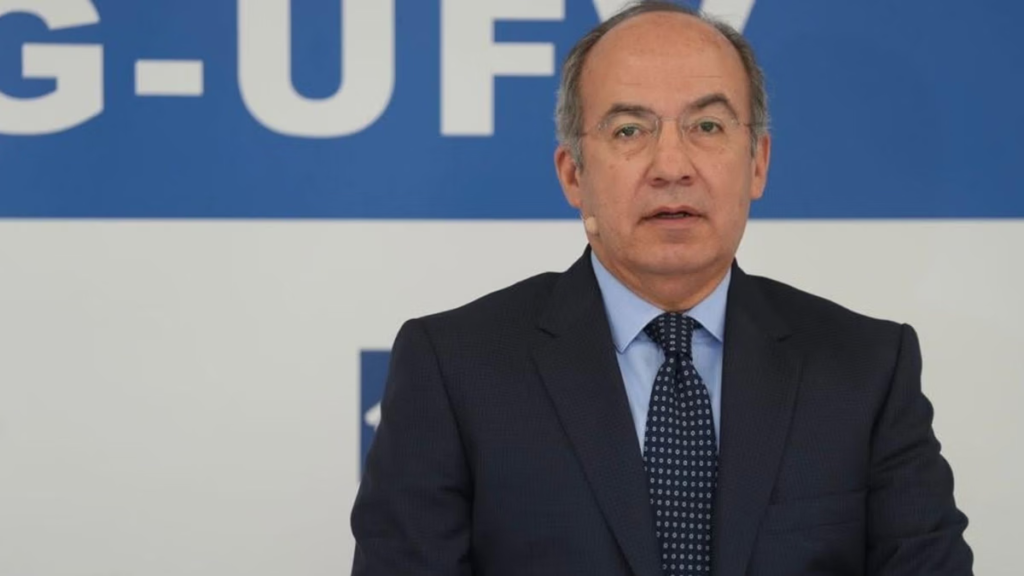
Following the recent [mass blackouts that affected southeastern Mexico], former president Felipe Calderón Hinojosa took the opportunity to criticize the current administration and its energy policy. The former president questioned the official explanations and condemned the lack of infrastructure in the sector.
“Vandalism? Vandalism is having left the electricity sector without new investment because of the stupid ideological prejudices of outdated nationalists. They were warned that there would be blackouts. There they are. There is their fourth-rate energy,” he wrote.
Amid the controversy and criticism from the former president, questions arose about his political career and education. Below are all the details regarding his educational background.
What did Felipe Calderón study?
Felipe de Jesús Calderón Hinojosa has an academic background in law and economics, supported by professional and postgraduate degrees from prestigious national and international institutions.
According to [his official biography and historical records], his studies include:
- Law Degree: He studied to become a lawyer at the Escuela Libre de Derecho between 1980 and 1985, obtaining his professional degree in 1987.
- Master’s Degree in Economics: He completed postgraduate studies and earned a master’s degree at the Instituto Tecnológico Autónomo de México (ITAM).
- Master of Public Administration (MPA): He completed a second master’s degree at the John F. Kennedy School of Government at Harvard University in the United States, during the period from 1999 to 2000.
His political career before becoming president
Born in Morelia, Michoacán, on August 18, 1962, Calderón grew up in a family closely associated with the National Action Party (PAN), which was partly founded by his father, Luis Calderón Vega. From an early age, he collaborated with the party’s grassroots organizations, initially leading the Acción Juvenil youth organization.
His party and legislative career included positions such as Secretary General and National President of the PAN. Within the same party, he led the National Executive Committee from 1996 to 1999, achieving electoral gains in several state governorships across the country.
He also served as a Federal Deputy in Legislatures LV and LVIII of the Congress of the Union and served as coordinator of the PAN parliamentary group. Calderón also held the presidency of the Political Coordination Board of San Lázaro.
He later became Director General of the National Bank of Public Works and Services (Banobras) and subsequently joined President Vicente Fox’s cabinet as head of the Secretariat of Energy (Sener). From that position, he chaired the boards of directors of Pemex and CFE before running for the presidency of the Republic.
After [winning the 2006 federal elections], Calderón assumed the position of head of the Federal Executive Branch for the 2006–2012 term.
What does Calderón do now?
After concluding his presidential administration in December 2012, he temporarily resided in the United States, where he served as a visiting researcher at Harvard University. Calderón maintained a three-decade affiliation with the PAN, but resigned from the party in late 2018 in an attempt to consolidate a new political project called México Libre, together with his wife, Margarita Zavala.
Currently, the former president is primarily involved in international forums focused on political analysis, conferences, and organizations dedicated to the environment and sustainability. He has also taught at Harvard as a “visiting professor” and [resides in Spain].
His appointment as president of the Environment and Sustainability Commission at the International Automobile Federation (FIA) is also noteworthy, as is his active participation in public debate through his social media platforms.
Blackouts in 4 states
The former president’s statement came after the operational collapse recorded in the country’s southeastern electrical system. The Federal Electricity Commission (CFE) reported that a series of massive power interruptions left thousands of users without electricity in the states of Campeche, Chiapas, Quintana Roo, and Yucatán, affecting the daily lives and economic activities of the region.
According to technical reports, the incident occurred following the sudden shutdown of two high-voltage lines.
Source: radioformula