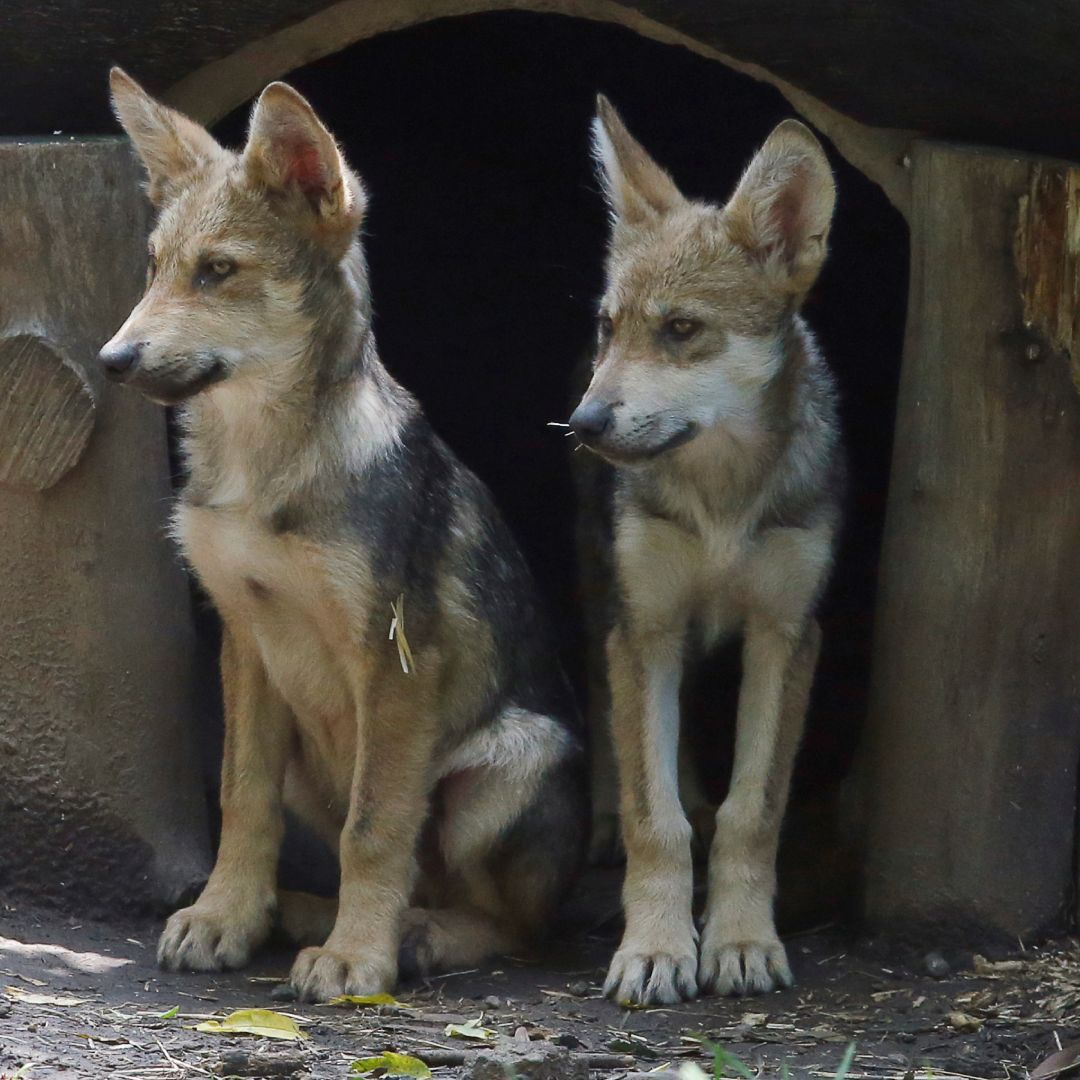

From his desk in the Oval Office, President Donald Trump signed what could mark the end of the Mexican gray wolf in his country, a subspecies of the North American gray wolf, for the benefit of the livestock sector in the United States.
Within three months, Interior Secretary Doug Burgum will have to make a key decision regarding this animal, which was declared extinct in the wild in the 1970s.
If the official decides to remove the Mexican gray wolf from the list, he would strip it of the federal protection it currently enjoys, which has allowed the species to flourish following a binational plan between the United States and Mexico.
Under the title Supporting America’s Ranchers, the president detailed the proposed approach to the issue of the wolf:
- The Secretary of the Interior will decide whether to remove the wolf from the list or reclassify it to a lower category if it meets the recovery criteria under the Endangered Species Act (ESA).
- A legislative recommendation will be presented to the president to completely remove or reduce the wolf’s classification.
- States will be encouraged to do the same and remove wolves from the endangered species list.
The objective is clear: to make regulations more flexible and review standards for “the lethal take of gray wolves and Mexican gray wolves to help ranchers combat predation.”
The obstacle is the ESA itself, which, by considering the Mexican gray wolf an endangered species, makes it illegal to hunt, capture, collect, harm, or kill any specimen classified under this designation.
As is evident, the livestock sector would benefit from this measure and has therefore strongly pressured for it since last year.
In July 2025, Republican Congressman Paul Gosar of Arizona introduced bill HR 4255, The Animal Security Improvement Act, which proposes removing the Mexican gray wolf from the endangered species list and separating its populations in the United States and Mexico.
What does this mean? It would separate the way these packs are managed in both countries, allowing the United States to unilaterally make the decisions it considers necessary to “ensure that American ranchers have priority.”
According to the legislator, “since their reintroduction into the wild in Arizona, Mexican gray wolves have attacked cattle, farm animals, and even pets, causing significant financial losses and economic hardship for family ranching operations.”
In addition to accusing the administration of Joe Biden of failing to do its job in controlling wolf populations in the United States, he also criticized the Mexican government, arguing that “American ranchers are paying the consequences of Mexico’s inability to effectively manage its own animal populations.”
On September 3, 2025, the National Cattlemen’s Beef Association (NCBA), one of the organizations sponsoring this measure, published a statement on its website supporting HR 4255 following the public hearing organized by the Subcommittee on Water, Wildlife, and Fisheries of the House Committee on Natural Resources.
The bill states that wolves have not only caused a livestock crisis, but also that they “stalk children and elderly people in the area, snatch and kill cats and dogs from the porches of village homes, and even kill our children’s horses. Wolves are a constant presence around our homes and schoolyards.”
According to the NCBA, federal protection for the Mexican gray wolf has “made it extremely difficult to manage this abundant apex predator.” In other words, they have been prevented from taking lethal action against these animals.
On January 22, 2026, the House Committee on Natural Resources approved the bill by 23 votes in favor and 13 against, and it will now be discussed by the full chamber.
However, there is no date for when it will be brought to the floor, and it could remain stalled. Therefore, Trump’s decision to address the issue through an executive order is the fastest way to benefit ranchers.
According to data from the U.S. Fish and Wildlife Service (FWS) as of December 2025, the Mexican gray wolf reintroduction program in Arizona and New Mexico had recorded 319 wolves living in the wild. In 1998, when the program began, there were only 4 in the wild.
During that same period, from 1998 to 2025, a total of 343 wolf deaths were recorded; 173 of those deaths were illegal, meaning they may have resulted from gunshots and arrows, as well as the use of traps by private individuals, according to the report.
For its part, Defenders of Wildlife explains that specialists have recommended at least three populations of 200 wolves in the United States — ideally 750 — for the species’ survival, but at present the number is only slightly above 300.
“It remains the most endangered wolf in the world due to genetic alteration, human intolerance, and reluctance to release more individuals and pairs into their natural habitat,” the organization states.
Within this context, Mexico appears as an oasis for saving the wolf, despite the fact that its current wild population is estimated at between 35 and 40 specimens. In 2018, there were 44.
Mexico’s Official Standard 059 (NOM-059-SEMARNAT-2010) considered the Mexican gray wolf to be “probably extinct in the wild,” but in its update of November 14, 2019 (DOF), it was reclassified as a species “in danger of extinction.”
This transition began in the late 1970s, when the last 7 wolves in the wild were captured to begin the captive recovery program.
Over the course of 30 years, the captive Mexican gray wolf population was increased to 300, and on October 11, 2011, the first specimen was released into its natural habitat.
Five specimens — two males and three females — were introduced into the Sierra de San Luis, in the municipality of Agua Prieta, Sonora.
This pack moved into Chihuahua, so it was determined that the following 11 releases would take place in that state, in the Janos Biosphere Reserve and the Campo Verde, Tutuaca, and Papigochic Flora and Fauna Protection Areas.
In 2014, a true milestone was achieved for the Mexican gray wolf in the country, as the birth of the first litter in the wild was recorded after more than 30 years of absence from its habitat.
Mexican Gray Wolf Faces Community Rejection and Forest Destruction
The most recent introduction of a wolf pack took place on April 10, 2026, in El Tarahumar and Bajíos del Tarahumar, in the municipality of Santa Catarina de Tepehuanes, Durango.
“The pack consists of a male, Jhon; a female, Miranda; and their two pups: eight-month-old males Elías and Chuy,” Semarnat published.
Previously, on March 13 of the same year, four specimens were released in the same state, marking the return of the Mexican gray wolf to the Sierra Madre Occidental after nearly 50 years of absence from the wild.
Currently, it is estimated that there are around 600 specimens in Mexico and the United States, taking into account both wolves living in the wild and those under human care on both sides of the border.
The decision by the United States could bring an end to this binational program that had secured the survival of the Mexican gray wolf in the United States and in Mexico.
This is because its territory encompasses the forests and deserts of Sonora and Chihuahua to western Texas, southern New Mexico, and central Arizona. In other words, its habitat is anchored along the border, meaning that any decision made in the United States will affect the life of this animal in Mexico.
The only thing that remains is for the Mexican side to continue its plans to care for and protect a species that had managed to overcome extinction in the wild.
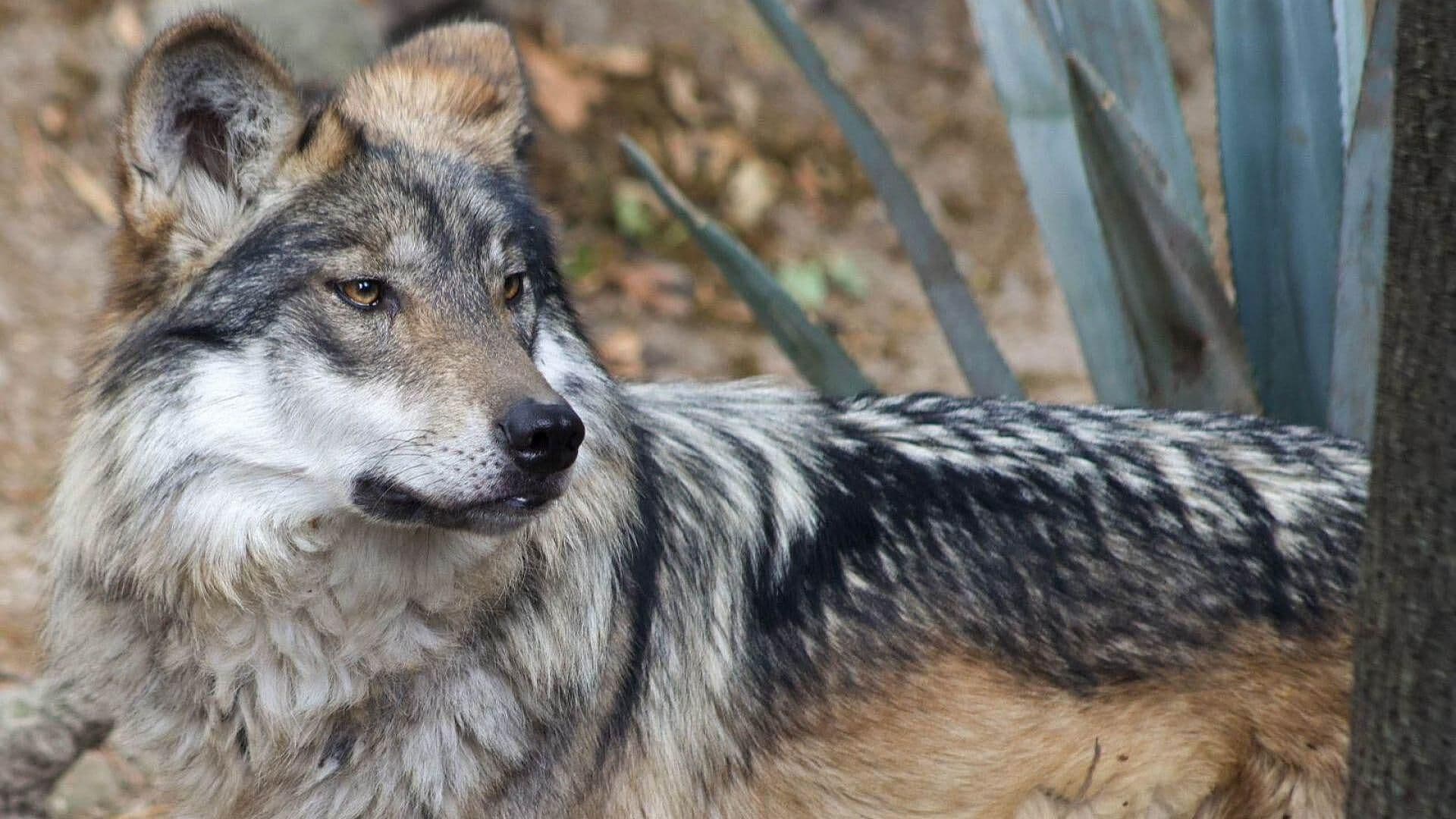
Source: nmas