
Cacao: The Seed That Places Chiapas Among Mexico’s National Leaders
Chiapas has established itself as one of Mexico’s most important cacao-producing states, contributing around 37% of the country’s cacao production and maintaining a tradition that dates back to the pre-Hispanic civilizations of southern Mexico.
The crop is particularly important in regions such as the Soconusco, where cacao cultivation is part of the agricultural, economic and cultural identity of numerous communities. Official agricultural statistics have consistently placed Chiapas in second place nationally, behind Tabasco. Government data for 2024 reported that Tabasco accounted for 62% of national production and Chiapas for 37%.
According to agricultural information from Chiapas, the state has produced around 10,000 to 11,000 tons of cacao annually in recent years. Government data previously reported 10,937 tons from 17,779 hectares in 28 municipalities, highlighting the importance of the crop to the state’s agricultural economy.
An ancestral crop
Cacao has a history of more than 1,500 years in the region. Pre-Hispanic civilizations such as the Olmec, Maya and Mexica considered cacao an important product and used it not only as food and a base for beverages, but also as a symbol of wealth and, in some contexts, as a means of exchange. The tradition continues today through products such as chocolate, pozol, tascalate and traditional chocolate drinks.
The importance of cacao has also been recognized through Mexico’s National Cacao and Chocolate Day, commemorated on September 2.
Production under pressure
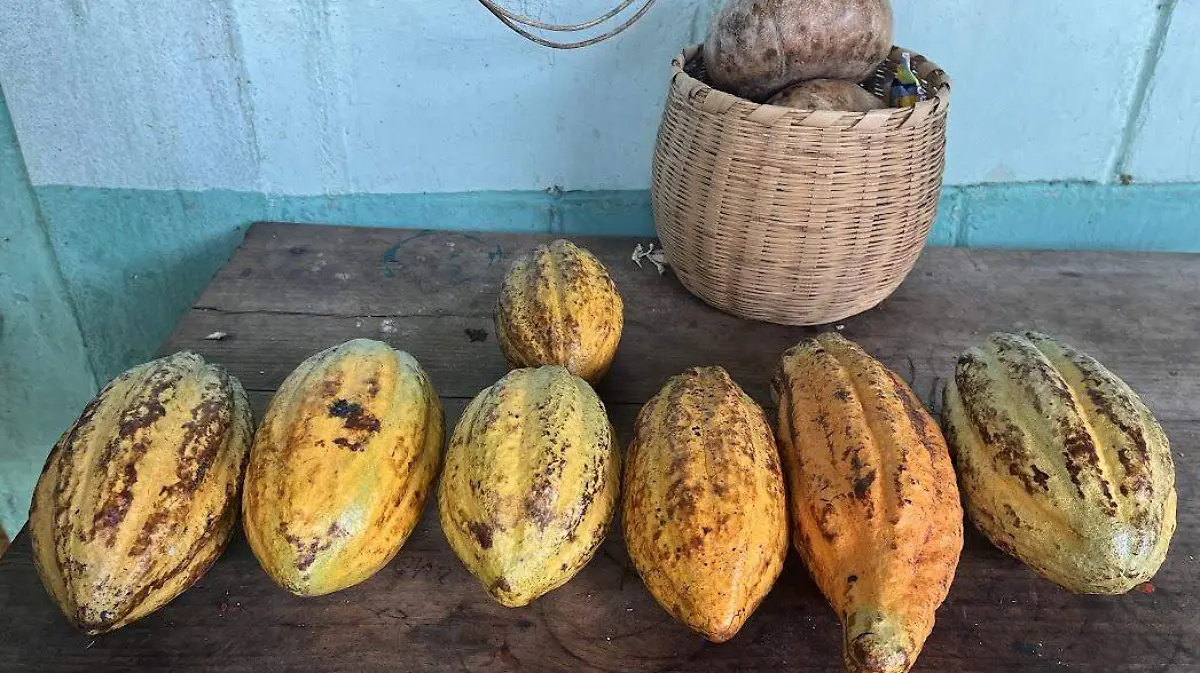
Despite Chiapas’ position as a national leader, producers are facing significant difficulties. One of the principal problems is moniliasis, a fungal disease that affects cacao pods and can drastically reduce harvests.
In the Soconusco, producers have reported severe losses. Some farms that previously produced up to one ton of cacao have reportedly been harvesting only between 60 and 100 kilograms, illustrating the scale of the problem in some affected areas. Recent rains have also contributed to the spread of the fungus.
Drought has created an additional problem in other parts of the state. In the Palenque area, some producers reported obtaining only around 30% of their expected harvest because of a lack of rainfall, with the possibility of recovering part of the production if precipitation improves.
These conditions demonstrate that being one of Mexico’s largest producers does not necessarily mean that cacao farmers are economically secure. Disease, weather conditions, aging plantations and production costs can directly affect their income.
The challenge of adding value
Another major challenge for Chiapas is that producing cacao is only the first step. Producers and specialists increasingly see the need to transform the raw bean into chocolate and other finished products instead of selling the crop primarily as a raw agricultural commodity.
The objective is to keep a larger portion of the economic value within the producing communities. Transforming cacao into chocolate, beverages and other products can generate additional businesses, employment and income.
Specialists have also pointed out that deficiencies in fermentation and processing can limit the ability of Chiapas cacao to enter international markets with higher quality requirements. Much of the cacao is still used for traditional products, while greater professionalization and investment in post-harvest processes could help producers compete in differentiated markets.
Chiapas and the national cacao industry
Mexico’s cacao production is concentrated primarily in Tabasco and Chiapas. Agricultural data show that the two states account for the overwhelming majority of national production, with Tabasco remaining the largest producer and Chiapas occupying second place.
In 2025, Mexico produced 27,874 tons of cacao, with Tabasco producing 18,751 tons and Chiapas 8,860 tons, according to figures published by Mexico’s Secretariat of Agriculture and Rural Development.
At the same time, government programs are seeking to strengthen the sector. The Sembrando Vida program reported that approximately 36,000 farmers produce cacao on nearly 29,700 hectares across Mexico, while some cooperatives are beginning to transform their harvests into chocolate and develop their own brands.
For Chiapas, the opportunity therefore extends beyond simply increasing the amount of cacao harvested. Improving disease control, protecting plantations from extreme weather, strengthening technical assistance and developing local processing could allow communities to capture more of the value generated by this historically important crop.
Cacao remains both an agricultural product and an important part of Chiapas’ cultural identity. Its future will depend not only on maintaining the state’s position as one of Mexico’s largest producers, but also on ensuring that the farmers who cultivate it benefit from the growing value of cacao and chocolate.
Source: oem